This is all good! In a roundabout way today I heard that the April program for NOLA members is "Gaming in the Library." Check here for an interesting sounding program that sounds to me like a full-day version of Migell's portion of the Symposium. So, if any of you live reasonably close to Warren, OH (outside of Cleveland) and are interesting in bringing gaming into your library, this is a program for you.
NOLA Regional Library System is a multitype library agency, consisting of 91 libraries: 37 public, five academic, 43 schools districts and six special libraries in nine northern Ohio counties: Ashtabula, Columbiana, Geauga, Lake, Lorain, Mahoning, Portage, Stark, and Trumbull.
Tuesday, January 18, 2005


"Libraries, the Princeton campus's unknown repository of sexiness"
A must read:
http://www.dailyprincetonian.com/archives/2005/01/17/opinion/11826.shtml
A sample quote:
"Education no doubt can be suggested in the classroom; but education happens in the library."
Thank you, Professor John V. Fleming!
http://www.dailyprincetonian.com/archives/2005/01/17/opinion/11826.shtml
A sample quote:
"Education no doubt can be suggested in the classroom; but education happens in the library."
Thank you, Professor John V. Fleming!
Monday, January 17, 2005
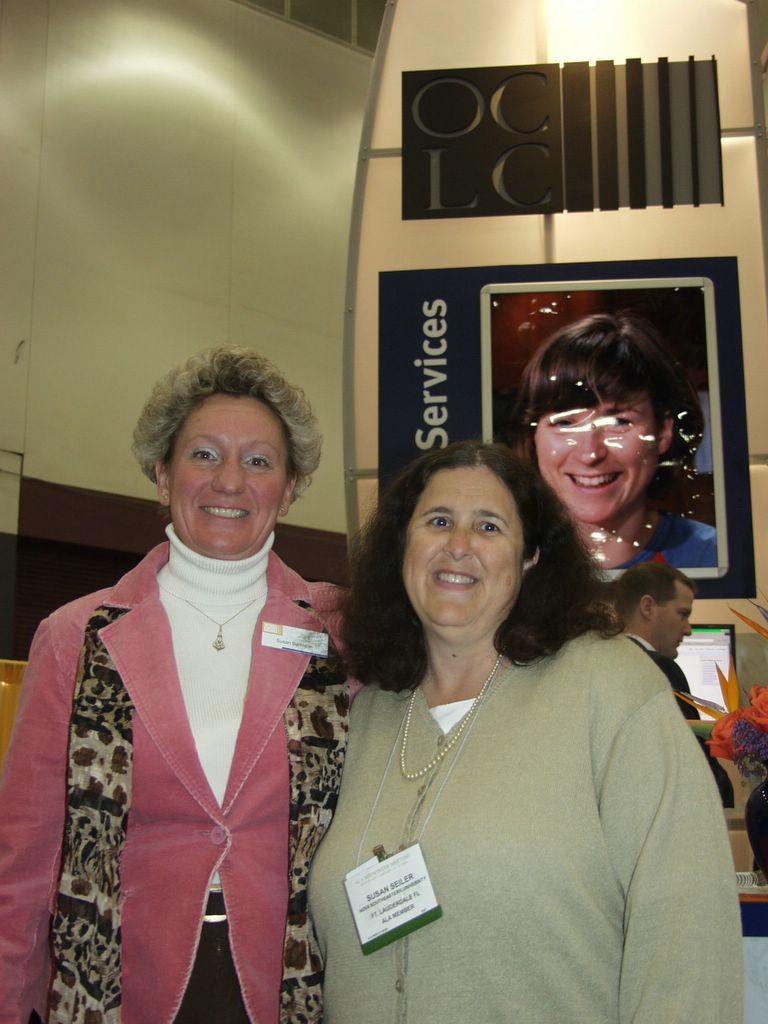
The winner of the OCLC opening reception basket, Susi Seiler. Susi is the Head of Technical Services for Nova Southeastern University Libraries, and she has been a gamer for years. She is pictured here with our own Susan Berntson (left), who came out of retirement to help with this ALA. On an interesting note, Susi said she "never wins anything," but that she AND her ALA-roommate both won baskets this year! Congratulations Susi, and happy listening to your new portable digital audio player while you game!


A poster of the Downloadable Audiobooks offer in the Recorded Books booth. In case you haven't heard, OCLC has partnered with Recorded Books to make eAudiobooks available through the NetLibrary platform. The core collection has 500 titles, and there are also Pimsleur language and biblical audiobooks as well.



Rent-a-dog
Alane set me up for this one! We were talking about entrepreneurship in the hotel bar, and I explained my small business idea: Rent-a-dog.
It all came to me while we lived in Hawaii. I was in Honolulu, working downtown, and my boyfriend-turned-fiancee-now-husband was in Pearl City at Pearl Harbor. Both of us liked dogs but didn't want the responsibility of a dog. I mean, let's face it--dogs are awesome but they are a commitment.
Thus the idea of rent-a-dog was born. It's all the fun of owning a dog, but none of the work. You rent your dog for the day, week or month--and they come fully trained with doggie treats, frisbees and everything. It seemed like a great "girl magnet" for guys, too. Personally, I really wanted a (well-behaved) dog to go to the beach with, so we could play fetch and romp around. Rent-a-dog would have been perfect for me.
Maybe once I become a very wealthy library blogger (ha ha ha), I can finance the venture capital needed to get rent-a-dog off the ground. Any dog-loving capitalists out there, look me up.
Post ALA musings
I know many librarians would still have been at ALA today but those of us who work for companies rather than libraries are usually gone once the exhibits are over--except for the very hard-working conference staff who are still there tearing down the booth and packing things up so they can be sent to the next conference. Our conference staff does an outstanding job of keeping track of people, OCLC bags, hotel rooms and everything else.
So, I didn't blog from Boston. Alice was doing a good job of populating It's All Good, and I spent a lot of time at the booth and it's hard to blog on a laptop standing up. Or at least I find it hard. ALA is a very different conference for those of us working the exhibits--we exhibitors don't personally get programs and don't have access to the agenda planner ALA has on its website. This makes it quite difficult to figure out what programs and meetings are happening when. And for sure, we don't get invited to the parties! I am still sorry I didn't get to go to the party held at the Kennedy Library--no idea who hosted but a conference attendee asked me about it at the booth and I was envious of the location.
I want to thank Beth Gallaway for her detailed posts about the OCLC Symposium over on the PLA blog. She clearly listened and took excellent notes and I am grateful to her for posting them. The symposium was filmed and will be available on the main OCLC web site in about 3 weeks. We're going to also put the slides up as Kurt Squire, Constance Steinkuehler and John Beck had interesting things on slides they did not explicitly refer to. As the person responsible for the symposium "content" (although my colleague Wendy McGinnis, Director of PR, deserves all the credit for convincing John Beck to speak) I don't want to sound like I am tootling my own horn, but I did think it was a most interesting session, and that is entirely due to the panelists--and the moderator. I'd asked them to make as many connections as they could to gaming's relevance to libraries and librarians and I think they succeeded.
Many people who stopped by the OCLC booth mentioned how much they had got out of the symposium and even though John Beck wasn't there to sign books, we still sold quite a few after he left. One academic librarian said she was giving it to her university's administrators. Jenny Levine's boss Pamela Brown stopped by too. She also liked the symposium and reads It's All Good as well. And Jenny pointed to Beth's excellent summary of the Gaming symposium way before I did!
I ran into Karen Schneider at the President's Advocacy program and had a short conversation about the oddness of meeting people who read our blogs (Karen's is The Free Range Librarian and she also blogged for PLA--and she's right, there's something wonky with the PLA blog, so be patient). It's not that we write into a vacuum because we know there are readers "out there", but meeting them in person is quite different than thinking about an abstract audience. And it's gratifying....well, it is if they like what you do!
And kudos to PLA for blogging ALA. It was most interesting reading and a whole lot better than reading just Cognotes...that human voice is very important. I hope that more associations try this as a way of reaching constituents...it's a whole lot better than quarterly newsletters.
I, like Alice, thoroughly enjoyed Malcolm Gladwell's presentation. He is an engaging speaker--and he's Canadian although my national attennae did not tell me this ahead of him announcing this. In John Beck's parlance, Gladwell would be a Strategy Guide (instead of a Level Boss) showing us interesting things and then reframing these things in a way we hadn't thought of. For me, after Gladwell spoke, presentations were back to the same-old, same-old--in the "how we did it good" mode and there was a tad too much self-congratulation and not enough real examination of what he had suggested. If advocacy efforts in the 90s were so successful, why would funding and profiles of libraries be so low now?
At dinner after the Symposium, John Beck told me that he had just come up with that "Strategy Guide" analogy as a good role for librarians as he was preparing the presentation so it isn't described in his book.
To all of you who stopped at the OCLC booth to talk to us, thanks! We learn things in every conversation.
And I am going to refrain from blogging about our miserable trip to Boston because it'd be very long, and whiney in places. Besides, I think most people travelling from the middle and east of the country had a hard time so I wasn't alone...in fact I had very good company in Moby Dick (a white Buick Le Sabre) on the 6 hour drive from Syracuse, NY to Boston late Thursday night. Despite the problems, my fellow travellers remained cheerful and calm. It did occur to us on that long (expensive) ride that ALA may save money by having conferences in "off season" places, but we, the attendees, often end up spending a lot of extra money due to travel mishaps, especially in the winter--although perhaps that's not altogether true as I recall a couple of unfortunately memorable trips home during thunderstorms from ALA in the summer.
Maybe Alice will tell you about her "Rent-A-Dog" business idea...she shared this with me yesterday as we had a very late lunch in the Marriott hotel bar where just about everyone else was watching the Patriots-Colts game.
Creating an Advocacy Epidemic
Alane and I attended the ALA President's Program, "Creating an Advocacy Epidemic." The program was geared for public libraries, although there were some academic folks in the back, I saw.
Malcolm Gladwell was fantastic. Totally want to run out and find his latest books The Tipping Point and Blink.
He tee'd us up for thinking about library advocacy in an epidemic way.
Background on epidemics
Epidemics differ from marketing campaigns or advertising because the word has it's roots in medical terminology. It differs from marketing in that it is non-linear and typically gets spread by word-of-mouth, at a grassroots level. [Alice aside: sounds suspiciously like viral marketing to me, but there we are.]
Malcom gave a great example of a recent (American) epidemic: the Atkins diet. Why did it catch on like wildfire? Because Atkins reframed our concept of diet and made it simpler. Instead of doing complicated math for calorie counts and portion control, simply eliminate carbs. And everyone loved it because it was a new way to diet that was easy to follow.
Reframing
Malcolm talked about reframing the concept of libraries, in order to shift the general public's perception of what we are all about. In old-fashioned marketing terms, this sounds like nothing more than re-positioning your brand. Or put another way, repurposing your product. One of my favorite examples of this phenomenon is baking soda.
Baking soda sales were flat. Arm and Hammer had developed all the recipes it could that used baking soda instead of powder, and no amount of marketing the leavening power of baking soda was going to save the company. So someone figured out that baking soda can also eliminate unpleasant odors. Voila, a whole other aspect of the product that no one even knew it could do. They reframed baking soda to highlight its odor-removal use. And they did it so effectively that now all of us buy 2 boxes of baking soda--one for the frig and one to use in cooking. And the product itself did not change one bit. It kept on being baking soda. But the world around it changed.
[NB Malcom Gladwell didn't talk about baking soda. It's the value-added perspective you get from having your ALA MW covered by Weegee.]
Baking soda for libraries
So your sermon today is: can libraries be like baking soda? Can we reframe our position in people's minds? I think we can--and we've started to do it with the "Your public library is a small-business incubator" theme. We reframed the public library from a place you drop your kids for storytime, to a high-tech hub with resources, answers and a space for entrepreneurship to happen. At least, that's the idea.
As my former boss Gregor used to say, "If we can't be aspirational about this issue, who will be? Shoot the moon!" And I couldn't agree more. Let's use our social power to make this happpen. Ideas? Comments?
Sunday, January 16, 2005

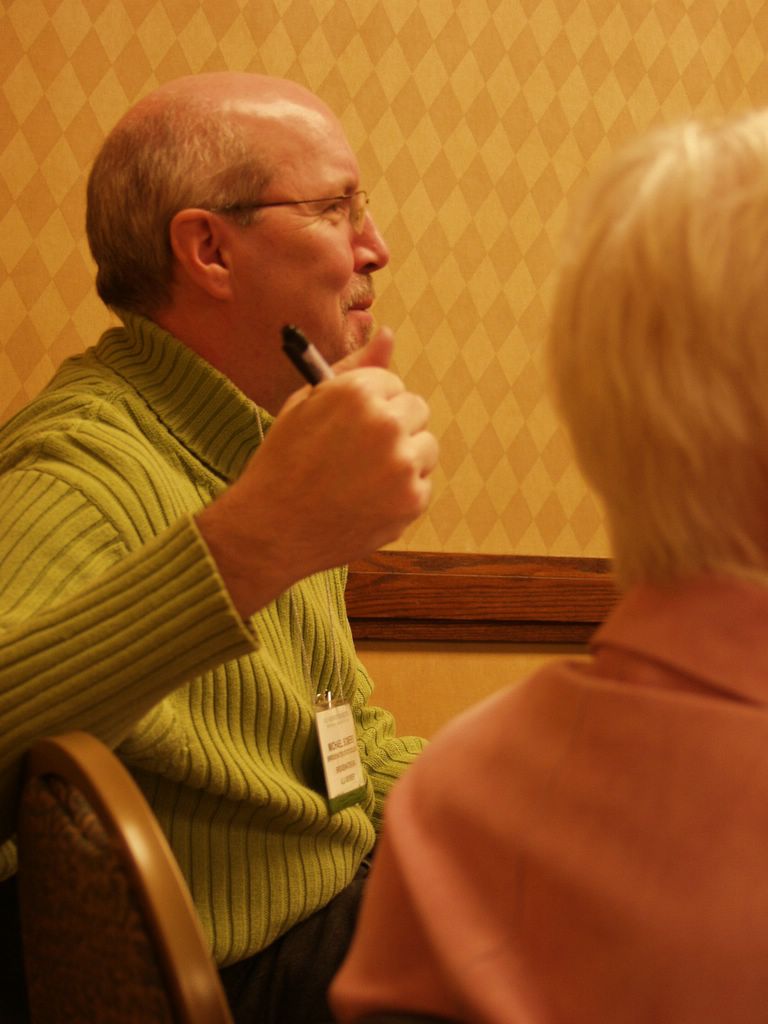
Michael Somers, a library director from Bridgewater State College, Mass. asks what the turnaround time will be for WorldCat Collection Analysis results. Answer: 24-72 hours, with real-time data manipulation capabilities after that.
WorldCat Collection Analysis
I attended Glenda Lammers informational session on this new product, slated to come out in March. WorldCat Collection Analysis is a very sensible way to get even more value out of our collective industry investment in WorldCat. Duh, we should use it as a tool for comparitive analysis betwixt and between libraries.
The service relies on up-to-date holdings in WorldCat, and then you select your peer group to compare against. The interface look and feel is very similar to FirstSearch. So similar, in fact, that I think it is a tab on your FirstSearch authorization. No new password required. That's a small but appreciated nod to OCLC's attempt to simplify what on my desk is a growing wad of sticky notes...
So from the tenor of the room today, what everyone is quite eager about is to be able to do an in-depth collection analysis with only a 72 hour turn-around time for the data. (Instead of 3 weeks and hours of paperpushing, I take it?) Of course, seeing some sample results screens got us all very curious to think about who we'd set our library up to compare against. Who are some of your peer library collections?
Another cool thing is that once you do the comparisons and identify titles you'd like to acquire, you can link straight out to Alibris, Abe Books, etc and buy the books! Talk about efficiency. This is cool.
The service is available for individual libraries or library groups, and the pricing is based on your number of holdings. Even for the biggest category--more than 1 million holdings--a year's subscription was only $8500 plus a one-time $500 set up fee.
He's Back!
Tom Lehrer, one of my favorite songwriters and performers, once complained about the endless stream of plays, books, and movies about people who have trouble communicating. Lehrer said, "If you can't communicate, the least you can do is shut up!" Early on when Alice and Alane asked me about starting this blog, I decided that if I didn't have anything to say, I wasn't going to say it here. So for the last few weeks, I haven't had a lot to contribute. But this weekend at ALA Midwinter has given me something I want to talk about.
The Symposium, pictures of which have been posted by OCLC's answer to Weegee, Alice Sneary, was terrific. Each of the participants brought an interesting perspective to the question of what libraries can learn from gamers. Kurt Squire and Constance Steinkuehler took the academic perspective and coupled it with Constance's personal interest in Lineage. Marilyn Mason tied WebJunction to games, and Migell Acosta talked about how the Santa Monica Public Library has used LAN parties in a mutually beneficial way: the kids get a safe place to play with well-networked machines, and the library gets exposure to a new source of input on how to appeal to this generation. (Kurt, Constance, and Migell had spoken at OCLC in October. Kurt and Constance were the keynoters at Members Council, and Migell spoke on a panel presentation for staff in a program immediately after the Council meeting.) After a break, John Beck, author of "Got Game: How the Gamers Generation Is Reshaping Business Forever," made a superb case for how the generation of people conceived in Pong, weaned on SuperMario and matured in Massively Multiplayer Online Games, are changing and will change the workplace.
The questions and answers were excellent, and it seems like the audience really got it. We got a lot less of "Why is this important to libraries?" than we might have expected. Instead, attendees learned more about a way to think about their users from a generational perspective, and they heard some interesting ideas about how this perspective could be applied. Gamers impress me with their enthusiasm, their optimism, and their willingness to try new things. If the gamer generation can apply these traits in our libraries, we have nothing to worry about for the future of libraries. We just need to have enough sense to take advantage of what they bring to the table!
I've also spent several hours working in the OCLC Exhibit Hall booth. Donna Gehring, who manages our conference presence with unbelieveable patience and an almost Zen calm, assigns me as a generalist on the booth, which means basically I get to help people sign up for the drawing and then direct them to someone who actually knows something about OCLC products and services. What has been most gratifying this week is that a number of blog readers have stopped by to tell us how much they enjoy "It's All Good." It was a real ego trip, and now I know why authors like book signings!
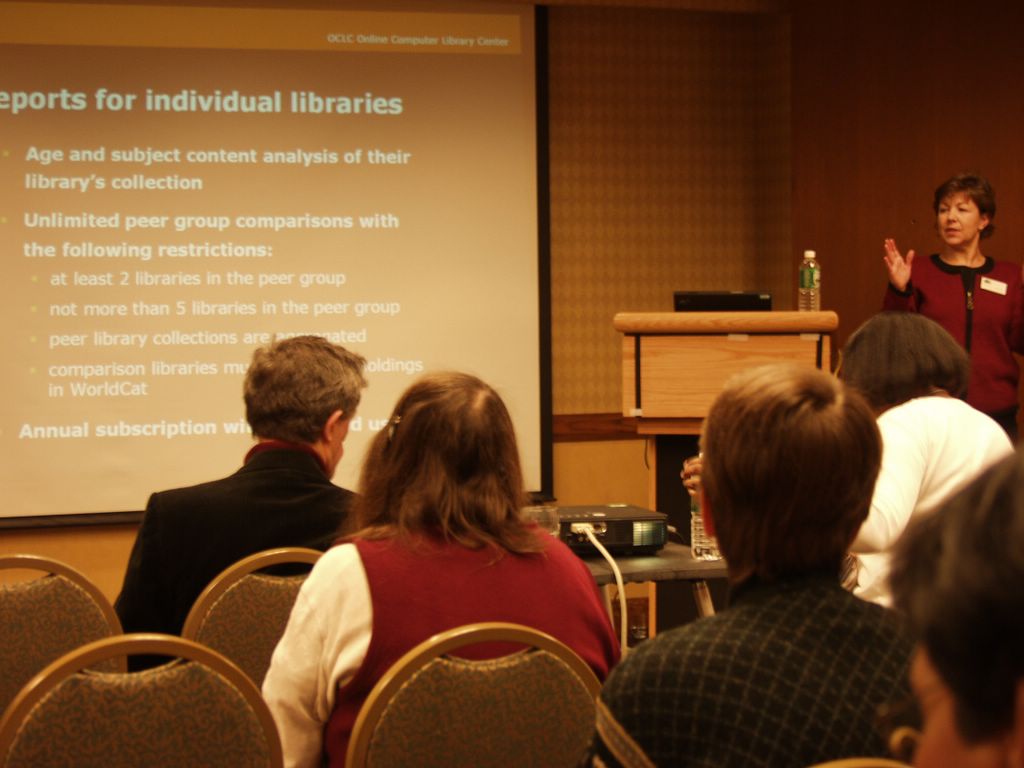
Ready for Advocacy session
Okay gang, I have more photos to download and post for you...but I'm gearing up to attend the ALA President's Advocacy forum. It starts at 3 pm so I'd better motor. Wish it was easier to moblog at this show. I'm been mourning my technical nonconvergeance...no bluetooth, no picture phone, no wifi. But lots and lots of bloggable moments.
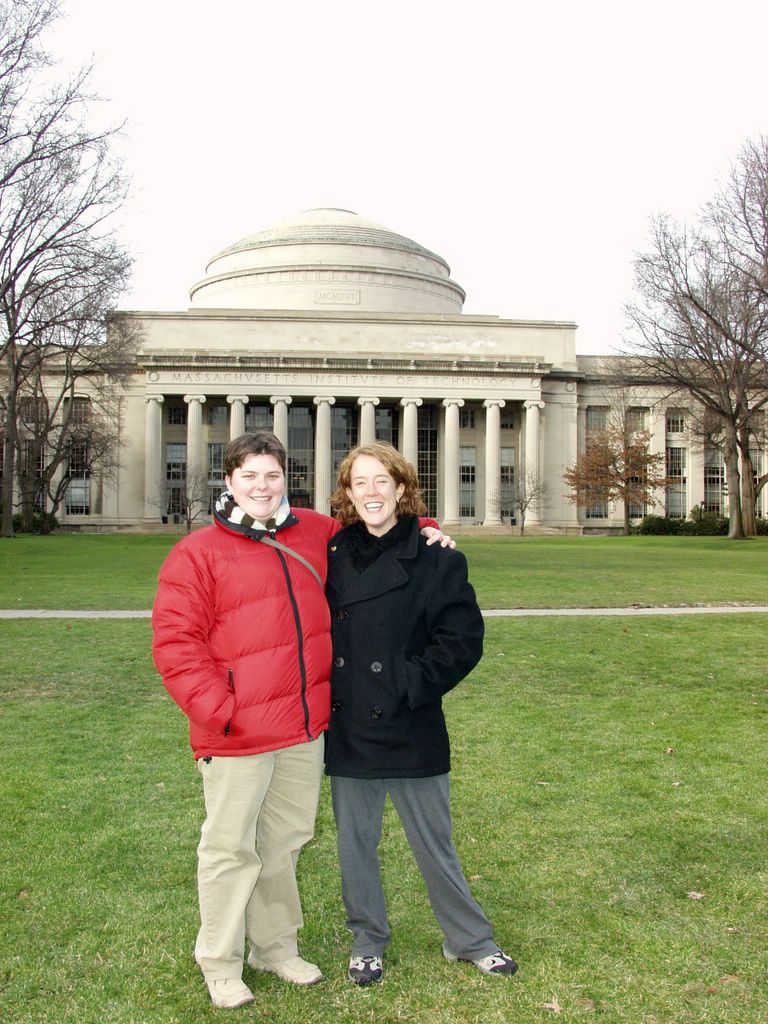
Boston is full of great sights--in addition to the OCLC activities. Because I am committed to bringing you the WHOLE experience of the conference, I of course had to wander offsite for a quick tour of MIT
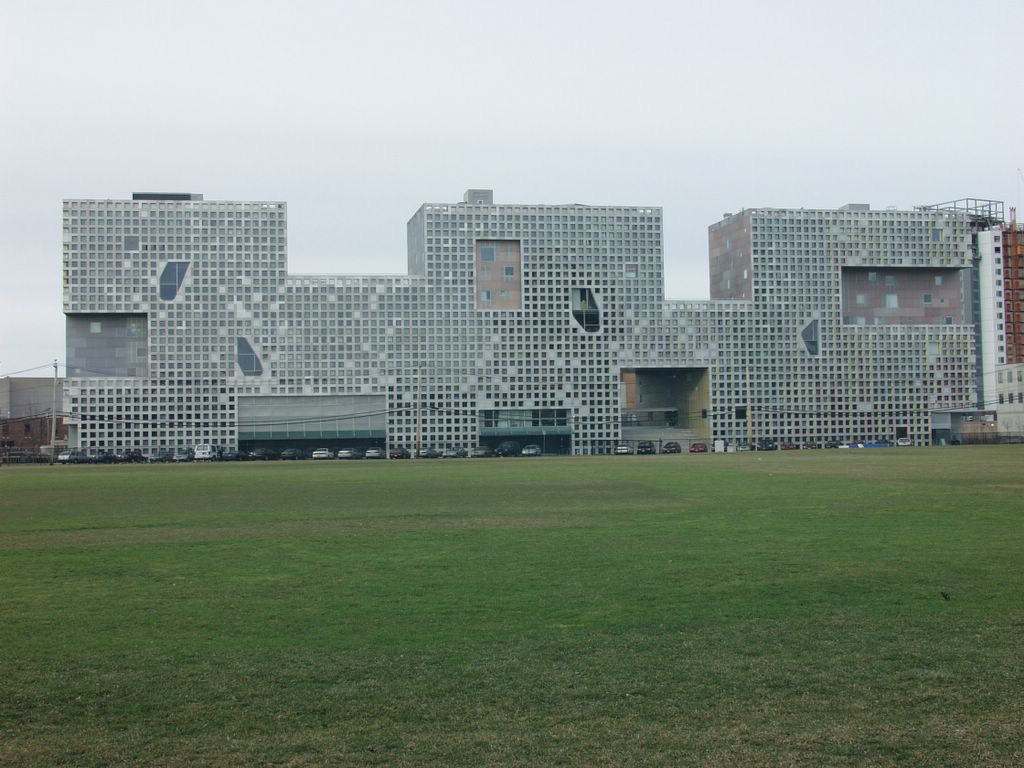
Can you believe this is a dorm? It's called Simmons and this photo does not adequately capture the architectural presence. Here's the back story on it.


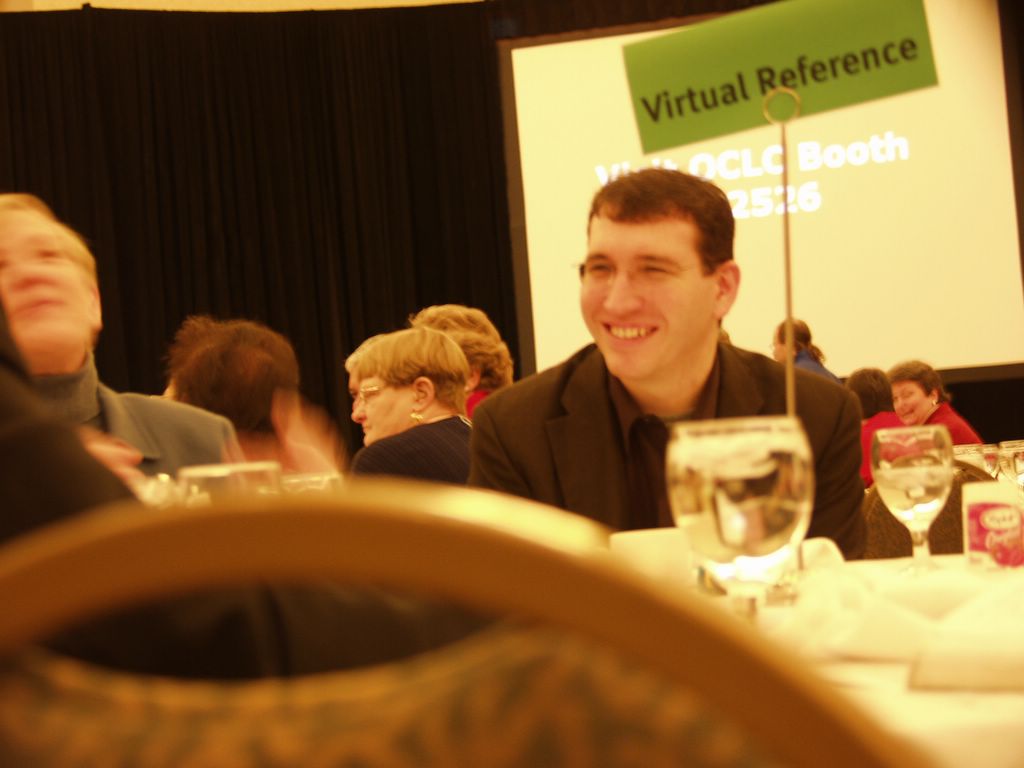
OCLC Library Services staff compare notes and relax after the first full day of exhibits on Saturday. Pictured L-R are Robert Norvell, Carmen Candlin, Ron Glass and Danny Overstreet. If you haven't heard about the new Downloadable Audiobooks or the NetLibrary Collection Developer series yet, one of these guys would be happy to demo it for you.


Saturday, January 15, 2005

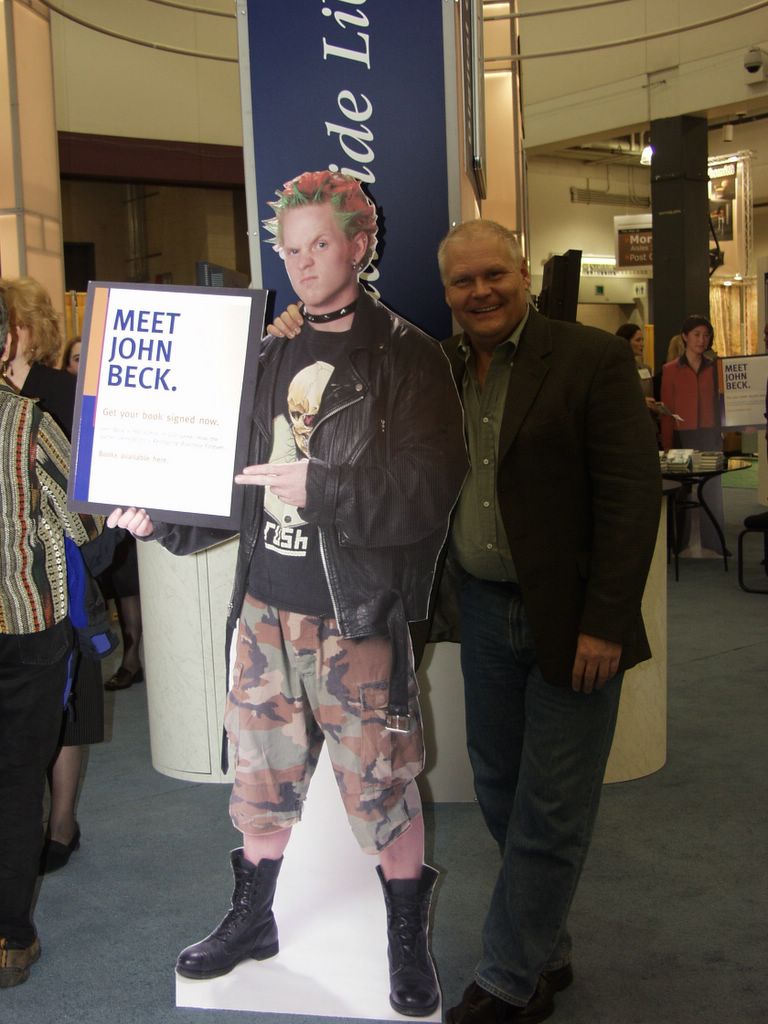


Symposium, Opening reception, Book signing and more
So much happened yesterday! Promise to get you up to speed--but I also have to dash to an 11:30 meeting soon.
My day yesterday was the OCLC exhibit booth. We hung the ring header (yes, the riggers finally came) and got everything put in place. Had a madcap dash to buy a few essentials--trash cans can be precious commodities sometimes--and voila the booth was ready, right on time.
Good thing, because while I was setting up over in the exhibit hall, the Symposium was going like gangbusters. Alane said she looked out over the crowd and realized it was the youngest audience we'd ever had--and people stayed to hear about Gaming and the significance for information literacy and learning.
John Beck, author of Got Game? was a panelist, as well as Kurt Squire, Constance Steinkuehler, Marilyn Mason, Migell Acosta and our own blogger-bud, George Needham. I hear it was a fantastic time and that we'll have it available on the OCLC Web site as a streaming video. Alane even mentioned something about editing out the umms and ahhhs. I can't wait to watch it. If the discussions we had a dinner later were any indication of the enthusiasm of the Symposium, it's going to be a great show, indeed.
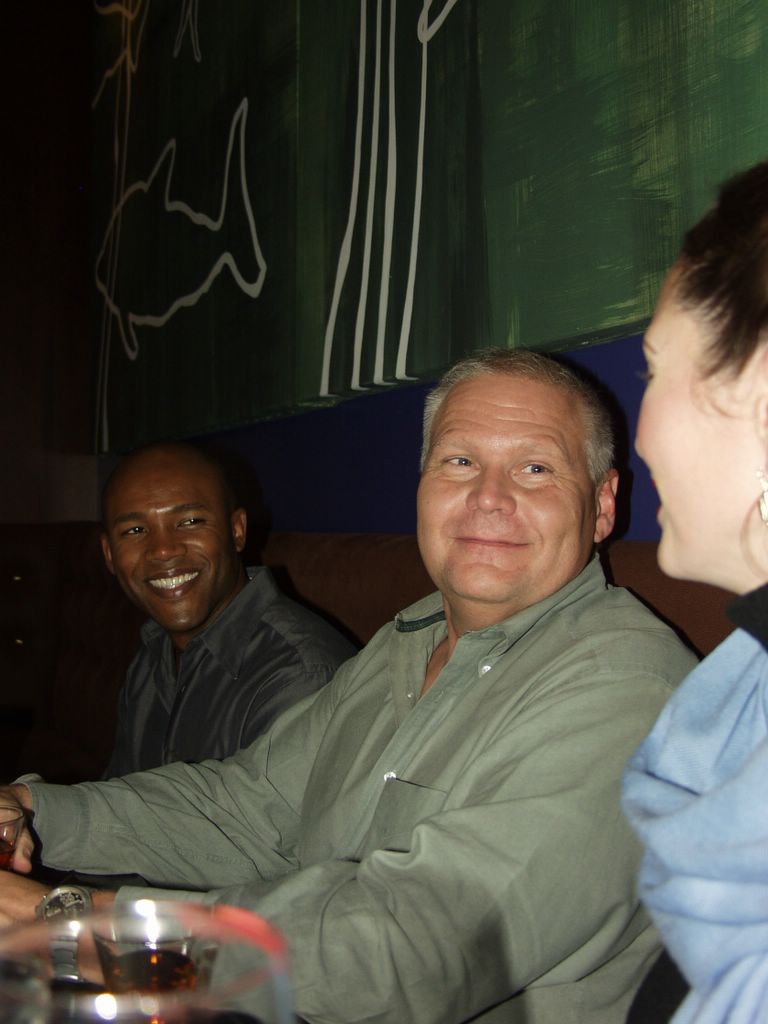
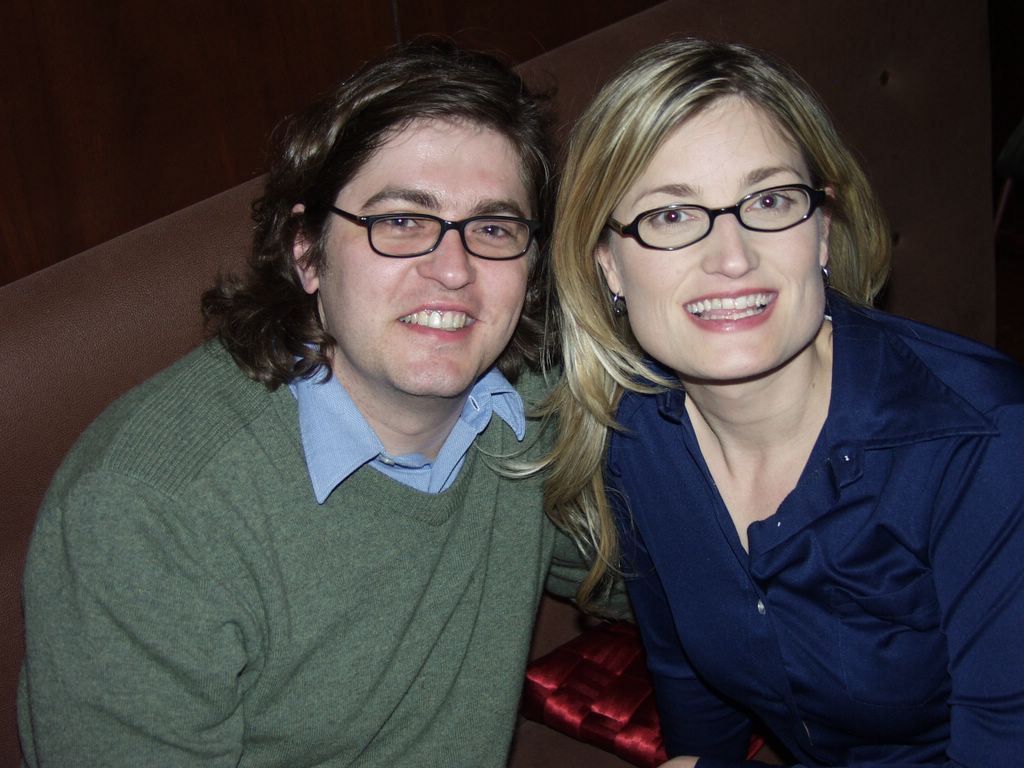
The gamers then celebrated the successful Symposium, book signing and opening reception with a smashing dinner together. They invited me because of course, they wanted their celebrity presence blogged.
Now for photos!
Friday, January 14, 2005
Live and Direct from Boston
Good morning scanbloggers.
Thought I'd catch you up on latest news from your favorite worldwide library cooperative:
I'm going to bring you the news as it happens from ALA MW 2005...so even if you're not enjoying balmy Boston, you can still be in the know from OCLC.
I'm here on the exhibits floor in-progress in the Hynes Convention Center, waiting for the riggers. I have a fantastic camera (you'll see results as soon as I dig out the USB cable) this trip, loaned to me by our resident photographer, printing expert and all-around go-to-him-and-he-can-get-it-done-guy, Rich Skopin.
Our rigging director just showed up--more later.
Tuesday, January 11, 2005
Left brain or right brain?
If you've been reading "It's All Good" for a while, you may recall that a few months ago I lamented that OCLC hadn't got anything to show for the long time we've been mulling over visual display of information. Well, good news. The pilot has been launched. Our colleague Tom Storey is the editor of the OCLC Abstracts and I stole the title from his notice about the pilot.
Here's what he wrote.
"OCLC and Antarctica Systems, Inc. to test library users’ search preferences.
OCLC is launching a pilot to evaluate library users’ experiences with searching and display of search results using a visual interface developed by Antarctica Systems, Inc. The pilot will run from January through April 2005 and will be implemented on a database of electronic books that will be available to all users of the OCLC Base Package and the OCLC Collection on the OCLC FirstSearch service.
Antarctica Systems, Inc. will use its VisualNet data visualization software to create a visual interface to the electronic books database. When users select the electronic books database on FirstSearch, they will be given the option to use the visual interface for searching and viewing results. OCLC will conduct a user survey to gauge feedback during this pilot and will also collect usage statistics that will be evaluated for future applications."
If you are not a FirstSearch subscriber, Antarctica has a link to the ebooks data here.
Friday, January 07, 2005
Why we need advocacy--and more research
ALA president Carol Brey-Casiano and Bernard Margolis, president of the Boston Public Library have an article in the January 5 Boston Globe on the sorry state of public library funding. "Despite the fact that more people are using libraries than ever before, their funding continues to decrease. More than $80 million has been cut from public library budgets in the past year alone, which has weakened or closed libraries in more than 40 states."
Gloomy as this is there was another statement in the article that particularly caught my attention: "Librarians truly are the 'ultimate search engine,' an incredibly knowledgeable human resource far more responsive and interactive than virtual commercial ones." It did so because I had just read something on the same topic expressing a different view. Rafat Ali at PaidContent.org posted some comments yesterday from an interview on digital media. Here's Rafat's posting.
"The Future of Digital Media: Hank Barry: An excellent interview with Hank Barry, who is a partner at the venture capital firm Hummer Winblad, and has been a close observer of the evolution of digital media - he was CEO of Napster and previously was a partner with Wilson Sonsini Goodrich & Rosati. This point is excellent: 'I think all businesses have tremendous opportunity here. To survive and prosper, they simply need to adapt...They have moved much of their ordering and sales configuration online. It's working. Perhaps contrary to expectations, customers prefer a consistent machine interface to an inconsistent human interface.' That's why I like banking online completely, than going into the bank or even the ATM" (my emphasis)
Now, Carol and Bernie, and Hank and Rafat aren't (necessarily) talking about the same kind of interactions but one of the major trends we focus on in the Environmental Scan is disintermediation of the sort Rafat mentions...interacting with a screen rather than a human.
There is good evidence that for many types of interactions, people actually prefer the machine.
In presentations we do, we often mention an article from Fast Company that George pointed us to called The Toll of the New Machine by Charles Fishman. This long article contains many interesting and important points and "offers a glimpse of the continued power of computers, automation, and the Internet to transform our lives as both workers and consumers--a power that, far from having plateaued, is only just getting started. Information technology hasn't touched lots of things that are just waiting to be automated, computerized, or kiosked. That they will be automated seems inevitable."
I think we continue to give too much weight to the notion that people coming to libraries want to be "served" by a human and I also know that I have no empirical evidence that library users prefer asking where the bathrooms are or why the sky is blue from humans. It's yet another area in our profession where emotion rules over fact, in my very own personal opinion. We don't actually know this; we just assume. And as Mr Fishman points out in his article, "Part of self-service is paying attention to how many different selves you might be serving. " So, I think we need to pay attention to the many kinds of interactions people have in libraries and decide where the real value of human interaction and service lies and focus on those selves and then get cracking on the things that are waiting to be automated.
Thursday, January 06, 2005
Advocacy advertisement
This is one of three advertisements. You can view it so you can read the words at the OCLC web site.

Check out our Advocacy initiative
We've hinted at this program a couple of times in this space but now we have something to point you to. Alice did a lot of hard creative and phone work, and George and I swanned in now and then and gave opinions and ideas--not at all hard work for us.
Here's some of what we say on the Advocacy pages: "OCLC has developed an advertising campaign on behalf of libraries, aimed at library budget decision-makers.
The 12-18 month campaign consists of a series of national print ads and customizable, local posters." And here's why.
"The idea of doing advocacy grew naturally out of OCLC's 2003 Environmental Scan: Pattern Recognition report and the many presentations and discussions that resulted from it. As library staff members read and reflected on trends in our larger culture, the idea of 'branding the library experience' continued to resonate. The necessity of marketing library values—especially in the era of tighter budgets—was obvious.
So OCLC decided to put our money where our mouth was.
For the calendar year 2005, OCLC shifted advertising from library-specific publications to a new audience of nonlibrarians who influence budget decisions and technology purchasing for libraries. See the advertising schedule of placements."
There's lots more information about the program and the resources related to it at the web site.
And Happy 30th Birthday, Alice.
Tuesday, January 04, 2005
It's 2005 - do you know where your content is?
"Happy New Year" just seems a bit too chipper, considering millions of the living in the tsunami-affected regions of the world are miserable physically and mentally beyond the comprehension of most of us. I'll repeat myself: please donate whatever money you can. You don't want to be visited by the Ghost of Christmas Present tonight.
So, here we are back, in a new year. I've been reading lots of summaries of 2004 and musings for 2005 on various blogs.
John Blossom at Shore Communications has a piece called Models for Success: 2005 Ushers in an Era of Major Shifts in Content Business Models as well as a view in the Crystal Ball Redux: Looking Back on Shore's 2004 Forecast - and Peeking at 2005
The Write News reports on the Online Publishers Association announcement that "consumer spending for online content in the U.S. grew to $853 million in the first half of 2004, an increase of 14 percent over the same period last year." This tracks with the only place shopping did well over the holidays--online.
They also have an entire section called The Editorial Dead Zone that reports on the shutterings and staff reductions in media, bookselling and publishing communities. Don't go there if your unrealized dream is to be a reporter or the publisher of a magazine.
Paula Hahn at Information Today is Wrapping Up 2004; Looking Forward.
And along with a zillion other bloggers, I note the Pew Internet & American Life report The State of Blogging. As well, Outsell Inc has released its 2005 predictions...I haven't read this yet but the previous ones have been most interesting. This one is called Outlook 2005: Power Play In The Information Industry.
You'll need to wander around a bit to read all the bits associated with Jay Rosen's Top Ten Ideas for 2004 at Pressthink. Not all the ideas are on the main page so look for the links. Number 6 is "Content Will be More Important than its Container" Hey, where've I heard that before?
And somehow I missed this at the beginning of December...RageBoy, aka Chris Locke, co-author of The Cluetrain Manifesto, was hired by HighBeam Research to blog. The RageBoy blog is still here and The ChiefBloggingOfficer is here. I've landed you on the "About" page because I want you to scroll down and look at what may or may not be a "real" poster. It's great though: For Greater Knowledge on More Subjects, Use Your Library Often!
And from a gaggle of biz publications: Fortune published its 10 Tech Trends, Business 2.0 The 5 Lessons of 2004, Red Herring, Top Ten Trends for 2005 and Fast Company Top Trends for 2005.
And not a trend summary, but 'in theme' with the upcoming OCLC Symposium, Jenny "The Shifted Librarian" Levine talks about her son and daughter's interests (different) in social gaming, Internet Use Goes Social at Our House.
And if the deluge of trend watching and musing is weighing you down, along with all the news and images from sad places, spend a few minutes with this WMD (weapon of mass distraction), peacefully virtually snipping paper into lovely snowflakes.
As my dad said in a New Year's email: Lang may yer lum reek.
Thursday, December 30, 2004
It's not all good
What does one say in the face of such widespread devastation and suffering? Not much. If you can afford to donate money to any of the various NGOs and relief agencies operating in South East Asia, please do. And please check to see if your organization matches such donations.
At OCLC, we sponsor the IFLA/OCLC Fellows, a program that brings librarians to Dublin, to OCLC, for six weeks each year. For the most part, the Fellows are from what we call here in the West "developing economies". Malaysia, Sri Lanka, Indonesia, Vietnam, Mauritius, Rwanda, Kenya, India. You'll have heard most of these country names this week. George, who oversees the progam, reports that our Fellows from Mauritius, India and Sri Lanka are OK, although Nayana in Sri Lanka lost friends. We haven't heard yet from Ferry and Zarina who live in Indonesia and Malyasia.
Nothing like a real, large scale tragedy to put things in perspective... "doesn't take much to see that the problems of three little [OCLC] people don't amount to a hill of beans in this crazy world. Someday you'll understand that. Now, now... Here's looking at you kid."
Monday, December 27, 2004
GoogleWhack
I'm in New Orleans now, watching "Good Morning America." They're describing a game people are playing with Google, called Google Whack. Apparently it's been around for awhile...
Anyway, the game is to put 2 terms in the Google search box and get one result returned. Examples of successful GoogleWhacking include:
braggadocoious illuminator
hippopotami plethora
lambating scallopini
Try it yourself!
Anyway, the game is to put 2 terms in the Google search box and get one result returned. Examples of successful GoogleWhacking include:
braggadocoious illuminator
hippopotami plethora
lambating scallopini
Try it yourself!
Monday, December 20, 2004
Geoffrey Nunberg on Google, text and libraries
You may recall, if you've read the Environmental Scan, that we quote a poem by Geoffrey Nunberg called "We're Coming Unwired" at the front of the Social Landscape. And he edited a book called The Future of the Book, published in 1996, that still is worth a read. He is a professor of linguistics at Stanford University, and is, on many levels, a good person to comment on Google's plans to digitize books owned by his university. Read the December 19 LA Times article here.
What next?
From the "keep an eye on this" files...
The summary is from Hot Bytes newsletter, put out by the e-Content Institute. The whole article from Internetnews.com (linked below) is worth reading.
"Google magazine search?
Writer Susan Kuchinskas notes that Google may have found a way to make money from its still-in-beta News service without alienating publishers, as indicated by a patent application on file with the USPTO. She writes: If Google could pull off what it outlines in that broad patent application, it may open new revenue streams to publishers of print, CD and DVD media, while broadening its own revenue base. U.S. Patent Application No. 20040122811, filed by Google co-founder Larry Page, has a deceptively simple name: "Method for searching media." But the application illuminates possible plans by the Mountain View, Calif.-based search leader to enable search of printed material, offer pay-per-view documents, scanned documents with clickable ads and even the ability for print publishers to swap out ads in digital copies of their printed pages. There are two key elements of the patent: a method for executing a permission protocol so that the publisher could authorize Google to display more text from the relevant publication; and storing scanned versions of printed documents along with data sets representing the ads that went with them. Source: Internetnews.com "
Wednesday, December 15, 2004
Indexing Uncooperative Cats
Art Rhyno is a funny guy (despite the fact that he lives in that Honduras-of-the-North, land of my citizenship). After the Google news yesterday flooded the web and the blogosphere, Art posted 4 funny, completely fake (please note this, Google legal staff) press releases.
Here's the first one.
Google to Index Dog Droppings
Press snippet: In a major initiative, Google will index the geometric properties of dog droppings around the world. Searchers will be able to upload pictures of the offending materials and be matched instantly with the dog that created them. "We are limiting this to dogs in the first phase" said a spokesperson from Google, "the cats are too uncooperative at this point".
Go to Art's blog, LibraryCog, to read the other equally amusing three. Thanks, Art, for a laugh.
Tuesday, December 14, 2004
Google and Lots of Books
This isn't really news considering more than 120 news sources (according to, what else, Google) have picked up the story from the AP source last night. Here's one version but this story isn't hard to find. This version is CNet posting a New York Times article which is handy as the NYT requires registration.
"It may be only a step on a long road toward the long-predicted global virtual library. But the collaboration of Google and research institutions that also include Harvard, the University of Michigan, Stanford and the New York Public Library is a major stride in an ambitious Internet effort by various parties. The goal is to expand the Web beyond its current valuable, if eclectic, body of material and create a digital card catalog and searchable library for the world's books, scholarly papers and special collections."
This is all good, isn't it?
Monday, December 13, 2004
Griefers, griefers everywhere
Here's an interesting article about people who deliberately spoil the game experience in MMOGs (Massively Multiplayer Online Gaming) like EverQuest, Star Wars Galaxies and Sims Online. They are known as "griefers" and are "a small but seemingly irradicable set of players who want nothing more than to murder, loot and otherwise frustrate the heck out of everyone else."
The article points to the strong social rules that govern games and their communities. But I found myself thinking about the "griefers" I have worked with in libraries that didn't commit cardinal sins but who definitely inflicted pain on their colleagues and people using the libraries, and frustrated the heck out of people.
There was Negative Naomi who was impatient and sarcastic with students, and who sucked all the life out of committee work (which flickers with a weak spark anyway) because nothing would ever make librarianship as good as it used to be when she was young.
There was Jaded Janet who used every coffee break, every lunch conversation to decry the sorry state of professionalism and management abilities among absent colleagues.
And there was Peeved Pete who would have been much happier if "technology" had never been invented.
Griefers, all of them. Seems to me our workplaces have things to learn from the gamer communities in managing real social misfits.
Saturday, December 11, 2004
ACS sues Google Scholar
Just saw this story on slashdot...
American Chemical Society suing Google over the use of "Scholar" on Google Scholar.
!! Truth? I did a cursory check and didn't see anything on the ACS Web site about it. Anyone heard anything about it?
American Chemical Society suing Google over the use of "Scholar" on Google Scholar.
!! Truth? I did a cursory check and didn't see anything on the ACS Web site about it. Anyone heard anything about it?
Friday, December 10, 2004
"We fought him all the way to his promised land."
Apparently the title is what the presenter of the 1978 Melvil Dewey Award said of that year's recipient, Frederick G. Kilgour. If you are but a casual reader of this blog, you may not know that Fred is OCLC's founder--the inventor, really. He was born in 1914 and is still writing and being a serious birdwatcher.
I have been thinking about Fred today because I am reading and musing for a couple of pieces I am working on. And, as usual, when I read "Fred quotes" I am struck by the vision of the guy, as well as what a hard-nose he was (probably still is) in terms of his conviction that libraries needed to move on from what he termed "nineteenth century" practices. Here's the title quote in context:
"OCLC would not have come into being if it had not been for a quadripartite skein of skills and qualities possessed, perhaps uniquely, by Fred Kilgour. First, he was a thoroughly competent librarian. Second, he had a high degree of technical acumen. Third, he was a consummate politician. And fourth, he had skin a foot thick, which was fortunate indeed because we fought him every step of the way en route to his Promised Land"
(Anne Marie Allison and Ann Allen. OCLC, A National Library Network. Short Hills, N.J.: Enslow, 1979. p. 12)
And I have to think his skin must have been a foot thick because in a May, 1976 article by Art Plotnick in American Libraries he said:
"We do things to libraries, not for them. We want to make resources more available to users of libraries, and to reduce the unit costs. We are not essentially a catalog card-producing agency. We want to put the card catalog out of business. we've made a new kind of catalog--the on-line- totally different from the book catalog of the 17th century and the card catalog of the 19th. The library has become dehumanized. We have to bend ourselves to the demands and limitations of the catalog; but a computer can produce a miniature, custom made catalog just for the user--a special gathering of data that may never be put out again."
Many librarians reading that first sentence must have been most put-out by that opinion. And yet, I see a strong parallel between Fred's belief that OCLC led libraries--and should lead libraries-- into new territories in the 70s, and the OCLC of today, leading libraries out of the building, out of the OPAC, onto the open Web, with Open WorldCat being the first step towards the "promised land".
"New applications of technology will enable libraries to shift from their traditional packages of data to furnishing information for decsions and action. Hence, the new technology will provide librarians with the opportunity of developing new concepts of librarianship, having as their main emphasis the provision of information to individuals when and where they need it."
Are these words from Jay Jordan, announcing the Open WorldCat program? No, this is Fred Kilgour in 1981.
Movie Reviewers
Just came across (I know, I'm so behind these days) the call for movie reviews of The Librarian.
I heard the film was not living up to its full potential...though I have not yet seen it and do admire Dr. Carter's character evolution on ER through the years.
It's on TNT again tonight at 11:45 pm. Post your comments on ref:blog:spot.
Carrot for the idea. Stick for the execution?
I heard the film was not living up to its full potential...though I have not yet seen it and do admire Dr. Carter's character evolution on ER through the years.
It's on TNT again tonight at 11:45 pm. Post your comments on ref:blog:spot.
Carrot for the idea. Stick for the execution?
Thursday, December 09, 2004
Call me Alane
Hey gang. Alane has been filling in for me, as I slog through a lot of advertising deadlines and chasing imagery all over the world. It's been great fun--and it's not over yet.
I just wanted to stick my nose out of the water quickly and pop you a couple of cool links:
Article on libraries in NYT
We love good library exposure. An article in the New York Times today, "Libraries Reach Out, Online". Disclaimer: yes, it mentions OCLC. Also touches on gaming, audiobooks, eBooks and many of the trends near and dear to our "It's all good" readers.
Software company I applaud
A company called Hyperion will give any employee who buys/owns a car that makes more than 45 mpg a $5,000 check. How cool is that? Hear the whole story on Marketplace (NPR). Get the clip from the SF Chronicle.
Grapevine
I heard WorldCat might be the largest text database in Oracle. Oracle sources said they didn't actually keep lists--but that WorldCat was "definitely in the top 10." Way to go, OCLC Cooperative!
ALA-APA contest
Last week Alane and I met (virtually met) with Jennifer Grady of the ALA-APA office. She's got a lot of cool things going on, including a video: "Working@your library: for love or money." And there's a contest to write the accompanying print guide that goes with it. There's also a PDF toolkit on better salaries and pay equity (beware: 72 pages).
The title spoke to me about why we're putting together the Advocacy advertising program, geared for nonlibrarians. It's to explain that libraries (and librarians) cannot live on love alone. To get the cool technology described in the NYTimes article, you have to fund it.
Have the ALA MW 2005 Conference Program Guide ad due tomorrow.
Back to swimming.
Tuesday, December 07, 2004
Just Call Me Alice
Alice is very busy making webby things for ALA and also putting the finishing touches on material for the library advocacy advertising campaign we are weeks away from launching (more on that soon), so I will be Alice and tell you that the OCLC web site listing of all the OCLC hosted events at ALA Midwinter 2005 is now up here. The Symposium is listed first and not surprisingly (to me) I got 2 major pieces of information wrong in my previous posting about the Symposium location. It's at the Westin Copley Place, America South Room.
The book signing by John Beck, co-author of Got Game, will be at the OCLC booth (#2526) beginning at 5:30pm on Friday, January 14 (after the Symposium). This is during the Grand Opening of the Exhibits so with any luck there will be libations and snacks.
As I said earlier, registration is not required at OCLC events but it's kind of like an RSVP to a dinner party. We can make sure we have enough chairs.
"Learning is a Community-Wide Responsibility"
Robert Martin, the director of the Institute of Museum and Library Services, has a short piece in C&RL News, December 2004 (thanks to ResourceShelf for pointing to it on Dec. 4) titled "Libraries and librarians in the 21st century: Fostering a learning society." As usual, Bob is worth reading. He always seems able to say important things succinctly and clearly.
And happily, he quotes several passages from the Scan. It's all good when someone we respect does so. Of course, we quoted Bob several times in the Scan....perhaps I am indulging in blogrolling?
And happily, he quotes several passages from the Scan. It's all good when someone we respect does so. Of course, we quoted Bob several times in the Scan....perhaps I am indulging in blogrolling?
Monday, December 06, 2004
The Greatest Show on Earth
I just logged in to read "Go Ask Alice," and realized it's been three weeks since my last post. In that three weeks, we celebrated Thanksgiving in the US, my long-suffering wife and I celebrated our 12th wedding anniversary, and we took our five year old grandson Jake to the circus.
I don't know if you've been to the Ringling Brothers and Barnum and Bailey circus recently (or ever, for that matter) but they now have a special event one hour before show time. You can go down on the arena floor and meet the performers, see the jugglers and the acrobats close up, shake hands with the clowns (and get free red plastic noses), and examine close up some of the incredible costumes that the performers wear. This last was of special interest to my wife, who does theatrical and special event costume design and creation.
So what does this have to do with the Scan? Just this---the owners of the circus have realized that people expect more in entertainment today. They don't just want to come into a 20,000-seat mega-arena to be entertained from 200 feet away. They want to get close to the action. They want to see the performers as human beings. They want to see for themselves that the animals are not being mistreated, PETA notwithstanding. The lesson is that even with amazing amounts of spectacle, human scale is important.
As we design our services and our facilities, we need to mix the personal with the awesome. Ol' Phineas T. Barnum would still recognize his namesake, but he'd also understand that you have to put it all into context.
Next week, it's off to Cleveland State University to do my last Scan program of the year. Since my last presentation, we've seen the announcement of the Google Scholar program (do you really need a hyperlink to THAT one?) and an AC Neilsen survey (sponsored by eBay) that claims that 40% of Americans now participate in online communities. The best part about doing these Scan presentations is that no two are ever the same: as the environment changes, so does the presentation!
Saturday, December 04, 2004
Go Ask Alice - Symposium Details
You know, I am just the warm-up act, the scout running ahead of the real posse...the reason I mentioned the upcoming OCLC Symposium is because I am one of several people organizing it. This happens way ahead of getting info up on the official OCLC web site...I mean, does ALA have the Midwinter program up yet? Not on Dec 3rd they didn't.
So, for those of you who need to know now....the OCLC Symposium is always on the Friday of ALA. For this Boston Midwinter meeting, that's January 14th. It begins at 1:30pm and ends at 4:30pm. I can't recall the room it's in....but it'll be at the Marriott Copley (that's where the OCLC staff will be staying), in a large room probably with "Ballroom" in the name. It's not an invitation-only event. In fact, all you really need do is show up although we do like it if you register, at the OCLC web site (but you can't until it's up on the web, can you?) And there's a good chance the whole thing will be captured so people unable to attend will be able to view it afterwards.
We'll be very happy if you do attend and you'll get a small token of our appreciation. In past years, this has been the popular OCLC bags. Don't know what it is this conference.
Here's an aside about the bags. The first edition of these was the green ones. That year we gave them away at the OCLC booth. Well, we didn't really give them away. They were grabbed away...we completely underestimated the desire people had to get not one, not two, but sometimes a dozen of those bags. OCLC booth staff had bruises from being elbowed aside as librarians converged on the middle of the booth where the bags were stacked. OK, I am exaggerating....slightly. In subsequent years, the bags have only been given to people attending OCLC events and those of us working the booth at ALA have heard many interesting stories at the booth from people who are hoping to score a bag. Reference librarians....know how you tell "war stories" about reference interactions? Well, I confess, booth staff do the same.
The "go ask Alice" in the title is because our Alice is one of the talented and overworked people doing webby work at OCLC. So, I'll ask Alice...when will the OCLC-at-ALA-Midwinter info be up on the OCLC web site?
Friday, December 03, 2004
OCLC Symposium - A Reelly Reelly Big Shew
I don't know how I missed mentioning this. George--yes, this blog's George Needham--is going to be the host and moderator of the forthcoming OCLC Symposium at ALA (blogged here a few days ago). See, worth coming just for this, right?
There's another "it's all good" thing, though. Through the efforts of Wendy McGinnis, OCLC's Director of PR, John Beck, the co-author of Got Game (also mentioned here a few days ago) has agreed to participate in the Symposium. Don't worry if you've not read Got Game...there will be an author-signing at the OCLC booth. Details will be posted here and on the OCLC web site closer to ALA.
And this has nothing to do with anything else in this post, but I wanted to note the passing at 84 of a great Canadian personality: author, journalist and broadcaster Pierre Berton. I discovered this late because neither the Columbus Dispatch (the local newspaper), NPR, or my digest of the New York Times noted his death, which is as if Canadian newspapers had ignored the death of someone of the stature of Tom Brokaw. Although it's hard to imagine that Mr Brokaw's last television interview would have been on how to roll a good joint.
Said Pierre, "If people who are of age want to have a smoke, let them have a smoke, I say."
Probably a good thing he decided to remain a big frog in a small pond and not move to the US like Peter Jennings, and John Roberts.
Wednesday, December 01, 2004
Making It Work
There has been a lot of thinking and work going on among clever people with regard to Google Scholar and Google Desktop.
Art Rhyno, at the University of Windsor Library, and Peter Binkley, at the University of Alberta Libraries, have been tinkering with Google Desktop and Google Scholar with most interesting and promising results.
Art has blogged his Google Desktop tinkerings on his own blog, LibraryCog which is the best place to read the details--and I confess I skim over the techie parts but I am jazzed about the results.
In a nutshell, he started musing on what it would mean to have catalogue searching carried out by "third parties" (say, Google Desktop), and he's come up with a proof of concept, using Google Desktop against the library catalogue at Windsor. I know Art so I emailed him and said, so, if Google Desktop might be able to search against OPACs does this make the Open WordCat program redundant? Why would records need to go to Yahoo! and Google if bib records can be crawled from point of origin? And this is what Art replied to me (posted with his permission).
"I am impressed by the efficiency of Google Desktop though I don't know if what I am doing with our collection will go any further than our public stations. It's a bit like the "teachable moment" that we talk about in Information Literacy, how to make library access seamless at the point of information need. The advantage of Google Desktop over fighting it out with the billions of documents that Google indexes through the web is that it reserves some prime real estate for displaying the results.
But I know that anything that relies on software to be installed locally is going to be problematic. I think OCLC's approach of working with Google is still the best. I would love to see some dialogue on how to inject rights management into this process. Google's business model depends a lot on instant gratification, exposing content that can't be accessed immediately treads on to some tough ground and I am sure the folks at Google understand this. Even going outside of the Google cache is a bit tough because it shakes the fault tolerance of Google's infrastructure, but I am sure many publishers get nervous about caching licensed content.
We are revamping our lookup bookmarklet to augment URLs in Google Scholar which are listed in our proxy tables. The idea is to automatically give patrons some chance to access content that has already been licensed for them, but this is still a pretty weak measure. Even building a toolbar, which some of my colleagues are very keen on, seems to me to be competing in a space where there are powerful forces that can squeeze us out. Still, Google has some facility now for creating profiles, and I think the hooks for an infrastructure for rights management already exist, what's missing is a forum plugging the two together, though maybe this is already happening.
To be honest, at least some of my interest in Google Desktop comes from a game that I worked on with my kids a few years ago. We named it StackQuest and the idea was that creatures chased you around library bookstacks and the lead characters had to find books on certain topics to throw at the creatures in order to escape. I have always been a big fan of Don Norman
and I loved that the Environmental Scan looked at gaming. I think we tend to badly underestimate how powerful the notion of fun can be in learning. Interestingly, I have discovered that games have a long history in [Canadian] indigenous cultures for teaching."
One of the reasons I asked Art if I could post his comments to "It's All Good" is because of the last paragraph--our faithful readers know how interested we are in gaming.
And on to Peter Binkley. What about Google Scholar, rights management, and the appropriate copy problem, Peter? No problem...he's been working on that.
Yesterday, on the Web4Lib listserv, Peter announced that "As a proof-of-concept I've built a Firefox extension that adds OpenURL links to the results lists in Google Scholar. It can be downloaded here: http://www.ualberta.ca/~pbinkley/gso/ . The functionality is pretty basic but it shows what might be possible."
If you don't belong to the Web4Lib listserv, you might want to join if you're interested in keeping track what Peter, Art and others are doing to develop practical, usable ways of integrating library metadata into the shared space of the web.
This really is All Good.
Tuesday, November 30, 2004
Not just for Political Conventions any more
Hey blogger fans.
Just heard this tidbit from Mickey, who helps manage the OCLC Web team (and has helped bring about OCLC ordering nirvana with the online service center):
ITI editors are blogging live from the Online Information conference and expo in London. They have 5 editors stationed for live news, views and photos.
How cool!
Monday, November 29, 2004
Third Place Convergence
Your bloggers have been taking a wee break. It was Thanksgiving here in the US and I, for one, didn't even open my work laptop for several days and so I didn't think about the Second Place (work) while I spent time in the First Place (home): ate turkey, read, ordered presents online, did crosswords, talked to my sisters, downloaded music onto my iPod, played Monopoly (I bankrupted my husband twice), and acclimated the outside cat, Willy, to the three inside cats (he loved the change; the other three did not, and the dogs just enjoyed chasing all four of them).
So, the Third Place.
Shore Communications notes a piece from the San Luis Obisbo Tribune called "Libraries Could Use Some Crumbs and Noise." It comments on Howard Shultz's book about his company, Starbucks. Here's an excerpt from the Tribune article:
And you might recall that some weeks ago George posted about the OCLC Members Council session in which Constance Steinkuehler and Kurt Squire of the University of Wisconsin-Madison spoke to the delegates about gaming (to view their presentation click on the link on this page). Well, we are going to have Constance and Kurt as speakers at the OCLC Symposium at ALA Midwinter in January. They will be joined by Marilyn Mason, the program director for the joint OCLC/Gates Foundation community portal WebJunction, and Migell Acosta, the Principal Librarian for Information Management at Santa Monica Public Library, and who has had success with LAN parties at the library. And what does this have to do with the Third Place? Lots, I hope.
Constance has a paper under review for a journal. The title is "The New Third Space: Massively Multiplayer Online Gaming in American Youth Culture." As this is a draft paper, I won't quote from it but she does have the draft available at her web site under the MMOG research link. She, essentially, is arguing that MMOGs such as Lineage are a new "third space" and uses Ray Oldenburg's (he wrote The Great Good Place) eight defining characteristics of third spaces to support her thesis.
We hope that the Symposium will weave the theoretical with the practical and the possible: games, cognition and learning, community, libraries and the third place. Some people who have listened to George or me or Cathy DeRosa speak about the importance of the culture of gaming think that we are suggesting that libraries purchase and provide access to games in order to provide services to gameplayers...and off they wander down Tangent Lane, wondering how games would be catalogued and circulated.
No, no, no!! That's not it at all! We think that library culture can learn from the gaming culture about, among other things, collaborative workspaces, about peer support for learning, about providing interesting and fun environments in which to find information. Think WebJunction on steroids. And if you doubt that people "playing" games are learning much, read Got Game: How the Gamer Generation Is Reshaping Business Forever by John Beck and Mitchell Wade. And then go find some people on the staff of your institution who game, and ask them to help out with your strategic planning.
So, the Third Place.
Shore Communications notes a piece from the San Luis Obisbo Tribune called "Libraries Could Use Some Crumbs and Noise." It comments on Howard Shultz's book about his company, Starbucks. Here's an excerpt from the Tribune article:
The only thing wrong with the third place concept is that it's being utterly co-opted by corporate America. The rise of branded third places like the coffee shop and the literary superstores has directly coincided with the fall of libraries.
You don't have to look far to see that. The countywide library system just went to the voters to plea for more money and got smacked down like a bespectacled librarian in a cage match.
Just up Highway 101, the news is even worse. The city of Salinas has announced that it will shut down its entire library system next summer. Take that, John Steinbeck.
And you might recall that some weeks ago George posted about the OCLC Members Council session in which Constance Steinkuehler and Kurt Squire of the University of Wisconsin-Madison spoke to the delegates about gaming (to view their presentation click on the link on this page). Well, we are going to have Constance and Kurt as speakers at the OCLC Symposium at ALA Midwinter in January. They will be joined by Marilyn Mason, the program director for the joint OCLC/Gates Foundation community portal WebJunction, and Migell Acosta, the Principal Librarian for Information Management at Santa Monica Public Library, and who has had success with LAN parties at the library. And what does this have to do with the Third Place? Lots, I hope.
Constance has a paper under review for a journal. The title is "The New Third Space: Massively Multiplayer Online Gaming in American Youth Culture." As this is a draft paper, I won't quote from it but she does have the draft available at her web site under the MMOG research link. She, essentially, is arguing that MMOGs such as Lineage are a new "third space" and uses Ray Oldenburg's (he wrote The Great Good Place) eight defining characteristics of third spaces to support her thesis.
We hope that the Symposium will weave the theoretical with the practical and the possible: games, cognition and learning, community, libraries and the third place. Some people who have listened to George or me or Cathy DeRosa speak about the importance of the culture of gaming think that we are suggesting that libraries purchase and provide access to games in order to provide services to gameplayers...and off they wander down Tangent Lane, wondering how games would be catalogued and circulated.
No, no, no!! That's not it at all! We think that library culture can learn from the gaming culture about, among other things, collaborative workspaces, about peer support for learning, about providing interesting and fun environments in which to find information. Think WebJunction on steroids. And if you doubt that people "playing" games are learning much, read Got Game: How the Gamer Generation Is Reshaping Business Forever by John Beck and Mitchell Wade. And then go find some people on the staff of your institution who game, and ask them to help out with your strategic planning.
Thursday, November 18, 2004
The Big Bang - Google Scholar
My antennae are tingling--actually, clanging is more accurate. I think Google Scholar is (to use a really over-used phrase) a paradigm shift. Not that this perception is particularly clever as lots of people in the blogosphere and on listservs are musing along the same lines, right now.
So, what paradigm has shifted? Certainly the one that many librarians like to cling to: that little of any worth is retrieved in a Google search. This has never been absolutely true but being able to do a good search, and then isolate the wheat from the chaff was required, and it is also true that this was difficult for many people.
No more. I came across one blog entry from Dog News that points out the amount of scholarly material identified using Google Scholar on dog studies and animal shelters. This is how scholarly material is going to come to "the people" rather than the people coming to scholarly material which is the current paradigm at work in libraryland, and one that consistently fails to be attractive to searchers.
Google Scholar exposes the many instantiations of scholarly content available on the web, much of it accessible. Content that exists as an article in a subscription-based library-only accessible database often also exists as a pre-publication version on the author's web site, and/or as a conference presentation. For many searchers, these versions will be adequate as few people require the content have the imprimature that publication in a peer-reviewed journal bestows. Scholars may prefer the "real" version but I would bet a substantial amount of money that regular searchers like me will be satisfied, in most cases, with an immediately accessible version.
To someone who had to teach students the intricacies of the various Citation Indexes, I can only gaze in awe at the little link in each record "Cited by..." So easy, so integrated, so many person hours of bibliographic instruction no longer necessary. As Google explains, "Google Scholar also automatically analyzes and extracts citations and presents them as separate results, even if the documents they refer to are not online. This means your search results may include citations of older works and seminal articles that appear only in books or other offline publications."
In the FAQs, libraries are mentioned several times as Google makes sure people understand that much of the content identified will be in libraries, and that discovery of that content may need to be done through a library interface. And OCLC gets a mention too, for providing the service behind the "Library Search" link. I'd like to think that the Open WorldCat program has been instrumental in Google's decision to release Google Scholar.
For a good detailed look at Google Scholar, go read Gary Price and Shirl Kennedy on it, at ResourceShelf
The harbingers of our collective future have been for a long time, many, overt and often ignored. But there's nothing quite so salutory as a Big Bang to get reluctant wishful thinkers to pay attention. Pay attention. Google Scholar is a Big Bang, and others will follow. No doubt Yahoo will provide some way very soon of scoping their substantial amount of scholarly content.
So, is this The End of The World As We Know It? It just might be. And actually, I do feel fine.
Google Scholar
In the scan, we talk a lot about how research and the scholarly environment are changing, and here's an example of something that could make a huge difference. Google is introducing a new service, Google Scholar, that will allow users "to search specifically for scholarly literature, including peer-reviewed papers, theses, books, preprints, abstracts and technical reports from all broad areas of research."
Yes, this will include results from the Open WorldCat program, which is particularly important since much of this material isn't available in electronic format yet. It will be even more useful after Google has harvested all 57 million WorldCat records, instead of the 2 million records in the pilot subset.
Yes, this will include results from the Open WorldCat program, which is particularly important since much of this material isn't available in electronic format yet. It will be even more useful after Google has harvested all 57 million WorldCat records, instead of the 2 million records in the pilot subset.
Wednesday, November 17, 2004
Being Blue and Seeing Red
As a Canadian with a green card that allows me to work in the US, I have two things to contribute to the larger debate about being in the US or being in Canada, post election.
Number one: Americans know that many people left the US during the Vietnam war rather than be conscripted....and Canada was a place that many "draft dodgers" went.
What many Americans don't know is that in the 70s there was a significant migration from the US to Canada of people who disagreed with national politics, not just the draft dodgers. My English department at the U of Waterloo, in Ontario, had perhaps 2/3 of its faculty--male and female--come from the US. And at the U of Calgary where I worked for years, most departments--including the library-- had a significant number of faculty with US citizenship. So, if there is a migration from the US as a result of this most recent election, it's nothing new.
Number two: Librarians are covered by the NAFTA agreement. We are on the list of professions that are allowed to cross borders based on a job offer. This is how I got my job in Alaska. In my opinion, it's all good! Cross pollination is healthy and the profession benefits.
We do not, as a rule, remark on politics here at "It's All Good" but I did want to remind librarians that we are one of the blessed professions that have official sanction to cross borders...the NAFTA borders at least.
RFID: Libraries on the Fast Track?
CNet News.Com had a very interesting story last month on what RFID will mean for the libraries, stores, and other customer service outlets. The article discussed the civil liberties implications of RFID tagging, and the concept that someday RFID could replace traditional cataloging.
But for all of us who spend long nights wringing our hands over the glacial pace of change in libraries, this quote is a tonic:
Less thrilling, especially for those of us around OCLC, was this concept, which was not directly quoted but was attributed to Vinod Chachra, chief executive officer of Visionary Technology in Library Solutions (VTLS):
So much for the serendipity of finding another book on the same topic that you weren't expecting, eh?
But for all of us who spend long nights wringing our hands over the glacial pace of change in libraries, this quote is a tonic:
"Libraries are much further along with using RFID in a consumer environment than anybody else," said Jim Lichtenberg, an IT consultant to libraries. "They represent a wonderful test-bed in which to work through the issues of RFID because they have such a profound concern about the rights of their patrons."
Less thrilling, especially for those of us around OCLC, was this concept, which was not directly quoted but was attributed to Vinod Chachra, chief executive officer of Visionary Technology in Library Solutions (VTLS):
He envisions a day when libraries completely do away with the time-tested Dewey Decimal classification system, opting instead for a sort of organized chaos governed by the vigilant and unblinking eye of RFID ... With all corners of a library constantly monitored by a network of RFID readers, librarians could just toss a book on any old shelf. Finding it again would just require querying a computer that's linked to the RFID system and knows where everything is. The most popular books would end up in the front of the library while the less used get pushed to the back and reshelving would be a breeze.
So much for the serendipity of finding another book on the same topic that you weren't expecting, eh?
Tuesday, November 16, 2004
Find It in a Nearby Library
George, Alane and I have agreed to share our soapbox today with Andy Boyer, one of the creative minds behind the Open WorldCat program.
A bit of context about Open WorldCat
As you may have heard, OCLC and Yahoo! are working together to raise the visibility of libraries with a co-branded Web browser toolbar. The news release from one of our most faithful blog readers, Bob Murphy, explains the project.
Andy's guest posting
A bit of context about Open WorldCat
As you may have heard, OCLC and Yahoo! are working together to raise the visibility of libraries with a co-branded Web browser toolbar. The news release from one of our most faithful blog readers, Bob Murphy, explains the project.
Andy's guest posting
Want a quick way to find library resources online?
We [OCLC] have teamed up with the Yahoo! Toolbar folks to make it easier for you to access two million of the most popular records found in WorldCat, a central catalog of library holdings. The Yahoo!/OCLC toolbar is a project associated with Open WorldCat, a new OCLC initiative designed to increase the online visibility of libraries and their collections.
The toolbar lets you restrict your search to just the WorldCat database and locate libraries in your area that house materials you'd expect to find in libraries: books, movies, and historical archives.
To find WorldCat records, enter a search term in the toolbar's search box, and click
either the WorldCat logo or select "Libraries" from the drop-down menu next to
the "Search Web" button.The WorldCat bibliographic database was built by thousands of librarians over several decades, and maintained by OCLC. It has 57 million catalog records for items in nearly 1 billion locations.
We're busy making the rest of the WorldCat database available to crawl and if you're
interested in watching it grow (every 12 seconds, a new record is added to
WorldCat), check out: http://www.oclc.org/worldcat/grow.htm.
Also, if you're attending the Internet Librarian conference in Monterey this week, stop by the Yahoo! Search-sponsored Internet Café where the Yahoo!/OCLC toolbar will be on every computer.
--Andy Boyer
Open WorldCat Product Manager
The OCLC "Top 1000 in WorldCat" List
OCLC Research released this list a few days ago. It's visually pleasing and has a lot more features than just a flat list of titles. You can look at lists by predetermined subject, banned books, books that have been turned into films, and so on. You can also vote on your own "top titles."
What struck me, though, is the non-stuffy, light-hearted way in which the text was written, as well as the quotes chosen to accompany each page...one of my favourite Groucho Marx quotes heads the main page, "Outside of a dog, a book is man's best friend. Inside of a dog it's too dark to read."
So, I'd like to say thanks to Shirley Hyatt, the OCLC Research staffer responsible for the "voice", for making this new space a "sticky" place to spend some time. Because, remember, the "experience society" prefers learning that is fun.
Wednesday, November 10, 2004
Inviting money-changers into the temple of knowledge?
A great article from Beth Dempsey that puts the library as third place idea squarely in dialogue with how we (libraries) survive monetarily.
Get behind me, satan
Interestingly enough, she notes that a lot of the pushback for service enhancements do not come from mayors, city councils or users--but from the librarians themselves.
Passports with periodicals
Coolest thing from the article was reading about how Ferguson Public Library in Stamford, CT took on the overflow from the passport agency next door--and soon realized that people like coming to the library much more than they do a cold and boring passport office. And they'll pay for the convenience. I expect they'll continue to return to the library, long after their passport arrives.
And then there's Starbucks
They'll also return to the Ferguson Public Library because they've had a Starbucks since 1999. Love it or hate it, Starbucks is the Wal-Mart of coffee shops. Even my neighborhood grocery store has a Starbucks in it. And I see people trudging around--cart full, latte in hand. In fact, there are 14 "urban coffee opportunities" in my zip code radius.
"Cashing in on Service" from 11/1 on the Library Journal Web site.
Monday, November 08, 2004
Google results to my mobile phone
Okay this isn't a service I would expect to be provided by libraries YET--but it does fit in the "This is cool and I can see it in a couple of years" category:
Google can now send localized information to your mobile phone. You just text message what you're looking for and your zip code. I did pizza 43017 [the ZIP/postal code for OCLC in Dublin, OH] and sent it to 46645. I got back 4 results in about 15 seconds. They even filtered out my most un-favorite pizza place in Dublin, which will not be named. Is this Sheer Genius on Google's part or what?
It's a short step from finding the closest pizza place to finding the closest library. And then from finding the closest library to the closest book/CD/content available from the closest library.
So when can Open WorldCat move to my mobile phone? With Google's SMS, it looks like it's pretty soon!
E-Scan and Virtual Reference
As I blog today, I'm sitting at the registration desk at the 6th Annual Virtual Reference Desk Conference, which OCLC Member Services co-sponsors with the Information Institute at Syracuse University and ALA's RUSA (Reference and User Services Association). The conference opened this morning with a rousing oration by "Virtual Dave" Lankes on what reference wants to be when it grows up, and by Eva Miller from the Multnomah County Library who addressed the "Improvisational Librarian." I don't want to spoil this for you in case you ever have the great good fortune of hearing Eva, but suffice it to say she had the whole audience of 250 or so people riffing lyrics and music to the results of a survey she'd done. Dave Lankes has been one of the driving forces behind Virtual Reference Desk for the better part of a decade now. Dave, as I said in my introduction this morning, has the uncanny ability to be intense without being creepy. He is passionately committed to the future of reference, whatever that might be, but he doesn't make your skin crawl when he's talking about it.
The point I made during my very brief opening remarks is that virtual reference is a sterling example of what is driving the landscape at the moment. (OK, full disclosure moment: my portfolio at OCLC also includes responsibility for QuestionPoint and 24/7 Reference.) Virtual reference allows us to offer our services at the point of need (or, as I heard Lorcan Dempsey quote someone the other day, "the point of inspiration.") It allows us to disaggregate collections, making service available across a wide geographic area without necessarily having a large collection of materials close at hand. It allows us to collaborate in new and interesting and even challenging ways.
We have about 350 or 375 people here in Cincinnati (at the amazingly beautiful Hilton Netherland Hotel) for the conference, attendees, speakers, staff, and exhibitors included. There is a lively exchange of ideas happening in the meetings, the corridors, and (inevitably at a library conference) in the bar. If you want to know what we're doing, check out the previous conference proceedings on the Syracuse site, and Neal-Schuman will be publishing the proceedings in hardcover form next year.
"Communicontent"
I think we might have had a bit of a post-election funk. There didn't seem to be much to say.
But, this essay on "communicontent" from a fellow I've never come across before, Russell Beattie, is most thought-provoking, and really fits well with the "Content, Not Containers" report we released not long ago. Russ has a pretty strong copyright statement on his site that I'll honour by not quoting directly from his posting. But, go read it. He has some very interesting thoughts on blogging, the web, mobile devices, content and communication. I am going to quote one sentence because it should tempt librarians to read the whole thing.
"In order to create communicontent, pure content needs meta-data, and pure communication needs organization."
Monday, November 01, 2004
"If Things Seem Under Control, You're Not Going Fast Enough"
Apparently, Mario Andretti made the remark that is today's title. Makes sense that a race car driver would say this. I have driven on a racing oval once and at about 70mph, going around a tight curve, the instructor grabbed my steering wheel and yanked it hard to the right to make my cornering much, much tighter. To that fellow, 70mph was slow. It's all relative.
As a kid, I knew who Mario was, as well as Jackie Stewart, Emerson Fittipaldi, Sterling Moss and Jack Brabham. My brother Andrew had a pedal car designed like a racing car, with a number on the side. And if you look at the photo at this link, I sat with my dad sometime in the early 60s on the crest of the ridge watching cars come up the hill in an event called the "Rest and Be Thankful" hill climb. So, perhaps my penchant for speed, both in cars and in the pace of change is something I absorbed young.
OK, enough time in the past!
We've not been here much lately. We've been busy in the real world. As George mentioned, our Members Council delegates got to hear from 2 real gamers who are also real academics. I found Kurt and Constance's presentations fascinating as did many other attendees. I think it might be the first time I've heard "semiotic" said at an OCLC meeting. The video of their presentation will be up on the public OCLC web site soon as will the minutes of the other meetings and sessions. We'll let you know when they are.
Lorcan Dempsey, VP Research, passed this along over the weekend: "Computer games should be taught in schools because they are good for children's development, researchers said today. " The whole article is in TES (The Times Education Supplement), October 26.
Lorcan's until-now-internal-to-OCLC-only blog was released to the world on Friday. He's been posting to it for about one year so there's a lot of content there. It has the utilitarian name "Lorcan Dempsey's weblog" and you'll note immediately that he's much better than we are at the mechanics. And he's much more research oriented--no suprise there, he's supposed to be.
And I wanted to write a cogent little paragraph about manga and other graphic novels but have run out of time, so I am just going to link to a bunch of things that I think are interesting in and of themselves, and that all together make me wonder what this trend means.
- From The Economist, How to say a lot without a lot of words
- From AsiaInc, Lessons from a comic book
- From Inet-Too, a training company in Calgary, AB, Reading Between the Pictures: Graphic Novels, the Internet, and Your Library
- From Steve Raiteri, Green County PL in Xenia, OH, Recommended Graphic Novels for Public Libraries
- From The Journal Gazette, Fort Wayne, Mad for manga.
- From the Christian Science Monitor, 'Hamlet' too hard? Try a comic book
Subscribe to:
Posts (Atom)


