In reading the NYT's article on Tight Times Loosen Creativity, it made me want to be able to have libraries assist in the creative efforts somehow. Whether it be a gallery space for local artists to display their work (probably already happening in a lot of places already?), or a space to work and give tutorials for people (the basics of oil painting, how to get started with clay modeling, etc.), or perhaps simply a quiet space to renew personal creative juices...
The library can surely be a part of the creative solution for everyone, as we soldier on through the economic recession.
Yes we have career information and yes, we can help job-seekers find resources for resumes. But the greater good is the hope You as the Librarian bring to people. The Library is a Place to Go where people are welcomed and encouraged to learn, branch out and become more of the idealized people they see themselves as.
The Library can be a part of that creative growth.
For artists. For students. For people. Are there activities your library is already doing?
Showing posts with label alice. Show all posts
Showing posts with label alice. Show all posts
Wednesday, May 20, 2009


Monday, May 04, 2009
Slow Churned Neighborhood Salute
I stumbled upon this Edy's Ice cream promotion--the Slow Churned Neighborhood Salute. It's about helping neighbors meet each other and neighborhoods come together. I LOVE the way they have done this--with the emphasis on the people. The ice cream is simply the backdrop of what brings them together. Plus I am all into video these days and especially like the idea you can enter a video submission.
I wonder if there might be a few branch libraries that would want to host a Neighborhood salute similar to this with a local ice cream shop?
What's your local ice cream shop? Would they want to partner with you for a library promotion? Recent reports show that more and more people are showing up at the library every day. It would make their business look as socially responsible and neighborhood-friendly as I'm sure they already are. And it gives people a nice reminder that the library is a great place to meet your neighbors--and potentially cool off in the A/C inside.
All hail to neighbors coming together over ice cream at the library!
I wonder if there might be a few branch libraries that would want to host a Neighborhood salute similar to this with a local ice cream shop?
Here in New Hampshire, it might be with Annabelle's.
In Columbus, it might be with Jeni's.
What's your local ice cream shop? Would they want to partner with you for a library promotion? Recent reports show that more and more people are showing up at the library every day. It would make their business look as socially responsible and neighborhood-friendly as I'm sure they already are. And it gives people a nice reminder that the library is a great place to meet your neighbors--and potentially cool off in the A/C inside.
All hail to neighbors coming together over ice cream at the library!
Tuesday, April 28, 2009
New OCLC report now available about online catalogs
The research report, “Online Catalogs: What Users and Librarians Want”, came out recently. Authored by an OCLC research team headed by Karen Calhoun, Vice President, WorldCat and Metadata Services, the report presents findings about the data quality expectations of catalog end users and librarians. I haven't actually had time to crack it yet myself (!) but am looking forward to the long flight to Amsterdam for the WorldCat Mashathon when I can.
From the news brief, the Online Catalogs report offers:
· Insight for readers seeking to define requirements for improved catalog data
· Information about the metadata elements that are most important to end users in determining if an item will meet his or her needs
· Support for the enhancements end users and librarians would like to see made in online library catalogs
· Insight into the end user’s discovery experience
· Findings for readers in areas associated with contributing, synchronizing or linking data from multiple sources in library catalogs and integrated library systems
If you've already read the report, what do you think? Do these findings ring true with your experience, or with what you observe about your users?
From the news brief, the Online Catalogs report offers:
· Insight for readers seeking to define requirements for improved catalog data
· Information about the metadata elements that are most important to end users in determining if an item will meet his or her needs
· Support for the enhancements end users and librarians would like to see made in online library catalogs
· Insight into the end user’s discovery experience
· Findings for readers in areas associated with contributing, synchronizing or linking data from multiple sources in library catalogs and integrated library systems
If you've already read the report, what do you think? Do these findings ring true with your experience, or with what you observe about your users?
Wednesday, April 22, 2009
Happy Earth Day

There may still be an event or two you can participate in, to celebrate Earth Day.
Remind your library supporters that using the library makes every day an earth day. (Sharing resources, sharing knowledge, bringing people together under a common desire to improve their lives through a richer, more complex world view. (Or simply knowing how to fix their truck...)
I love the polar bear in this image...
Friday, April 17, 2009
Third and final installment on How to Survive a Network Attack
It's been a crazy week here at OCLC. Lots of good stuff in the works. I have been joking that the whole company will exhale a collective sigh of relief when all the planned spring and summer upgrades/enhancements/releases finally go through.
I spent an extended holiday weekend last weekend in my hometown of Alva, Oklahoma visiting as many family members as possible. Where else do you find a baby calf, a rabbit, a dog, 2 kittens and an indeterminate amount of chickens in the same backyard? I love it!
I was recently reminded that I hadn't give you the final installment in the IAG occasional series on "How to Survive a Network Attack" for small and medium-sized libraries. If you have IT people who specialize in security, rock on. If not, maybe these tips will help. This is the third chunk.
Find the previous two chunks are here:
Determine what you’re up against.
In the middle of a problem, it can be easy to jump to conclusions that will lead you astray.
* Is there really an attack going on, or is there another cause, such as a misconfiguration, equipment failure or power outage?
* Is your network the target of an attack, or is it the source?
* Is your network the target of an attack directed specifically at your organization, or are you caught up in a larger issue?
* Is the apparent intent of the attack to cause a service interruption, or are interruptions the side effect of a different type of attack?
Be able to block.
* Choke points in your network: Identify in advance the most efficient places in your network to perform filtering. A good place to look is Access Control Lists on the router that connects your network to the Internet.
* Quality of Service (QoS) controls: Even better than being able to block is to be able to control the amount of resources devoted to different types of traffic. With QoS controls configured in your network, you may be able to throttle the bad traffic while ensuring that there are enough resources devoted to critical services.
* Maintain a relationship with your Internet Service Provider: By the time traffic reaches your network it may be too late, and it may be more than it can handle.
Above all, don’t panic.
###
My take is that there are people who make their living providing security for online services. And lucky for libraries, there are data streams that are much more prone to attacks, too. I know we all love our MARC XML (sent through RESTful queries, no doubt) but banks and health care providers deal with data that is every bit as sensitive (I would argue much more so) than library data.
So if we take some pro-active steps, we will probably survive a network attack just fine and even live to tell the tale.
I spent an extended holiday weekend last weekend in my hometown of Alva, Oklahoma visiting as many family members as possible. Where else do you find a baby calf, a rabbit, a dog, 2 kittens and an indeterminate amount of chickens in the same backyard? I love it!
I was recently reminded that I hadn't give you the final installment in the IAG occasional series on "How to Survive a Network Attack" for small and medium-sized libraries. If you have IT people who specialize in security, rock on. If not, maybe these tips will help. This is the third chunk.
Find the previous two chunks are here:
Reduce the likelihood of an attack.
Have visibility into the problem.
Determine what you’re up against.
In the middle of a problem, it can be easy to jump to conclusions that will lead you astray.
* Is there really an attack going on, or is there another cause, such as a misconfiguration, equipment failure or power outage?
* Is your network the target of an attack, or is it the source?
* Is your network the target of an attack directed specifically at your organization, or are you caught up in a larger issue?
* Is the apparent intent of the attack to cause a service interruption, or are interruptions the side effect of a different type of attack?
Be able to block.
* Choke points in your network: Identify in advance the most efficient places in your network to perform filtering. A good place to look is Access Control Lists on the router that connects your network to the Internet.
* Quality of Service (QoS) controls: Even better than being able to block is to be able to control the amount of resources devoted to different types of traffic. With QoS controls configured in your network, you may be able to throttle the bad traffic while ensuring that there are enough resources devoted to critical services.
* Maintain a relationship with your Internet Service Provider: By the time traffic reaches your network it may be too late, and it may be more than it can handle.
Above all, don’t panic.
###
My take is that there are people who make their living providing security for online services. And lucky for libraries, there are data streams that are much more prone to attacks, too. I know we all love our MARC XML (sent through RESTful queries, no doubt) but banks and health care providers deal with data that is every bit as sensitive (I would argue much more so) than library data.
So if we take some pro-active steps, we will probably survive a network attack just fine and even live to tell the tale.
Tuesday, March 31, 2009
More screen time
A new study measured screen time and found all of us are on about 8 hours a day, unless you're in the magic aged 45 to 54 bracket, and then you enjoy more screen time than any of the rest of us--excluding our young friends under the age of 18.
I find this number actually lower than I would expect. What do you think?
I find this number actually lower than I would expect. What do you think?
Wednesday, March 18, 2009
New WorldCat keyword widget
Released this weekend, the WorldCat keyword widget is pretty darn cool. You'll have to scroll down, though, to see it on our antiquated page layout (if you still read on the big screen, rather than your aggregator). Perhaps (sigh) it is time for some actual design skills to help us out here at IAG. I am feeling the need for some visual freshening. Or perhaps it's just spring fever.
Our original intent in keeping It's All Good in its current polkadotted fashion was to encourage everyone in libraries or library school who, like us, had limited design skills, attention spans and hours in the workday to devote to blogging to consider its merits and see how easy it was. "See," we said, "See how we're using it in the totally out-of-the-box, you don't need special tools way." But by now that ship has sailed...
But back to the WorldCat Keyword search widget. Designed especially for content pages or blogs that are relatively narrow in scope, you can build a refined keyword search right into the widget...and then of course you can also change it and get results right in the cute box. Play around with it and see what you think. Better yet, put it on a couple of blogs/pages and see what your users think.
Our original intent in keeping It's All Good in its current polkadotted fashion was to encourage everyone in libraries or library school who, like us, had limited design skills, attention spans and hours in the workday to devote to blogging to consider its merits and see how easy it was. "See," we said, "See how we're using it in the totally out-of-the-box, you don't need special tools way." But by now that ship has sailed...
But back to the WorldCat Keyword search widget. Designed especially for content pages or blogs that are relatively narrow in scope, you can build a refined keyword search right into the widget...and then of course you can also change it and get results right in the cute box. Play around with it and see what you think. Better yet, put it on a couple of blogs/pages and see what your users think.
Friday, March 13, 2009
Record your WorldCat story
I've been working on a sort of "StoryCorps" project for WorldCat and library cooperation--except it's video. It's really simple. All you do is record a quick blip about Why You Love WorldCat.org, and upload it to YouTube to join the growing collection.
We're inviting everyone to record their "WorldCat stories" in video form. It can be a simple as telling the world why you love a specific WorldCat.org feature (10 seconds), or as involved as relating the time when someone you knew absolutely couldn't find the Ukrainian resource she desperately needed, until a library staff member suggested WorldCat and she found the actual digitized art object itself. (2 minutes or, as long as you like).
If you're headed to the ACRL conference, we even have a videographer lined up to do the video taping for you. It will be at the OCLC hospitality suite at the Seattle Sheraton, room 3102 from 1-4 pm.
If you're at SXSW Interactive, lucky you! Record yourself in the midst of all the fun.
We're inviting everyone to record their "WorldCat stories" in video form. It can be a simple as telling the world why you love a specific WorldCat.org feature (10 seconds), or as involved as relating the time when someone you knew absolutely couldn't find the Ukrainian resource she desperately needed, until a library staff member suggested WorldCat and she found the actual digitized art object itself. (2 minutes or, as long as you like).
If you're headed to the ACRL conference, we even have a videographer lined up to do the video taping for you. It will be at the OCLC hospitality suite at the Seattle Sheraton, room 3102 from 1-4 pm.
If you're at SXSW Interactive, lucky you! Record yourself in the midst of all the fun.
Monday, March 09, 2009
Library coverage in US News and World Report
The latest post over at the Professor's Guide blog on US News and World Report features 10 Tips on Getting the Most Out of your Library. Geared for high school/college students and their parents, it is something you can point to for incoming 1st year/freshmen, etc.
Plus it's written by yours truly! (So true confessions it mentions WorldCat.org by name...but it is meant to promote Libraries in General.)
Plus it's written by yours truly! (So true confessions it mentions WorldCat.org by name...but it is meant to promote Libraries in General.)
Friday, February 27, 2009
Alice heads West
We have a series of meetings scheduled next week in Dublin, so I will likely be talk, talk, talking instead of write, write, writing. (Well, truthfully it should be list, list, listening...but there we are.)
The second tip in the series of "How to survive a network attack" comes to you today from the OCLC security team:
Wow, with names like Argus, Snort and Splunk, you'll be more secure in no time.
The second tip in the series of "How to survive a network attack" comes to you today from the OCLC security team:
Have visibility into the problem.
A key to identifying and recovering from a denial of service condition is being able to quickly and accurately determine its causes. Here are some utilities that you will want to configure in advance, in order to properly prepare for an attack:
* Web server logging: Web server logs are often the best source of information for determining the source of the attack, since they usually contain the client IP address.
* Network connection data: If your network devices don’t already log basic information about all network traffic, you may want to deploy a network auditing tool such as Argus . Argus logs contain the time, source IP address, destination IP address, and traffic characteristics such as protocol and port for the traffic that Argus is inspecting.
* Intrusion detection: Early detection of the problem is critical. Intrusion detection systems like Snort can be configured to send you alerts in the event of behavior that has the characteristics of an attack.
* Log analysis tools: Regardless of the type of logs, you’ll need to search and analyze them quickly. You may want to have a system with a utility like Splunk ready to go before a problem hits.
Wow, with names like Argus, Snort and Splunk, you'll be more secure in no time.
Friday, August 29, 2008
Student comparisons, or, Why Penn State students come out ahead
Eric is madly dashing around the office, trying to get ready for a presentation he's giving in Mexico--or he would have posted this himself.
But he knew I was NOT madly dashing around the office. In fact, I'm here on an almost leisurely Friday morning before the three-day weekend. I biked the baby to school today, as we have been doing for the past 2 weeks now. It turns out, it's practically as fast as the car and it may not be saving a ton of gas...but I decided it saves me feeling like a nincompoop for driving the 3 miles twice a day. Plus the fresh air, a bit of exercise, some drama as I turn onto the main road with lots of cars. All good.
But I digress. Penn State took the results from The College Students Perceptions report and compared it with their latest FACAC results, as reported by E-Tech.
Penn State students regularly came out on top, above national averages revealed by the report. Now, there are a number of factors that could be in play here:
- Penn State students are above average. (Probably quite likely, yes.)
- Students have gotten much more information literate since the report was published (less likely.)
- Librarians have become much more aware of the need to bridge the chasm between student perceptions and library offerings since the report was published (Overwhelmingly likely!)
Any of the above--and in combination--I am ecstatic about the possibilities and excited by the potential. With academic life cranking back up next week (if it's not already cranked in your neck of the world), what's your response to these findings, in terms of your own experience?
Also (unrelated) a colleague just forwarded me a link to Wimba Pronto. Looks like a nice way to carry conversations from the classroom to the dorm room and beyond. Even if it's only for virtual office hours--could be a more formalized setting than Facebook and less stilted than Blackboard. (Not that I've actually used Blackboard myself, but so I'm told.)
Enjoy the holiday weekend.
Monday, August 18, 2008
Free like free
I just heard this funny anecdote today about the different meanings of "free."
Free as in:
Free Speech: You have the right to do something at no cost, as in "it's a free country" or "free speech."
Free Beer: There are things like "free beer," that might be free for you but someone has to pay for it. (This is something like "everything is free at the library!" but someone has to pay for the materials, staff salaries, lighting, heat, chairs, plumbing...)
Free puppies: Open source software might be something akin to free puppies. You may acquire them at no cost, but you may be looking at some bills down the road for food, vet bills, carpet cleaning, etc.
Free as in:
- Free Speech.
- Free Beer.
- Free Puppies.
Free Speech: You have the right to do something at no cost, as in "it's a free country" or "free speech."
Free Beer: There are things like "free beer," that might be free for you but someone has to pay for it. (This is something like "everything is free at the library!" but someone has to pay for the materials, staff salaries, lighting, heat, chairs, plumbing...)
Free puppies: Open source software might be something akin to free puppies. You may acquire them at no cost, but you may be looking at some bills down the road for food, vet bills, carpet cleaning, etc.
Tuesday, July 29, 2008
Checked out Cuil
I checked out Cuil, tempted by the Chronicle's coverage of the new, "bigger than Google" search engine. Not thrilling, IMO. But maybe it will grow on me. It does have a nice black screen, which might save lots of energy--but it might not. Did I mention we want to see Wall-E last weekend?
Friday, July 18, 2008
We've been quietly digging out
 So you may have noticed we have been suspiciously quiet since ALA. Is it because we used up all our decent ideas at the LITA Forum? Blog salon?
Hardly.
- I think it's because we're all trying to dig out from the "ALA preparation" hole that we (at least, me) invariably find ourselves in.
- Chrystie is busy launching a new WebJunction site.
- I spent a week in Ohio and now have a new official role as the consumer marketing guru for WorldCat.org. (My words, not OCLC's).
- George is valiantly trying to have a summer in between speaking engagements and entertaining IFLA fellows.
- Eric, well, Eric last I know was organizing a baseball outing. But that was in his spare time.
If you missed the WorldCat Challenge at ALA, the WorldCat pool and wheresworldcat tagged photos are starting to grow. If you need a WorldCat t-shirt, more are coming later this summer. The first appearance was at ALA, but I'll let you know as soon as they're available. Or sign up to receive WorldCat updates and you'll know when they're out.
Friday, May 16, 2008
OCLC Symposium at ALA Annual 2008
Heidi has been kind enough to prompt me.
The topic for the OCLC Symposium this year is "The Mashed Up Library."
We're still finalizing the details--so don't take the description below as the final final. But the idea we're exploring here is--mash-ups are not so much about technology (while interesting) as they are the idea of taking something traditional, twisting it, combining it, and making it fresh again.
Here's the semi-official blurb:
The keynote will be Michael Schrage, author of Shared Minds—The New Technologies of Collaboration and columnist for CIO and MIT’s Technology Review.
Then we'll also have a panel of three librarians who have developed their own mash-ups:
*Susan Gibbons, Associate Dean, Public Services & Collection Development, University of Rochester (NY) River Campus Libraries
*David Lee King, Digital Branch & Services Manager, Topeka & Shawnee County (KS) Public Library
*Mary Beth Sancomb-Moran, Librarian, University of Minnesota Rochester.
So come one, come all. It's at the Marriott Anaheim, Platinum Ballroom 1-5. Register now, for all your OCLC events. If you're not coming to conference, I am sure there will be enough tweets that you'll get the gist of it.
What cool mash-ups do you have going at your library? Or that you WANT to have going at your library?
The topic for the OCLC Symposium this year is "The Mashed Up Library."
We're still finalizing the details--so don't take the description below as the final final. But the idea we're exploring here is--mash-ups are not so much about technology (while interesting) as they are the idea of taking something traditional, twisting it, combining it, and making it fresh again.
Here's the semi-official blurb:
"Developing new library services can now mean mixing data and functionality from several sources into “mash-ups” to provide a unique and powerful user experience. Some librarians have discovered how to use Web applications to adapt or create new services. Others are investigating this trend and looking for further guidance. Still others have found creative ways to deliver traditional programs to new populations. "
The keynote will be Michael Schrage, author of Shared Minds—The New Technologies of Collaboration and columnist for CIO and MIT’s Technology Review.
Then we'll also have a panel of three librarians who have developed their own mash-ups:
*Susan Gibbons, Associate Dean, Public Services & Collection Development, University of Rochester (NY) River Campus Libraries
*David Lee King, Digital Branch & Services Manager, Topeka & Shawnee County (KS) Public Library
*Mary Beth Sancomb-Moran, Librarian, University of Minnesota Rochester.
So come one, come all. It's at the Marriott Anaheim, Platinum Ballroom 1-5. Register now, for all your OCLC events. If you're not coming to conference, I am sure there will be enough tweets that you'll get the gist of it.
What cool mash-ups do you have going at your library? Or that you WANT to have going at your library?
Friday, April 18, 2008
Today's most e-mailed article from the Chronicle of Higher Education
"Snacks in the Stacks: Libraries Welcome Food Amid the Books." (It's
No lie, that was the number one e-mailed article.
I don't know whether to be happy or sad about this fact.
No lie, that was the number one e-mailed article.
I don't know whether to be happy or sad about this fact.
Friday, March 14, 2008
Hulu is here
If you're a TV, movie or a YouTube junkie, now there's a new place for video content: Hulu.com.
There's not a *ton* of content here yet--but scanning through I saw enough Simpsons, Saturday Night Live and House clips to make for some fun doodling over the weekend. Not to mention the smattering of full-length movies.
I wonder if you could write a little script to capture the metadata for each episode and list it (like a journal article) in WorldCat or your local catalog, so the user could find it, click and get right to the content. It doesn't sound that hard.
That usually means it's next to impossible...
There's not a *ton* of content here yet--but scanning through I saw enough Simpsons, Saturday Night Live and House clips to make for some fun doodling over the weekend. Not to mention the smattering of full-length movies.
I wonder if you could write a little script to capture the metadata for each episode and list it (like a journal article) in WorldCat or your local catalog, so the user could find it, click and get right to the content. It doesn't sound that hard.
That usually means it's next to impossible...
Tuesday, March 11, 2008
Rewire your Life Day
But whoops, we already missed it. Rewire your Life Day was yesterday, according to a Michigan State University professor, Ellen Ernst Kossek.
But contrary to what it sounds like (take a day to sort through all the old chargers, USB cables, hard drive folders, and straighten out your iTunes to mobile phone synch, once and for all...), she's saying to take a break from your iLife and switch everything off.
Go to lunch with a friend, talk face to face, etc.
Maybe I have the crackberry addition, because it feels almost the equivalent of saying, "This is a pencil free day," because your hand needs a break from all this writing it does.
Almost, but not quite. And looking through Kossek's Work-Life Web site, I am drawn in. The CEO of Me sounds appealing. Okay, I am changing my mind about this crazy person who is proposing I stop blogging e-mailing chatting texting powerpointing videoing for a day....
Now, can I get that title in an eBook, so I can read sections of it to my lunch friend?
Setting aside the fact that it would promote the wrong brand message for your library (a connected, totally wired space for the future)...what do you think of Rewire Your Life Day, as a personal empowerment strategy?
But contrary to what it sounds like (take a day to sort through all the old chargers, USB cables, hard drive folders, and straighten out your iTunes to mobile phone synch, once and for all...), she's saying to take a break from your iLife and switch everything off.
Go to lunch with a friend, talk face to face, etc.
Maybe I have the crackberry addition, because it feels almost the equivalent of saying, "This is a pencil free day," because your hand needs a break from all this writing it does.
Almost, but not quite. And looking through Kossek's Work-Life Web site, I am drawn in. The CEO of Me sounds appealing. Okay, I am changing my mind about this crazy person who is proposing I stop blogging e-mailing chatting texting powerpointing videoing for a day....
Now, can I get that title in an eBook, so I can read sections of it to my lunch friend?
Setting aside the fact that it would promote the wrong brand message for your library (a connected, totally wired space for the future)...what do you think of Rewire Your Life Day, as a personal empowerment strategy?
Friday, March 07, 2008
Our hearts go out to Jerusalem mourners
[Note: this is not a political post.]
I am reminded of the bit in the Charles Stanford work (sorry Dr. Delcamp--I don't remember which one!), "Pray for the Peace of Jerusalem."
The news yesterday would have been a passing blip on the radio, had they not included that the shootings happened in the library. For some reason, that factoid reverberated right down to the pit of my stomach.
I will not urge you to beef up security. I will not urge you to create an emergency evacuation plan. (Although both of those things would probably be smart undertakings.)
I urge you to set aside time today to reflect on how much we all take the sanctity of the library for granted. As if somehow, whether we have vast expanses of steel and glass, quiet nooks of burnished copper and dark-stained wood, or simply plastic chairs and some makeshift computer tables--somehow, being in the library makes us immune to danger.
And then pray for peace throughout troubled lands.
I am reminded of the bit in the Charles Stanford work (sorry Dr. Delcamp--I don't remember which one!), "Pray for the Peace of Jerusalem."
The news yesterday would have been a passing blip on the radio, had they not included that the shootings happened in the library. For some reason, that factoid reverberated right down to the pit of my stomach.
I will not urge you to beef up security. I will not urge you to create an emergency evacuation plan. (Although both of those things would probably be smart undertakings.)
I urge you to set aside time today to reflect on how much we all take the sanctity of the library for granted. As if somehow, whether we have vast expanses of steel and glass, quiet nooks of burnished copper and dark-stained wood, or simply plastic chairs and some makeshift computer tables--somehow, being in the library makes us immune to danger.
And then pray for peace throughout troubled lands.
Tuesday, March 04, 2008
Long weekend
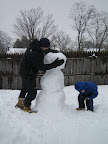
There was sunshine on the beach, too...but still in our snowboots. Hello March and bring on the spring fever.
Subscribe to:
Posts (Atom)
