“Everybody's talking at me,
I don't hear a word they're saying,
Only the echoes of my mind.” (“Everybody’s Talkin” – Harry Nilsson)
If adware, malware, and spyware are bad, can myware (spyware you use to track your own path through the electronic universe) be good? An interesting piece on Business2blog discusses the potential value of conveniently tracking your own surfing history, listening habits, etc. electronically so you -- or your social network or other third party you authorize -- can exploit your trail in the future. B2B’s conclusion is worth quoting:
“We are going to be seeing a lot more companies that help you do creative things with your clickstream (the history of your online behavior). Some will give you complete control over how your data is used. Others will entice you with a cool service to capture that data so that they can then resell it.”
The ultimate currency in this e-trails economy is called by some “personomies,” defined as “digital manifestations of an individual. Personomies combine identity (who you are), activity (what you do) and sociality (who you know). They include emails, contacts, blog posts, comments, purchases, page views, forms filled, bookmarks, ads clicked, chats, feeds subscribed and more,” and some interesting aspects of personomies can be found on a blog of the same name (the blog is also the source of the definition quoted above).
Storing and sharing personal information necessarily invites addressing the issue of trustworthiness. The individual needs to trust that they control their personal information, and that they can rely on the assurances of privacy, etc. of any third parties the individual explicitly authorizes to access their history. Likewise third parties want authentic information – real users, real usage patterns.
Librarians traditionally have been very mindful of privacy and anonymity, and have sought to aggressively guard our users’ history of information seeking -- typically by routinely erasing transactions from our systems. History and present circumstances give ample credence to our fears of intrusive government interest in the reading habits of individual users. And there are more than a few cautionary tales from the Web (see for example a very interesting, even frightening item entitled “Data Mining 101: Finding Subversives with Amazon Wishlists,” describing the ease with which Amazon wish lists potentially could be exploited to discover individual reading interests).
Still, it may be argued that in pursuit of privacy libraries do their users some disservice – an individual’s information-seeking/reading habits could be leveraged to improve personalization, significantly enhance library-based recommendation systems, and help libraries optimize acquisition, collection development, and other aspects of library services in ways that gross circulation statistics, numbers of libraries that hold the item in WorldCat, etc. – useful as these may be -- cannot.
Are we striking the right balance of privacy vs. making data work harder? Are there options as yet not fully explored that would allow us to protect privacy but leverage user information more fully?
Wednesday, January 18, 2006


Are You a Librarian?
Over on PUBLIB, there has been a discussion of a quiz called, "Are You a Librarian?" After more than three decades in the profession, I scored a 72%, good enough for their ranking of "Assistant Librarian." I quote from my results:
"You seem to be a librarian, but you are not as knowledgeable as your more devoted colleagues in some of the library lore, trivia, technical details and social knowledge that can give depth and perspective to ones professional identity; but your practical knowledge of your job may be quite excellent."
On the other hand, I outscored 99% of the other quiz takers of my age and gender.
One drawback is that you don't find out which questions you answered wrong. Otherwise, this is a fun way to waste fifteen minutes or so. Twenty, if you blog about it afterwards!
"You seem to be a librarian, but you are not as knowledgeable as your more devoted colleagues in some of the library lore, trivia, technical details and social knowledge that can give depth and perspective to ones professional identity; but your practical knowledge of your job may be quite excellent."
On the other hand, I outscored 99% of the other quiz takers of my age and gender.
One drawback is that you don't find out which questions you answered wrong. Otherwise, this is a fun way to waste fifteen minutes or so. Twenty, if you blog about it afterwards!
Bridging the Chasm
Betsy Barefoot has an article in the online Chronicle Review, titled "Bridging the Chasm: First-Year Students and the Library." (May be password protected...let me know if you can't get in and I'll repost the full story.) In it, she champions the library as essential to first-year students' success, and she essentially takes up the tune we've been singing with our very small academic advocacy work.
Here's an excerpt:
My boldface added. I'm not trying to toot my own horn here...but I am tickled pink to know that we (as the library industry/profession) are not the only ones yakking about how the library is so important--while everyone else in our respective communities quietly keeps on, keepin' on. Other people (at least one) have started the yak!
Here's an excerpt:
The most effective way to ensure that first-year students become information literate is making library instruction an integral part of courses across the curriculum. That integration requires continuing and creative collaboration between librarians and professors. The good news is that a variety of institutions — public and private, large and small — are taking library instruction increasingly seriously. Members of the Association of College and Research Libraries are working with the National Resource Center for the First-Year Experience and Students in Transition at the University of South Carolina to produce a monograph about information-literacy instruction in the first year that will provide models for including library use in courses throughout the curriculum.
My boldface added. I'm not trying to toot my own horn here...but I am tickled pink to know that we (as the library industry/profession) are not the only ones yakking about how the library is so important--while everyone else in our respective communities quietly keeps on, keepin' on. Other people (at least one) have started the yak!
Tuesday, January 17, 2006
Outside Looking In - David Weinberger on the NCSU Catalog
David Weinburger is perhaps the original "superpatron". He has long taken an interest in library matters, particularly classification. In this post at his blog, Joho the Blog, he walks you through the Endeca-enabled presentation of the North Carolina State University library's catalog that so many in our community have blogged about (including Lorcan and Superpatron Edward Velmetti.)
It's always interesting to read outsiders' takes on library innovation, particularly if the outsiders are thoughtful as David and Edward are.
It's always interesting to read outsiders' takes on library innovation, particularly if the outsiders are thoughtful as David and Edward are.


Connecticut Roadshow
Alane and I were fortunate enough to meet a few of the community college librarians in Connecticut last Friday.
We were part of a panel to explore the topic of "Our Roles, They are A-Changin': The Future of Community College Libraries." In addition to Alane and I, panelists included:
Leslie Burger, the ALA President Elect for 2006-2007
Christine Bradley, the Executive Director for the Connecticut Library Consortium
George Cigale, Chairman and CEO of Tutor.com
Broad viewpoints, all. The main theme (to my ears, anyway) was the idea of shifting from a library-or even university-centric outlook to a user-centered one. And to understand that it means doing things differently! (branding, having online tutors available 24/7, working with the larger community context and making sure we actually act rather than committee-ify.)
We must have hit a chord somewhere...we were asked back for February!
For all of you ready for things within the profession to shake-up (aka ALA)...watch for good things from Leslie!
We were part of a panel to explore the topic of "Our Roles, They are A-Changin': The Future of Community College Libraries." In addition to Alane and I, panelists included:
Leslie Burger, the ALA President Elect for 2006-2007
Christine Bradley, the Executive Director for the Connecticut Library Consortium
George Cigale, Chairman and CEO of Tutor.com
Broad viewpoints, all. The main theme (to my ears, anyway) was the idea of shifting from a library-or even university-centric outlook to a user-centered one. And to understand that it means doing things differently! (branding, having online tutors available 24/7, working with the larger community context and making sure we actually act rather than committee-ify.)
We must have hit a chord somewhere...we were asked back for February!
For all of you ready for things within the profession to shake-up (aka ALA)...watch for good things from Leslie!
Monday, January 16, 2006
OCLC Symposium - the Gentlemen Panelists
It's so long since I posted about the female panelists at the upcoming OCLC Symposium at ALA MW that you are forgiven if you've forgotten who they are: Jennifer Rice and Patricia Martin. The post is here. Jennifer has posted on her own blog about preparing for her presentation: "Have you really thought about what would happen to libraries in the Google Age? I bet you (like me) haven't thought about libraries at all. What an interesting challenge; how do we rebrand and reinvent libraries to maintain their relevance? "
So, we are very pleased to have two additional panelists: Antony Brewerton and Omar Wasow. Antony will likely be new to most attendees because he's from the UK. Omar may be familiar to you either because you've heard him on NPR, or because you've heard him at a library event. George heard him speak here in Ohio last year and really enjoyed Omar's talk. Come to think of it, George heard Antony speak in England and spoke highly of his talk, and that's why we asked Antony. So, clearly, if you don't like the presentations, it's George's fault. Conversely, if you love them, then I guess George gets the credit.
 Antony is the is Subject Team Leader for Arts, Social Sciences & Hospitality at Oxford Brookes University Library in the UK. Yes, it's in Oxford. No, it's not that Oxford U. He was previously at the University of Reading where he co-ordinated Library PR and compiled the Library’s successful entry in the Library Association/TC Farris Publicity and Marketing Awards. He has written and lectured on the image of librarians and the marketing of library services. His image-busting article “Wear lipstick, have a tattoo, belly-dance, then get naked: the making of a virtual librarian” won the UK Career Development Group’s Martin Award.
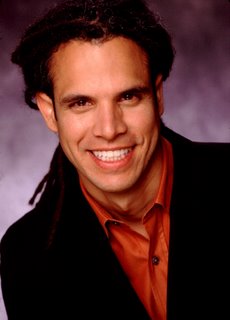 George's post about Omar Wasow's presentation at the Ohio Library Council conference is here, and I think it will give you a good indication of Omar's groove on libraries. Omar is pursuing a doctorate in African American studies and political science at Harvard. In addition to his graduate work, Omar is the co-founder of BlackPlanet.com and an on-air technology analyst. Under Omar’s leadership BlackPlanet.com became the leading site for African Americans. . As a result of his active participation in a number of social issues, particularly the charter school movement, Omar was selected to be a fellow in the Rockefeller Foundation's Next Generation Leadership program.
Now, we've never had to turn people away from a symposium, but registration is inching up! If you like to sit at a table rather than on the floor, come on time!
So, we are very pleased to have two additional panelists: Antony Brewerton and Omar Wasow. Antony will likely be new to most attendees because he's from the UK. Omar may be familiar to you either because you've heard him on NPR, or because you've heard him at a library event. George heard him speak here in Ohio last year and really enjoyed Omar's talk. Come to think of it, George heard Antony speak in England and spoke highly of his talk, and that's why we asked Antony. So, clearly, if you don't like the presentations, it's George's fault. Conversely, if you love them, then I guess George gets the credit.
 Antony is the is Subject Team Leader for Arts, Social Sciences & Hospitality at Oxford Brookes University Library in the UK. Yes, it's in Oxford. No, it's not that Oxford U. He was previously at the University of Reading where he co-ordinated Library PR and compiled the Library’s successful entry in the Library Association/TC Farris Publicity and Marketing Awards. He has written and lectured on the image of librarians and the marketing of library services. His image-busting article “Wear lipstick, have a tattoo, belly-dance, then get naked: the making of a virtual librarian” won the UK Career Development Group’s Martin Award.
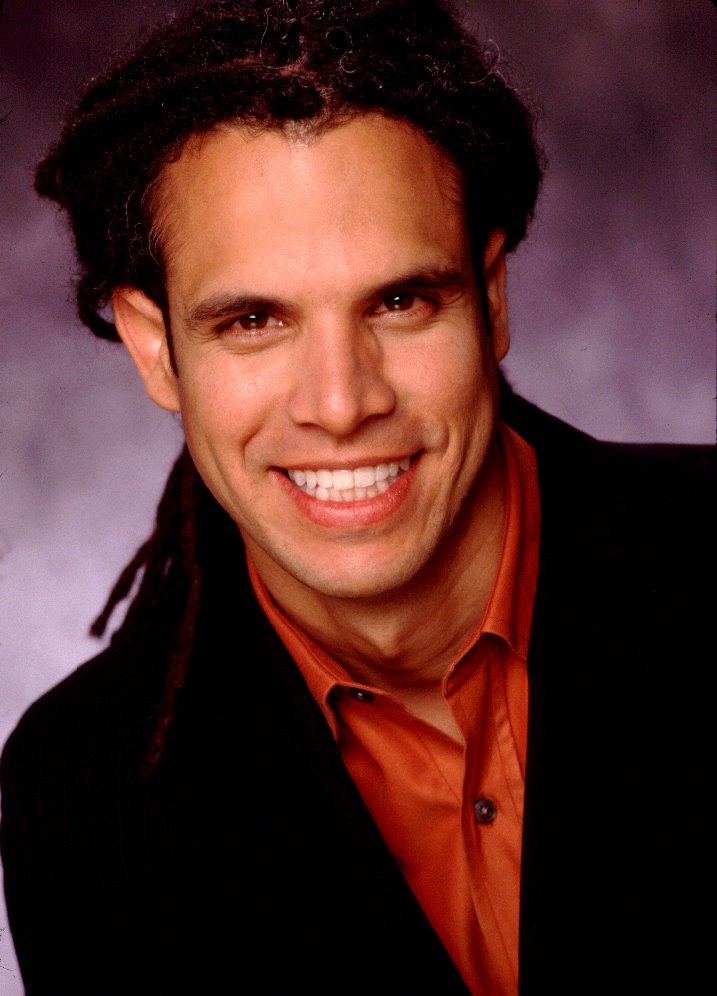 George's post about Omar Wasow's presentation at the Ohio Library Council conference is here, and I think it will give you a good indication of Omar's groove on libraries. Omar is pursuing a doctorate in African American studies and political science at Harvard. In addition to his graduate work, Omar is the co-founder of BlackPlanet.com and an on-air technology analyst. Under Omar’s leadership BlackPlanet.com became the leading site for African Americans. . As a result of his active participation in a number of social issues, particularly the charter school movement, Omar was selected to be a fellow in the Rockefeller Foundation's Next Generation Leadership program.
Now, we've never had to turn people away from a symposium, but registration is inching up! If you like to sit at a table rather than on the floor, come on time!
Thursday, January 12, 2006
Best Jobs of 2006?
According to US News and World Report, quoted on Yahoo! Finance, librarianship is one of the 16 best jobs to have in 2006.
As much as I've loved this career, US News may have a hard time convincing the freshly-minted MLS's who are detailing their struggles to find meaningful work on the nextgenlib or newlib listservs.
Thanks to Wei Bender of OCLC Marketing for passing this news item to me.
As much as I've loved this career, US News may have a hard time convincing the freshly-minted MLS's who are detailing their struggles to find meaningful work on the nextgenlib or newlib listservs.
Thanks to Wei Bender of OCLC Marketing for passing this news item to me.
Wednesday, January 11, 2006
Gerald Hodges
Gerald Hodges, a friend of many years standing, passed away yesterday. As Linda Loman once said, "Attention must be paid."
Gerald was the Associate Executive Director for Communications and Marketing at the American Library Association. Before that, he was the Association's director of Membership Services and Chapter Relations, the role in which I met him when I held a similar job for the Ohio Library Association. Gerald helped me understand the way ALA and state chapters work together on government relations, advocacy, and library promotion. He helped me get into the media training that ALA launched in the early '90s to organize a cadre of librarians who could work effectively with the media. This was some of the best training I've ever had.
When the job of PLA Executive Director came open, Gerald encouraged me to apply and even helped me prep for the interview. I promised him that if I got the job, I'd take him to dinner at his favorite restaurant. We had a boozy, enjoyable dinner several months later, and the friendship was sealed.
Working with Gerald was a pleasure. His approach to work and life were marked by his sense of humor, encyclopedic knowledge of the field, and an apparently bottomless reservoir of patience. He took great and constant delight in his work, his partner Charles, frequent trips to Vegas, and, as his obit on the American Libraries site notes, all things Spanish. He was one of the nattiest dressers in the profession. Gerald in a tux at the ALA President's Inaugural Dinner was a GQ photo spread come to life.
After I left ALA for Michigan, our contacts were less frequent, but when we did see each other, at an ALA conference, or at state association conferences, or at a meeting at ALA about WebJunction a couple of years ago, it was as if we'd never been apart.
What I'll remember most fondly about Gerald is the way his eyes would twinkle when he was about to tell a funny story. He knew that as important as libraries are, life is more important. He had perspective.
The best way to memorialize Gerald will be to go to San Antonio for Midwinter and skip a meeting. Instead, go out and have a few laughs with friends that you don't see often enough.
Gerald was the Associate Executive Director for Communications and Marketing at the American Library Association. Before that, he was the Association's director of Membership Services and Chapter Relations, the role in which I met him when I held a similar job for the Ohio Library Association. Gerald helped me understand the way ALA and state chapters work together on government relations, advocacy, and library promotion. He helped me get into the media training that ALA launched in the early '90s to organize a cadre of librarians who could work effectively with the media. This was some of the best training I've ever had.
When the job of PLA Executive Director came open, Gerald encouraged me to apply and even helped me prep for the interview. I promised him that if I got the job, I'd take him to dinner at his favorite restaurant. We had a boozy, enjoyable dinner several months later, and the friendship was sealed.
Working with Gerald was a pleasure. His approach to work and life were marked by his sense of humor, encyclopedic knowledge of the field, and an apparently bottomless reservoir of patience. He took great and constant delight in his work, his partner Charles, frequent trips to Vegas, and, as his obit on the American Libraries site notes, all things Spanish. He was one of the nattiest dressers in the profession. Gerald in a tux at the ALA President's Inaugural Dinner was a GQ photo spread come to life.
After I left ALA for Michigan, our contacts were less frequent, but when we did see each other, at an ALA conference, or at state association conferences, or at a meeting at ALA about WebJunction a couple of years ago, it was as if we'd never been apart.
What I'll remember most fondly about Gerald is the way his eyes would twinkle when he was about to tell a funny story. He knew that as important as libraries are, life is more important. He had perspective.
The best way to memorialize Gerald will be to go to San Antonio for Midwinter and skip a meeting. Instead, go out and have a few laughs with friends that you don't see often enough.
More on Newspapers - Fishwrap?
If you visit here often, you'll know that I keep an eye on what is written about newspapers. I do so because newspapers require readers, because they are a 19th century innovation (at least in terms of mass production and adoption) struggling into the 21st, and because both those challenges seem to me to have relevance to libraries. "People will always read print books" is a mantra we all hear, but increasingly, at least for the sister media of newspapers, that is not assumed.
In a longish essay called "Are Newspapers Doomed," (published in Commentary), the author Joseph Epstein suggests some reasons that print newspapers--at least as we know them--may not continue much longer. He links the change in appetite for print newspapers to, among other things, the blogosphere:
Well worth reading.
In a longish essay called "Are Newspapers Doomed," (published in Commentary), the author Joseph Epstein suggests some reasons that print newspapers--at least as we know them--may not continue much longer. He links the change in appetite for print newspapers to, among other things, the blogosphere:
[T]he young are hardly alone in turning away from newspapers. Nor are they alone responsible for the dizzying growth of the so-called blogosphere, said to be increasing by 70,000 sites a day (according to the search portal technorati.com). In the first half of this year alone, the number of new blogs grew from 7.8 to 14.2 million. And if the numbers are dizzying, the sheer amount of information floating around is enoughto give a person a serious case of Newsheimers.But this isn't an essay on journalism versus blogging. It's much broader and perhaps, a lament for the glory days of newpaper journalism: "About our newspapers as they now stand, little more can be said in their favor than that they do not require batteries to operate, you can swat flies with them, and they can still be used to wrap fish."
Astonishing results are reported when news is passed from one blog to another: scores if not hundreds of thousands of hits, and, on sites that post readers’ reactions, responses that can often be more impressive in research and reasoning than anything likely to turn up in print. Newspaper journalists themselves often get their stories from blogs, and bloggers have been extremely useful in verifying or refuting the erroneous reportage of mainstream journalists.
Well worth reading.
The day passes
“Le jour se passe, les jours se lassent.”
(“Les ciels de traîne” – Autour de Lucie)
[English translation of the lyrics: “The day passes, the days grow weary.”]
I note with sadness that after two years the blog BiblioAcid will cease – for various reasons including a sense by the authors that the blog’s scope and nature was of a time, and the blog and authors needed to transition. While admittedly my mediocre French leaves some details of certain postings beyond my ready grasp, Marlène Delhaye’s & Nicolas Morin’s insightful coverage of topics of interest in both the Anglo- & Franco-library and IT spheres was unique and frequently alerted me to things I’d missed or was not likely to have come upon. Reading BiblioAcid also gave me a chance to refresh and expand my limited repertoire of IT and library-related technical French.
In their final post the authors reflect on BiblioAcid’s role in facilitating the emergence of blogging by librarians, and its impact on Marlène’s & Nicolas’s own “brand” as professionals. I’m pleased that the BiblioAcid posts will be archived, and that each author will continue to blog on their own – marlene’s corner and morinn.
Marlène & Nicolas, merci et bonne chance!
(“Les ciels de traîne” – Autour de Lucie)
[English translation of the lyrics: “The day passes, the days grow weary.”]
I note with sadness that after two years the blog BiblioAcid will cease – for various reasons including a sense by the authors that the blog’s scope and nature was of a time, and the blog and authors needed to transition. While admittedly my mediocre French leaves some details of certain postings beyond my ready grasp, Marlène Delhaye’s & Nicolas Morin’s insightful coverage of topics of interest in both the Anglo- & Franco-library and IT spheres was unique and frequently alerted me to things I’d missed or was not likely to have come upon. Reading BiblioAcid also gave me a chance to refresh and expand my limited repertoire of IT and library-related technical French.
In their final post the authors reflect on BiblioAcid’s role in facilitating the emergence of blogging by librarians, and its impact on Marlène’s & Nicolas’s own “brand” as professionals. I’m pleased that the BiblioAcid posts will be archived, and that each author will continue to blog on their own – marlene’s corner and morinn.
Marlène & Nicolas, merci et bonne chance!
Tuesday, January 10, 2006
The (Fine) Killer Strikes Again!
My post about library fines has sparked more interest than anything on this blog in a long time. Talk about a good news/bad news situation. I love the action, but I wish it could be about some new and challenging service, or a discussion of Library 2.0 as thoughtful and well-reasoned as Walt Crawford's, or anything as intellectually stimulating as Lorcan seems to be able to so effortlessly toss off. Nope, we're down here in nickel and dime land. *sigh*
OK, let me respond to several of the comments that have been made on my piece, and, with her permission, on Alane's follow-up.
First, my comments were about public libraries. I know that academic and public libraries work in very different ways, and the need for a piece of information in demand by everyone registered in one class might require a more sophisticated system of sanctions to function.
Second, I have no problem with sending a notice to Patron A that Patron B has put a hold on an item, and could you please return it?
But that's as far as I'm willing to back off. Yes, I do sincerely think that fines should go. In fact, when I was a library director in Ohio back in the 1980s, and times were relatively flush, I proposed just such a scheme to my board. And I got shot down almost immediately, for most of the reasons cited by the commentators on my post.
Fines seem to bring out our most evangelical fervor. Look at the language people use to describe why we can't dump fines:
I do sincerely believe that anything that creates a perception of a barrier between the user and the library needs to come down. And one of the things that people repeatedly cite as a reason not to use libraries is overdue fines. Sure, more parking, longer hours, and an unlimited supply of the latest best sellers and videos wouldn't hurt either. But one thing at a time, OK?
OK, let me respond to several of the comments that have been made on my piece, and, with her permission, on Alane's follow-up.
First, my comments were about public libraries. I know that academic and public libraries work in very different ways, and the need for a piece of information in demand by everyone registered in one class might require a more sophisticated system of sanctions to function.
Second, I have no problem with sending a notice to Patron A that Patron B has put a hold on an item, and could you please return it?
But that's as far as I'm willing to back off. Yes, I do sincerely think that fines should go. In fact, when I was a library director in Ohio back in the 1980s, and times were relatively flush, I proposed just such a scheme to my board. And I got shot down almost immediately, for most of the reasons cited by the commentators on my post.
Fines seem to bring out our most evangelical fervor. Look at the language people use to describe why we can't dump fines:
- "Inducing a sense of responsibility."
- "How about encouraging a little personal responsibility on the part of the patrons instead of blaming the libraries for following their policies?"
- "Users have the obligation to share library resources with others in the community, and to exercise good judgment in the use of library resources."
I do sincerely believe that anything that creates a perception of a barrier between the user and the library needs to come down. And one of the things that people repeatedly cite as a reason not to use libraries is overdue fines. Sure, more parking, longer hours, and an unlimited supply of the latest best sellers and videos wouldn't hurt either. But one thing at a time, OK?
Google Bookstore?
From BBC News, reporting from the just-over Consumer Electronic Show (flash stuff on this page)
"Google has suggested it may consider setting up an online book store. Google CEO Eric Schmidt told reporters at the Consumer Electronics Show in Las Vegas that this would depend on permission from copyright holders...Sony is also trying to invigorate demand for e-books. At CES, it launched a new portable device to read e-books and announced deals with major publishers to sell them online. Asked if Google would consider doing something similar, Google CEO Eric Schmidt said: "Subject to permission from the copyright holder, yes. I want to be clear on that."
Hmmmm.
"Google has suggested it may consider setting up an online book store. Google CEO Eric Schmidt told reporters at the Consumer Electronics Show in Las Vegas that this would depend on permission from copyright holders...Sony is also trying to invigorate demand for e-books. At CES, it launched a new portable device to read e-books and announced deals with major publishers to sell them online. Asked if Google would consider doing something similar, Google CEO Eric Schmidt said: "Subject to permission from the copyright holder, yes. I want to be clear on that."
Hmmmm.
Monday, January 09, 2006
When You Put It That Way....
"But it is hard to believe that there will be room in the economy for delivering news by the Rube Goldberg process described above."
Slate writer Michael Kinsley has an amusing description of the "Rube Goldberg process" whereby print newspapers end up on our breakfast tables, in a recent article, "Extra! Extra! The Future of Newspapers." But it is a slightly discomfiting amusement because the process and end product, as he describes it, does now seem a bit absurd, as if we did it this way because we couldn't think of a better way to do it. Will print book publishing seem this way too?
Slate writer Michael Kinsley has an amusing description of the "Rube Goldberg process" whereby print newspapers end up on our breakfast tables, in a recent article, "Extra! Extra! The Future of Newspapers." But it is a slightly discomfiting amusement because the process and end product, as he describes it, does now seem a bit absurd, as if we did it this way because we couldn't think of a better way to do it. Will print book publishing seem this way too?
Saturday, January 07, 2006
Fines Redux
Wading into the fray to support George's opinion...I am not sure how best to provide incentive to borrowers to return material but I am 100% in agreement with George that fines are a lousy way to do it. Tell me all the costs to collect material from delinquent users...less or more than replacement? Most librarians will not be able to answer this.
What do we think we are? The highway patrol? Drivers all know what the rules of the road are, and what the speed limits are. Yet, most of us (even librarians) break some of these rules and limits every single day. When we get caught, do we love our captors? No, I doubt it. Although we know that police officers are upholding laws designed for the common good, we don't feel bathed in the light of this common good when we are pulled over for doing 60 in a 40 zone, do we? We are contrite, and we yet feel anxiety often on spotting police cars. I think anxiety is a very bad state to associate with library use.
Police departments rely heavily on the revenue generated by such fines, but for the love of St. Jerome, do libraries really want to put themselves in the same civic category as police departments? My dad, one of my sisters, and one of my cousins were/are police officers so I have a great deal of respect for this work but I know that in their world there's good guys and bad guys. Nothing in between.
This might be flip, but I do not put never returning a book by Barbara Taylor Bradford into the same category of offense as speeding in a school zone.
I agree with George. Fines have to go. Libraries need to find another way to replace that income even if it means going to the Board and detailing what cannot be done without these funds. The cost of fines to the library's image far outweighs the income generated.
Come on, be truthful...this is really a moral issue, isn't it? People should return material......
What do we think we are? The highway patrol? Drivers all know what the rules of the road are, and what the speed limits are. Yet, most of us (even librarians) break some of these rules and limits every single day. When we get caught, do we love our captors? No, I doubt it. Although we know that police officers are upholding laws designed for the common good, we don't feel bathed in the light of this common good when we are pulled over for doing 60 in a 40 zone, do we? We are contrite, and we yet feel anxiety often on spotting police cars. I think anxiety is a very bad state to associate with library use.
Police departments rely heavily on the revenue generated by such fines, but for the love of St. Jerome, do libraries really want to put themselves in the same civic category as police departments? My dad, one of my sisters, and one of my cousins were/are police officers so I have a great deal of respect for this work but I know that in their world there's good guys and bad guys. Nothing in between.
This might be flip, but I do not put never returning a book by Barbara Taylor Bradford into the same category of offense as speeding in a school zone.
I agree with George. Fines have to go. Libraries need to find another way to replace that income even if it means going to the Board and detailing what cannot be done without these funds. The cost of fines to the library's image far outweighs the income generated.
Come on, be truthful...this is really a moral issue, isn't it? People should return material......
Friday, January 06, 2006
Killing Off Fines Is Long Overdue
There's a very interesting discussion going on over at Librarian in Black about a Wall Street Journal article on library fines (and other government fees). I'll just let you go over and read that discussion, then come on back here for my comments. No, it's fine...I can wait.
(musical interlude)
OK, here goes my rant...
I hate library fines. They represent and embody all of the librarian stereotypes I have loathed for the 34-1/2 years I've been working in and for libraries.
I wish some daring library director or board would try the NetFlix model. You know: you can keep these things as long as you want, but you don't get any more until these come back. Set a limit of 25 books and three videos and five CDs (or whatever seems a reasonable number in your setting), and when the user hits that limit, his or her card is blocked from taking out anything else. But no more overdue fines, no fees, no "retribution" at all. Bring back some of the items, you can take some more.
This kind of publicity hurts us, and it hurts us over and over again. We want to see ourselves as the guardians of the public good, but we end up looking like nitpicking gremlins.
And by the way, despite what one of the respondents on LIB said, when I worked in the Buffalo and Erie County Library in the 1970s, whole families could be (and were) barred from borrowing anything from the library because of one miscreant in the household. And don't think that the circ clerk in my branch didn't enforce that rule like an avenging angel. No skip tracer ever born was better at identifying who lived where than Dorothy Childers.
Even if this is no longer the policy anywhere, people remember this from their youth, and the stigma continues to apply to us all.
(musical interlude)
OK, here goes my rant...
I hate library fines. They represent and embody all of the librarian stereotypes I have loathed for the 34-1/2 years I've been working in and for libraries.
I wish some daring library director or board would try the NetFlix model. You know: you can keep these things as long as you want, but you don't get any more until these come back. Set a limit of 25 books and three videos and five CDs (or whatever seems a reasonable number in your setting), and when the user hits that limit, his or her card is blocked from taking out anything else. But no more overdue fines, no fees, no "retribution" at all. Bring back some of the items, you can take some more.
This kind of publicity hurts us, and it hurts us over and over again. We want to see ourselves as the guardians of the public good, but we end up looking like nitpicking gremlins.
And by the way, despite what one of the respondents on LIB said, when I worked in the Buffalo and Erie County Library in the 1970s, whole families could be (and were) barred from borrowing anything from the library because of one miscreant in the household. And don't think that the circ clerk in my branch didn't enforce that rule like an avenging angel. No skip tracer ever born was better at identifying who lived where than Dorothy Childers.
Even if this is no longer the policy anywhere, people remember this from their youth, and the stigma continues to apply to us all.
Blog Salon & Symposium at ALA MW
Just a reminder: the Blog Salon will be in the OCLC Red Suite on Sunday January 22, beginning at 6pm. The OCLC Red Suite (and our moving it from the Blue Suite to the Red has nothing to do with political affiliations) will be at the Marriot Rivercenter. And, as Walt Crawford rightly pointed out in a comment on Alice's post about the Salon: we can't tell you the number of the suite until mere days before the event. The 3 OCLC suites are not assigned until our intrepid suite organizer, Suzanne Lauer, checks in.
We will post the suite number here at IAG but you can drop by the OCLC booth, 1454, and ask for the suite number, or ask the front desk staff at the Rivercenter.
And aside from the lovely orange OCLC totebags, there will be an additional little momento for you--Alice's idea.
As well as your four IAG hosts, I think Jay Jordan and Cathy De Rosa will be attending for at least part of the gathering. And some of our WebJunction colleagues will be there too.
Finally, if you have the time open in your schedule, please come to the Extreme Makeover OCLC Symposium on Friday, 1:30 - 4:30 pm, Marriott Rivercenter, Salon G-H. I've posted about two of the presenters here, and will post about Omar and Antony, our other two speakers, soon. Registration for the event (and all the other official OCLC events at ALA) is here.
Considering how many librarians regard the words "marketing" and "brand" as inimical to librarianship, it could be a lively session. We'll be trying out a polling system during the symposium...200 lucky attendees will get a "clicker" and so will be able to participate in instant voting on questions posed by the panelists.
We won't be streaming the symposium live, but we will video it and make it available after the conference. But, as Alice has mentioned, we're hoping she'll be podcasting the symposium. And if there are bloggers attending--as I know there are--there maybe blog reports.
We will post the suite number here at IAG but you can drop by the OCLC booth, 1454, and ask for the suite number, or ask the front desk staff at the Rivercenter.
And aside from the lovely orange OCLC totebags, there will be an additional little momento for you--Alice's idea.
As well as your four IAG hosts, I think Jay Jordan and Cathy De Rosa will be attending for at least part of the gathering. And some of our WebJunction colleagues will be there too.
Finally, if you have the time open in your schedule, please come to the Extreme Makeover OCLC Symposium on Friday, 1:30 - 4:30 pm, Marriott Rivercenter, Salon G-H. I've posted about two of the presenters here, and will post about Omar and Antony, our other two speakers, soon. Registration for the event (and all the other official OCLC events at ALA) is here.
Considering how many librarians regard the words "marketing" and "brand" as inimical to librarianship, it could be a lively session. We'll be trying out a polling system during the symposium...200 lucky attendees will get a "clicker" and so will be able to participate in instant voting on questions posed by the panelists.
We won't be streaming the symposium live, but we will video it and make it available after the conference. But, as Alice has mentioned, we're hoping she'll be podcasting the symposium. And if there are bloggers attending--as I know there are--there maybe blog reports.
Thursday, January 05, 2006
Islands passed by
“A warning sign.
It came back to haunt me, and I realised,
That you were an island, and I passed you by.” (“Warning Sign” – Coldplay)
I was turned on to Coldplay by my youngest niece when I saw her over the holidays. I drove, and she organized the music in the rental car – a fair division of labor, I’d say. Some last minute shopping and a trip to see the delightful Chronicles of Narnia: The Lion, the Witch and the Wardrobe made up for the not so pleasant job of navigating Christmas traffic.
Coldplay is a British Pop group with the added bonus of Hollywood celebrity (Gwenyth Paltrow is married to a band member). On my return from the holidays, I thought nothing of doing discovery about the band via the Web, sampling tunes from various albums at an online store, buying an album, A Rush of Blood to the Head, online. And, yes, I could have borrowed a copy from my local library, but I wanted a copy of my very own.
The album’s been great background music as I read/scan my copy of Perceptions of Libraries and Information Resources. There’s a lot of insightful, confirming and at times a bit puzzling reveals in the report. Alane and George have walked through some pieces, and now I’d like to explore a thread myself, the online face of libraries.
Let me start by saying that arguably public access computing (i.e. providing personal computing and general Internet access to users) has been one of the library world’s better deeds (just ask our colleagues at WebJunction and the marvelous community they support). What I’m talking about is surfacing library services/systems and online resources in the users experiences on the Web. The data in the Perceptions report makes it clear that the online resources libraries offer suffer visibility problems.
To that point, here are some illuminating stats from the report (page references in brackets):
Fuzzy knowledge:
Mostly not a clue:
For the poor visibility, there are some interesting indications that the users who actually find their library’s online Web site/online resources are getting some value:
And lastly, I’m still working through the report, but there doesn’t seem to be a lot of emphasis by the users on interfaces, web site organization, or similar quality issues that many of us in the profession complain about. Responses to an open-ended question that asks users to advise their library on potential service improvements reveal that 1% of users would suggest making the local library catalog better. [4-7]
I’m not quite sure what to make of all this – are library online resources reasonably useful, but simply not a resource our users consider first (or even last)? Or are library online offerings suffering from interface, integration, restriction, indexing, or other systemic issues that if addressed would significantly increase the likelihood of discovery and use?
It came back to haunt me, and I realised,
That you were an island, and I passed you by.” (“Warning Sign” – Coldplay)
I was turned on to Coldplay by my youngest niece when I saw her over the holidays. I drove, and she organized the music in the rental car – a fair division of labor, I’d say. Some last minute shopping and a trip to see the delightful Chronicles of Narnia: The Lion, the Witch and the Wardrobe made up for the not so pleasant job of navigating Christmas traffic.
Coldplay is a British Pop group with the added bonus of Hollywood celebrity (Gwenyth Paltrow is married to a band member). On my return from the holidays, I thought nothing of doing discovery about the band via the Web, sampling tunes from various albums at an online store, buying an album, A Rush of Blood to the Head, online. And, yes, I could have borrowed a copy from my local library, but I wanted a copy of my very own.
The album’s been great background music as I read/scan my copy of Perceptions of Libraries and Information Resources. There’s a lot of insightful, confirming and at times a bit puzzling reveals in the report. Alane and George have walked through some pieces, and now I’d like to explore a thread myself, the online face of libraries.
Let me start by saying that arguably public access computing (i.e. providing personal computing and general Internet access to users) has been one of the library world’s better deeds (just ask our colleagues at WebJunction and the marvelous community they support). What I’m talking about is surfacing library services/systems and online resources in the users experiences on the Web. The data in the Perceptions report makes it clear that the online resources libraries offer suffer visibility problems.
To that point, here are some illuminating stats from the report (page references in brackets):
Fuzzy knowledge:
- Of total respondents, 61% know their library has a Web site, 6% don’t think their library has one, and 33% are unsure [2-7]
- Roughly similar responses are offered for whether users know the library has an online catalog or offers online reference materials. [2-7]
Mostly not a clue:
- For e-audiobooks, e-magazines/e-journals, e-books, and virtual reference services, the responses are even more dismal placing the “no” or “not sure” responses combined above 60% (above 70% for virtual reference) for total respondents. The vast majority (50% or higher depending on the resource type) are not sure. [2-7]
- When asked why users did not use their library Web site, for total respondents, 55% don’t know or don’t think their library has Web site, 4% can’t find it, and 25% could find it, but thought other Web sites were superior. [5-3]
For the poor visibility, there are some interesting indications that the users who actually find their library’s online Web site/online resources are getting some value:
- Users who use their library’s Web site to keep up-to-date on library resources [2-28]: Total respondents (3rd highest ranked choice – 25% of users); College students, all regions (1st highest ranked choice – 49%)
- Starting at a Web engine and then finding information via the library Web site: College students, all regions – "Have you ever started your search for information using a search engine and ended up at a library Web site?" Yes: 48%; "If yes, did you use the library Web site?" Yes: 41%, No: 7%; "If yes, did the library Web site fulfill your information needs?" Yes: 37% (10% -- library resources alone, 27% library plus additional resources) No: 4% [2-17]
And lastly, I’m still working through the report, but there doesn’t seem to be a lot of emphasis by the users on interfaces, web site organization, or similar quality issues that many of us in the profession complain about. Responses to an open-ended question that asks users to advise their library on potential service improvements reveal that 1% of users would suggest making the local library catalog better. [4-7]
I’m not quite sure what to make of all this – are library online resources reasonably useful, but simply not a resource our users consider first (or even last)? Or are library online offerings suffering from interface, integration, restriction, indexing, or other systemic issues that if addressed would significantly increase the likelihood of discovery and use?
Wednesday, January 04, 2006
I love to take a photograph
“I got a Nikon camera,
I love to take a photograph” (from “Kodachrome” by Paul Simon)
Well I didn’t want to let the day pass with less than 100% of IAGers posting given our dearth of posts last week. During the last two weeks I spent time with family and friends to celebrate the holidays, captured some of those moments digitally, and for the last two evenings I spent some time uploading pictures to my account on flickr, adding metadata & tags to same, and alerting family members (including several who couldn’t join us) the photos were up.
Compared to more traditional methods, the ease, speed, and low-cost of digital images are hard to beat. And it’s really easy to share the images with folks far and wide. My pics aren’t professional quality, but they’re on par with the pics I’ve taken with fairly expensive film equipment (suggesting sadly that the variable is the lack of a good photographer, not a shortcoming in the equipment). I haven’t used a traditional film camera in two years.
My habits and experiences are apparently not unique. An item in the Business 2.0 blog reports statistics gleaned from a new report by Merrill Lynch:
• Nearly half of all households now own a digital camera
• People are printing more digital photos than ever before (7.7B in 2005 vs. 400K in 2000)
• Retail printing of digital photos is gaining market share from home printing
• Traditional film printing is spiraling downward rapidly (down about 10B units in 5 years)
• The rise in digital printing doesn't offset the fall in traditional -- overall total photo printing has dropped about 5B units in 5 years
The author of the B2B blog piece opines that lowering prices for digital photo printing will stimulate demand, and I won’t disagree, but I think the fundamental problem may be a shift in tastes – standard physical prints may no longer be of strong interest. Amateur photography has probably always been more about sharing than holding. I think the more promising business space, however, is probably helping people manage their digital photos (flickr, Picasa, etc.), enhance the photos (e.g. Adobe Photoshop), and make novel use of them (for example, Qoop allows you to create posters, photobooks, apparel, many people choose personal photos as wallpaper on their computers, cell phones, etc.).
For libraries, the shift to the dominance of the digital photo presents some challenging new preservation issues, and raises issues the digital versions of any resources do – storage, retrieval, rights management, etc. What I admit I don’t know is whether there’s a role for libraries in helping users enjoy and share personal photography (film or digital). Like gaming, it seems like there could be. Any thoughts? Are libraries actively supporting the shutterbugs in their communities?
I love to take a photograph” (from “Kodachrome” by Paul Simon)
Well I didn’t want to let the day pass with less than 100% of IAGers posting given our dearth of posts last week. During the last two weeks I spent time with family and friends to celebrate the holidays, captured some of those moments digitally, and for the last two evenings I spent some time uploading pictures to my account on flickr, adding metadata & tags to same, and alerting family members (including several who couldn’t join us) the photos were up.
Compared to more traditional methods, the ease, speed, and low-cost of digital images are hard to beat. And it’s really easy to share the images with folks far and wide. My pics aren’t professional quality, but they’re on par with the pics I’ve taken with fairly expensive film equipment (suggesting sadly that the variable is the lack of a good photographer, not a shortcoming in the equipment). I haven’t used a traditional film camera in two years.
My habits and experiences are apparently not unique. An item in the Business 2.0 blog reports statistics gleaned from a new report by Merrill Lynch:
• Nearly half of all households now own a digital camera
• People are printing more digital photos than ever before (7.7B in 2005 vs. 400K in 2000)
• Retail printing of digital photos is gaining market share from home printing
• Traditional film printing is spiraling downward rapidly (down about 10B units in 5 years)
• The rise in digital printing doesn't offset the fall in traditional -- overall total photo printing has dropped about 5B units in 5 years
The author of the B2B blog piece opines that lowering prices for digital photo printing will stimulate demand, and I won’t disagree, but I think the fundamental problem may be a shift in tastes – standard physical prints may no longer be of strong interest. Amateur photography has probably always been more about sharing than holding. I think the more promising business space, however, is probably helping people manage their digital photos (flickr, Picasa, etc.), enhance the photos (e.g. Adobe Photoshop), and make novel use of them (for example, Qoop allows you to create posters, photobooks, apparel, many people choose personal photos as wallpaper on their computers, cell phones, etc.).
For libraries, the shift to the dominance of the digital photo presents some challenging new preservation issues, and raises issues the digital versions of any resources do – storage, retrieval, rights management, etc. What I admit I don’t know is whether there’s a role for libraries in helping users enjoy and share personal photography (film or digital). Like gaming, it seems like there could be. Any thoughts? Are libraries actively supporting the shutterbugs in their communities?
Empowering or empowered?
"If the likes of Google (through search and other online analytics) and Apple (through portable devices) taught us anything in 2005 it is that empowering consumers is very good business."
This quote is from an interesting article, "New media to take full control in 2006" published in yesterday's The HollywoodReporter.com Empowering consumers, empowering users...now, there's an idea.
We have here in my corner of the Kilgour building at OCLC, a small collection of promotional stuff libraries do: newspaper ads and mailed material, mostly. And one mailer card Cathy De Rosa and I were looking at recently was created to encourage people to renew their library cards. In person. As the only option. Not even by Pony Express.
Isn't this just a tad nineteenth century? Well, perhaps, but maybe this library system is waiting for a better way to empower their users.
Ok, how about renewing books? The mailer card says one of the benefits from renewing library cards is being able to renew books by phone. As the only option. Now, I happen to know that it is possible--and has been for some time--to renew material on the web site of this library. So, why the heck wouldn't this promotional piece of paper say so??! Was there an assumption that most people receiving the mailer wouldn't have a clue what the web was? Who knows? But all in all, the mailer was not a testament to an institution serious about empowering users.
"Empowering users..." It's a quaint phrase anyway. Our users hardly need to be empowered by us. They come that way, empowered by technologies outside of our domain, and empowered by all the various motives that drive people to do things for themselves, rather than seeking out "the experts." What we need to do is empower our systems and services so that they are attractive to users of all kinds. Wait! How about before we do all that empowering we all have a big think about what those services and systems should be and who they're designed for?
Here's the library services and systems Private Citizen Alane uses:
- Circulation to check out, holds and renew (my preference is to do this without humans)
- Look stuff up (a pain always because of either way too many steps or because of the indexing)
That's it.
This quote is from an interesting article, "New media to take full control in 2006" published in yesterday's The HollywoodReporter.com Empowering consumers, empowering users...now, there's an idea.
We have here in my corner of the Kilgour building at OCLC, a small collection of promotional stuff libraries do: newspaper ads and mailed material, mostly. And one mailer card Cathy De Rosa and I were looking at recently was created to encourage people to renew their library cards. In person. As the only option. Not even by Pony Express.
Isn't this just a tad nineteenth century? Well, perhaps, but maybe this library system is waiting for a better way to empower their users.
Ok, how about renewing books? The mailer card says one of the benefits from renewing library cards is being able to renew books by phone. As the only option. Now, I happen to know that it is possible--and has been for some time--to renew material on the web site of this library. So, why the heck wouldn't this promotional piece of paper say so??! Was there an assumption that most people receiving the mailer wouldn't have a clue what the web was? Who knows? But all in all, the mailer was not a testament to an institution serious about empowering users.
"Empowering users..." It's a quaint phrase anyway. Our users hardly need to be empowered by us. They come that way, empowered by technologies outside of our domain, and empowered by all the various motives that drive people to do things for themselves, rather than seeking out "the experts." What we need to do is empower our systems and services so that they are attractive to users of all kinds. Wait! How about before we do all that empowering we all have a big think about what those services and systems should be and who they're designed for?
Here's the library services and systems Private Citizen Alane uses:
- Circulation to check out, holds and renew (my preference is to do this without humans)
- Look stuff up (a pain always because of either way too many steps or because of the indexing)
That's it.
Establish a "Signage Czar"
And other good insights into how to make your physical library space more user-oriented. Of course, this Library Journal online article "Power Users" champions the approach we've all been soapboxing for years now--but it's good to see it filter into mainstream library conscience.
Is it "dumbing down" the system?
Absolutely!
Will it make the system more accessible for people who do not want to learn the secret library codes--but really just want to find some information on a certain subject?
Absolutely!
Paco Underhill and so much more. Read the piece as a warm-up to the OCLC Symposium...which I am meant to be figuring out how we can podcast live from San Antonio...
Okay, let's hear it. Read the article and then weigh in here--on the very provocative subhead in the article: WAS Dewey the Anti-Christ?
Why or Why not?
Is it "dumbing down" the system?
Absolutely!
Will it make the system more accessible for people who do not want to learn the secret library codes--but really just want to find some information on a certain subject?
Absolutely!
Paco Underhill and so much more. Read the piece as a warm-up to the OCLC Symposium...which I am meant to be figuring out how we can podcast live from San Antonio...
Okay, let's hear it. Read the article and then weigh in here--on the very provocative subhead in the article: WAS Dewey the Anti-Christ?
Why or Why not?
"Public Use of the Library and Other Sources of Information"
Alane's post below reminded me of two things: first, I made a conscious effort not to write anything beyond thank you notes while I was off for the holidays, and I make no apologies for that!
Second, there is another report of the same vintage as the Public Library Inquiry that reinforces the report Alane references. Public Use of the Library and Other Sources of Information, by Angus Campbell and Charles A. Metzner (Ann Arbor: University of Michigan Institute for Social Research, 1950) "presents the major findings of a survey undertaken by the Survey Research Council for the Public Library Inquiry." The field work was done in 1947, and was delivered to the Public Library Inquiry in 1948.
However, I see the differences between the two reports as indicating some important strides libraries have made in the past half century. Two key examples: The 1947 results indicated that about one fifth of adults in the US had a library card. Compare that to the 75% of US respondents to the Perceptions of Libraries and Information Resources survey who say they have library cards. In the OCLC report, 73% of the respondents said that had visited a public library in the previous year; in 1947, only 18% reported that they had done so. The 1947 report also said that library use was "highly concentrated among a small percentage of the population," that percentage being the highly educated book readers. Obviously, libraries have broadened their nets to draw in more users.
There is considerable discussion in the OCLC report of the library brand equaling "books." No great surprise there, despite our best efforts to become more relevant. (Ladle on as much irony as you'd care to here.) The interesting thing to me is that the 1947 report, like the OCLC report, asked people to make suggestions about what libraries could do to make themselves more attractive. In several cases, the answers given in both surveys are exactly the same: advertise more; have more current materials; be open longer/more convenient hours. But in several cases, the 1947 report pointed directly to changes that librarians have made. In 1947, people wanted to be able to view and rent movies at the library. They wanted to be able to borrow records. They wanted to have study groups, and group meeting space in the library. Over the last decades, public libraries have added all these services, and the results can be seen in the expanded participation numbers in the OCLC report.
The biggest consistency has been in people failing to see libraries as a primary information source. Librarians have not been able to make the leap from being a storehouse of recorded information (books, magazines, videos, audios) to being an active partner in the information gathering and evaluating process. The ubiquity of the web is making it even less likely that a formal institution like the library, with all our rules, service policies, limited hours, and other historical baggage, is ever going to change that.
The best use of the Perceptions report is to use a triage approach. Look at what respondents have said they want, and then figure out: a.) what you already offer but that you need to be more "in your face" about advertising; b.) what you could do by realigning resources, eliminating redundancies, or changing legacy policies; and c.) pipedreams. Just make sure not to confuse what you can't do (pipedreams) with what you don't want to do (because it's always been done this way)!
Second, there is another report of the same vintage as the Public Library Inquiry that reinforces the report Alane references. Public Use of the Library and Other Sources of Information, by Angus Campbell and Charles A. Metzner (Ann Arbor: University of Michigan Institute for Social Research, 1950) "presents the major findings of a survey undertaken by the Survey Research Council for the Public Library Inquiry." The field work was done in 1947, and was delivered to the Public Library Inquiry in 1948.
However, I see the differences between the two reports as indicating some important strides libraries have made in the past half century. Two key examples: The 1947 results indicated that about one fifth of adults in the US had a library card. Compare that to the 75% of US respondents to the Perceptions of Libraries and Information Resources survey who say they have library cards. In the OCLC report, 73% of the respondents said that had visited a public library in the previous year; in 1947, only 18% reported that they had done so. The 1947 report also said that library use was "highly concentrated among a small percentage of the population," that percentage being the highly educated book readers. Obviously, libraries have broadened their nets to draw in more users.
There is considerable discussion in the OCLC report of the library brand equaling "books." No great surprise there, despite our best efforts to become more relevant. (Ladle on as much irony as you'd care to here.) The interesting thing to me is that the 1947 report, like the OCLC report, asked people to make suggestions about what libraries could do to make themselves more attractive. In several cases, the answers given in both surveys are exactly the same: advertise more; have more current materials; be open longer/more convenient hours. But in several cases, the 1947 report pointed directly to changes that librarians have made. In 1947, people wanted to be able to view and rent movies at the library. They wanted to be able to borrow records. They wanted to have study groups, and group meeting space in the library. Over the last decades, public libraries have added all these services, and the results can be seen in the expanded participation numbers in the OCLC report.
The biggest consistency has been in people failing to see libraries as a primary information source. Librarians have not been able to make the leap from being a storehouse of recorded information (books, magazines, videos, audios) to being an active partner in the information gathering and evaluating process. The ubiquity of the web is making it even less likely that a formal institution like the library, with all our rules, service policies, limited hours, and other historical baggage, is ever going to change that.
The best use of the Perceptions report is to use a triage approach. Look at what respondents have said they want, and then figure out: a.) what you already offer but that you need to be more "in your face" about advertising; b.) what you could do by realigning resources, eliminating redundancies, or changing legacy policies; and c.) pipedreams. Just make sure not to confuse what you can't do (pipedreams) with what you don't want to do (because it's always been done this way)!
Tuesday, January 03, 2006
Synchronicity
Funny--I was just composing a post when Alane published hers.
Yes friends, today is the day when we celebrate the fact that my parents were brave enough to risk the great unknown, ["a 2nd child! How can the second ever live up to the wonderful-ness of the first?"] and that I have lived to tell the tale thus far. Birthdays are so fun. Too bad American culture does not also celebrate Name Days, like they do other places.
Had planned to give you a morsel of the Perceptions report that has stuck in my craw over the holidays...perhaps it will stick in yours, too, and together we can figure out what to make of it. It lines up with one of the quotations Alane posted:
FRIENDS! Friends as an authoritative source for all knowledge? I never would have pegged myself as relying on friends instead of *real* sources. But then again, I started to think about my own information-seeking habits.
In fact, I do rely on friends for most things. Heck, I ask my friends questions on
* medical advice [starve a fever, feed a cold?]
* home decorating [do you know how hard it is to make your own insulated drapes?]
* technology [how can I transfer MY iTunes downloads to YOUR computer?]
* entertainment [is that movie worth seeing? Yes for Walk the Line.]
* DIY [how exactly do I seal the ductwork that is within the walls?]
* and especially matters-of-the-heart/relationship questions [no comment]...
It dawns on me--these are all the types of questions that I have turned to my local public library for, for answers. But yes, it's usually only after I have nosed around with family/friends for initial opinions!
61%.
The Librarian was ranked lowest, at 8%, as a source of info about electronic resources. Ouch!
Yes friends, today is the day when we celebrate the fact that my parents were brave enough to risk the great unknown, ["a 2nd child! How can the second ever live up to the wonderful-ness of the first?"] and that I have lived to tell the tale thus far. Birthdays are so fun. Too bad American culture does not also celebrate Name Days, like they do other places.
Had planned to give you a morsel of the Perceptions report that has stuck in my craw over the holidays...perhaps it will stick in yours, too, and together we can figure out what to make of it. It lines up with one of the quotations Alane posted:
"61% of all respondents learn about electronic information sources from friends."
[page 1-19 Perceptions report]
FRIENDS! Friends as an authoritative source for all knowledge? I never would have pegged myself as relying on friends instead of *real* sources. But then again, I started to think about my own information-seeking habits.
In fact, I do rely on friends for most things. Heck, I ask my friends questions on
* medical advice [starve a fever, feed a cold?]
* home decorating [do you know how hard it is to make your own insulated drapes?]
* technology [how can I transfer MY iTunes downloads to YOUR computer?]
* entertainment [is that movie worth seeing? Yes for Walk the Line.]
* DIY [how exactly do I seal the ductwork that is within the walls?]
* and especially matters-of-the-heart/relationship questions [no comment]...
It dawns on me--these are all the types of questions that I have turned to my local public library for, for answers. But yes, it's usually only after I have nosed around with family/friends for initial opinions!
61%.
The Librarian was ranked lowest, at 8%, as a source of info about electronic resources. Ouch!
Alane's Back....
So, I leave for a little break and what do I see on my return? No posts since December 21....an eon in blogtime. Since I have not seen (in person) or "seen" (on email) any of my blogging colleagues, I will assume they were all doing real world things over the holiday period and, in keeping with the season, chastise them not. Besides, it's Alice's birthday today and that means she can do as she pleases.
Actually she just emailed me, confessing she was the secret Santa who sent me The Romance of Libraries, the brainchild of my friend Madeleine Lefebvre, who heads up the library at St Mary's U in Halifax, Nova Scotia. Madeleine edited this compilation of accounts of love in and of libraries, and I read it on the Chicago-Vancouver leg of my outbound holiday flight. And I left that copy with a retired librarian friend on New Year's Eve, after swanky drinks and snacks in the Fairmont Hotel at the Vancouver airport. So, I was thrilled to get another copy and I mean to get it autographed by Madeleine at ALA Midwinter.
One of the books I read in the early part of December is called The Library's Public. It was published in 1949, and is one of several volumes written about the results of The Public Library Inquiry, a national (US) survey conducted by the Social Science Research Council of the University of Michigan, at the request of ALA. This particular volume includes not only the results of the national survey mentioned above, but also the results of an analysis of all the studies of library use and users published since 1930.
And I'll not leave you in suspense. Nothing, but nothing has changed. Oh, technology has changed. The media collected by libraries and used by people has changed. But, the attitudes? The use of collections? The place--or not--of libraries in peoples' lives? Hardly a wiggle in the health-o-meter. What this means in a big sense I have yet to wrap my head around...it does suggest that We (that's the collective "we") have been barking up the same trees, tilting at the same windmills, denouncing the same media and communication innovations for decades. And that We know as little about our publics as We did 50+ years ago, and that presented with data that tells us about the people We apparently serve, many chose and choose to disbelieve. The author, Dr. Bernard Berelson (the then-Dean of the Library School at the U of Chicago) comments:
So, if you've dipped into the OCLC Perceptions of Libraries and Information Resources report and been surprised by the data, then I suggest you read Berelson's report. You'll be even more surprised. A few quotes--remember this research was done before 1949:
- "Of the five major public media of communication, [books, magazines, newspapers, movies, radio] book reading is the most limited in terms of total population...book reading is not an activity of the majority of Americans today."
- "Yet, not all people turn to formal media when they need information on various topics. In fact, the majority of a national sample of the population indicated that they would try other sources of information--usually friends or experts--rather than any of the mass media if they needed to know something about four selected subjects. The public library was specifically mentioned as a source by only a small minority of those questioned, and the following conclusion was drawn: The library appears to be lacking in salience to many people--it wouldn't occur to them to go there."
- "The young use the library more than the old, the better educated more than the lesser eductaed, and women a little more than, and differently from, men. The public library serves the middle class, defined either by occupation or by economic status, more than either the upper or the lower classes."
- "Only a relatively few people use the card catalogue with any regularity or rely on the librarian for reading guidance."
- "To a greater extent than ever before, people read newspapers and magazines, see films, and listen to the radio. These media provide recreation, information, and education to a greater or lesser degree; and they thus represent, in a special sense, competitors of the public library. "
- "There is no single public of library users; there are several publics. This is not simply a nice semantic distinction. It is central to the problem of the values and the objectives of public library service; it is the key to the 'philosophy of public librarianship'...Librarians have the problem of designating the library's publics to whom more or less consideration will be given. It is a matter of ranking the library's actual and potential publics in a value hierarchy."
And it was this last quote that made the reins from several hobby horses come together for me, because is it not this professional devotion to the philosophy of all publics are served that makes it impossible for any public library to serve adequately any public? The idea of ranking services and publics in a "value hierarchy" will be as repugnant to many librarians now as it likely was in 1950. But there it is...in the words of David Byrne of Talking Heads: Same as it ever was...Same as it ever was...Same as it ever was...Same as it ever was...Same as it ever was...Same as it ever was...Same as it ever was...Same as it ever was... "These studies [writes Dr Berelson] also indicate that the general public has little knowledge about the public library and its services and seems to regard the public library as a fine thing for a community to have--for other people to use."
Actually she just emailed me, confessing she was the secret Santa who sent me The Romance of Libraries, the brainchild of my friend Madeleine Lefebvre, who heads up the library at St Mary's U in Halifax, Nova Scotia. Madeleine edited this compilation of accounts of love in and of libraries, and I read it on the Chicago-Vancouver leg of my outbound holiday flight. And I left that copy with a retired librarian friend on New Year's Eve, after swanky drinks and snacks in the Fairmont Hotel at the Vancouver airport. So, I was thrilled to get another copy and I mean to get it autographed by Madeleine at ALA Midwinter.
One of the books I read in the early part of December is called The Library's Public. It was published in 1949, and is one of several volumes written about the results of The Public Library Inquiry, a national (US) survey conducted by the Social Science Research Council of the University of Michigan, at the request of ALA. This particular volume includes not only the results of the national survey mentioned above, but also the results of an analysis of all the studies of library use and users published since 1930.
And I'll not leave you in suspense. Nothing, but nothing has changed. Oh, technology has changed. The media collected by libraries and used by people has changed. But, the attitudes? The use of collections? The place--or not--of libraries in peoples' lives? Hardly a wiggle in the health-o-meter. What this means in a big sense I have yet to wrap my head around...it does suggest that We (that's the collective "we") have been barking up the same trees, tilting at the same windmills, denouncing the same media and communication innovations for decades. And that We know as little about our publics as We did 50+ years ago, and that presented with data that tells us about the people We apparently serve, many chose and choose to disbelieve. The author, Dr. Bernard Berelson (the then-Dean of the Library School at the U of Chicago) comments:
In addition, there is one general deficiency in the literature which this review has made strikingly apparent; that is, the concentration of the studies upon which certain kinds of problems, but not others, and mainly upon those dealing with the characteristics of the library's clientele. This has given rise in library circles to some deprecation of what are called quantitative results. Many conscientious and responsible librarians have disparaged research of the kind reported here because of its "quantitative" nature, asserting that book reading and library service are too subtle and too "subjective" to warrant such treatment. [p113 in the Columbia U Press edition]
So, if you've dipped into the OCLC Perceptions of Libraries and Information Resources report and been surprised by the data, then I suggest you read Berelson's report. You'll be even more surprised. A few quotes--remember this research was done before 1949:
- "Of the five major public media of communication, [books, magazines, newspapers, movies, radio] book reading is the most limited in terms of total population...book reading is not an activity of the majority of Americans today."
- "Yet, not all people turn to formal media when they need information on various topics. In fact, the majority of a national sample of the population indicated that they would try other sources of information--usually friends or experts--rather than any of the mass media if they needed to know something about four selected subjects. The public library was specifically mentioned as a source by only a small minority of those questioned, and the following conclusion was drawn: The library appears to be lacking in salience to many people--it wouldn't occur to them to go there."
- "The young use the library more than the old, the better educated more than the lesser eductaed, and women a little more than, and differently from, men. The public library serves the middle class, defined either by occupation or by economic status, more than either the upper or the lower classes."
- "Only a relatively few people use the card catalogue with any regularity or rely on the librarian for reading guidance."
- "To a greater extent than ever before, people read newspapers and magazines, see films, and listen to the radio. These media provide recreation, information, and education to a greater or lesser degree; and they thus represent, in a special sense, competitors of the public library. "
- "There is no single public of library users; there are several publics. This is not simply a nice semantic distinction. It is central to the problem of the values and the objectives of public library service; it is the key to the 'philosophy of public librarianship'...Librarians have the problem of designating the library's publics to whom more or less consideration will be given. It is a matter of ranking the library's actual and potential publics in a value hierarchy."
And it was this last quote that made the reins from several hobby horses come together for me, because is it not this professional devotion to the philosophy of all publics are served that makes it impossible for any public library to serve adequately any public? The idea of ranking services and publics in a "value hierarchy" will be as repugnant to many librarians now as it likely was in 1950. But there it is...in the words of David Byrne of Talking Heads: Same as it ever was...Same as it ever was...Same as it ever was...Same as it ever was...Same as it ever was...Same as it ever was...Same as it ever was...Same as it ever was... "These studies [writes Dr Berelson] also indicate that the general public has little knowledge about the public library and its services and seems to regard the public library as a fine thing for a community to have--for other people to use."
Wednesday, December 21, 2005
EVOLUTION
So glad that, in the midst of governmental spying rumors (those rumors that involve OCLC ILL are quite unfounded), transit strikes in NYC and Ariel Sharon having a stroke--
we can say MONKEYS in a science classroom, free and clear.
we can say MONKEYS in a science classroom, free and clear.
Tuesday, December 20, 2005
Zombies on your site?
A beautiful hunk of writing about meaningless copy from A List Apart.
Wise words to live by, even though it takes aim at business sites instead of library sites. We all fallinto zombie-traps now and then. It's the nature of the enabled, leveraged beast.
I should print this sucker and reread it anytime I start to open my mouth onto a blank page.
And interestingly, this gem comes on a day when I was forced down into the syntax rule books for citations...would you believe that a lot of bibliographic manuals still espouse underlining for book titles? I had dismissed it years ago, with the advent of hyperlinks!
So. Good lessons for me on this day.
Wise words to live by, even though it takes aim at business sites instead of library sites. We all fallinto zombie-traps now and then. It's the nature of the enabled, leveraged beast.
I should print this sucker and reread it anytime I start to open my mouth onto a blank page.
And interestingly, this gem comes on a day when I was forced down into the syntax rule books for citations...would you believe that a lot of bibliographic manuals still espouse underlining for book titles? I had dismissed it years ago, with the advent of hyperlinks!
So. Good lessons for me on this day.
Monday, December 19, 2005
Wanna better internet? You belong at a 5%-Google-owned America Online
Julia Roberts's reassuring voice on AOL's recent tv commercials has made even me start to move my brand-o-meter for AOL from "in the toilet, stop sending me irritating CDs in the mail" to "mildly unnecessary but no longer annoying."
Which of course is a huge jump upward. Now, with the news leaked that Google has bought a 5% share in AOL, it makes me think I'm not the only one who noticed!
Of course, it's probably just the "Coke vs. Pepsi" of the 2000's...but still, Google giving it up for branded logo-placement of AOL content on their page, make me think the pressure to perform for stockholders has begun to encroach on the Google Boardroom.
I could argue the other way, too--that finally Google has admitted publically that this is a battle for our eyeballs, and that Google aims to win.
It reminds me of a saying (paraphrased) from one of the smartest people I know, "All technology races eventually become a 2-horse race." And it seems that this merger signals that Microsoft's MSN is now the distant 3rd...
Anyone else have a different take? Comments are all over the map, Shark jumping or no?
Which of course is a huge jump upward. Now, with the news leaked that Google has bought a 5% share in AOL, it makes me think I'm not the only one who noticed!
Of course, it's probably just the "Coke vs. Pepsi" of the 2000's...but still, Google giving it up for branded logo-placement of AOL content on their page, make me think the pressure to perform for stockholders has begun to encroach on the Google Boardroom.
I could argue the other way, too--that finally Google has admitted publically that this is a battle for our eyeballs, and that Google aims to win.
It reminds me of a saying (paraphrased) from one of the smartest people I know, "All technology races eventually become a 2-horse race." And it seems that this merger signals that Microsoft's MSN is now the distant 3rd...
Anyone else have a different take? Comments are all over the map, Shark jumping or no?
Gutenberg Radio
Librivox is offering free access to recorded versions of titles from the Project Gutenberg library of public domain electronic books. The recordings are done by volunteers. There are 12 complete titles available so far, and Librivox is soliciting additional readers.
When I was at the Library of Michigan, we ran a studio for recording books as part of our service for the visually impaired. The process to learn to do this well was long and challenging. I'm listening to one of the Librivox recordings as I write this (Stave 2 of A Christmas Carol, as read by Kara Shallenberg). I used to review audiobooks for Library Journal and AudioFile, so I've heard a lot of recorded books over the years. No one will confuse Ms. Shallenberg with a professional actor/narrator from Recorded Books or Books on Tape, but her reading is actually very good. She modulates her voice to convey Mr. Dickens' emotion without getting carried away, and her enunciation is excellent.
This could be an interesting precedent for creating a cooperatively developed library of recorded materials. It would seem to me that the most difficult challenge would be getting enough narrators of sufficient vocal quality to keep up the flow of new material. There are only so many hams and hacks (such as your faithful correspondent) who might be willing to take on such a chore.
When I was at the Library of Michigan, we ran a studio for recording books as part of our service for the visually impaired. The process to learn to do this well was long and challenging. I'm listening to one of the Librivox recordings as I write this (Stave 2 of A Christmas Carol, as read by Kara Shallenberg). I used to review audiobooks for Library Journal and AudioFile, so I've heard a lot of recorded books over the years. No one will confuse Ms. Shallenberg with a professional actor/narrator from Recorded Books or Books on Tape, but her reading is actually very good. She modulates her voice to convey Mr. Dickens' emotion without getting carried away, and her enunciation is excellent.
This could be an interesting precedent for creating a cooperatively developed library of recorded materials. It would seem to me that the most difficult challenge would be getting enough narrators of sufficient vocal quality to keep up the flow of new material. There are only so many hams and hacks (such as your faithful correspondent) who might be willing to take on such a chore.
Thursday, December 15, 2005
Look, it's a Library in my pocket
File under: jealous
One of my friend-of-a-friend friends found out recently that he has won an iPod. He wasn't that excited at first, sure that we was getting a 5GB leftover or something...here was his message:
Now, how many WorldCats would fit in there? (OR should I say, how many WorldCats with digital content and reader's comments embedded straight in?)
I mean, the day is not too far away--You synch your digital device up every night and suck in all the content you want to have with you at all times--media/entertainment, (TV shows, movies) written words (books, magazines, blogs, journals), news (newspapers, podcasts)...and much of that content is broadcast to you, by way of the library. Maybe...
You just load up your 600 GB iPod every day and take sips of information, as you wait for the robot to finish ironing your silver space-jumper...
One of my friend-of-a-friend friends found out recently that he has won an iPod. He wasn't that excited at first, sure that we was getting a 5GB leftover or something...here was his message:
I have been informed that the iPod's been ordered.
And it's the new 60GB monster.
Lessee. 15,000 songs divided by 250 CDs divided by 12 songs per CD still leaves room for, oh, TWELVE THOUSAND songs. Or a whole season of Lost episodes.
Now, how many WorldCats would fit in there? (OR should I say, how many WorldCats with digital content and reader's comments embedded straight in?)
I mean, the day is not too far away--You synch your digital device up every night and suck in all the content you want to have with you at all times--media/entertainment, (TV shows, movies) written words (books, magazines, blogs, journals), news (newspapers, podcasts)...and much of that content is broadcast to you, by way of the library. Maybe...
You just load up your 600 GB iPod every day and take sips of information, as you wait for the robot to finish ironing your silver space-jumper...
Symposium Panelists: Women First
Wendy McGinnis (OCLC's Director of Communications and Public Relations) and I put our heads together and come up with a list of people we'd like to have as speakers for the symposia OCLC holds at the ALA conferences. And then Wendy works her magic and people say yes...my side of the conversation often goes like this: "you're kidding...X said yes??!"
So, this Symposium, two of our four panelists have done consulting work for the likes of Microsoft, Verizon, McDonalds and the American Library Association.
 Jennifer Rice is a strategist and evangelist for relationship-centric brands (and wouldn't libraries be a relationship-centric brand?) at her company, Mantra Brand Consulting. She brings 15 years experience in brand strategy, customer insight and marketing communications, and has worked with companies such as Microsoft, Verizon, Alcatel and Corning. Her current passion is exploring how brands are being impacted by blogs and other social technologies. She's a brand strategist who specializes in bringing the voice of the customer into organizations and she's is often hired to revive a stagnating brand. Jennifer has 15 years experience in brand/marketing strategy, market/customer research, integrated marketing communications and channel support.
Her company blog is What's Your Brand Mantra? (Which is how I found her...I like her blog voice) And she also blogs at the Corante group blog Brandshift.
The second panelist I am introducing today is Pat Martin, and Pat sent me a nice picture to use here and I'll be danged if I can get it to load, so I give up and will tell you there's a perfectly good likeness of Pat on her company LitLamp's home page. Here's what Pat writes about herself and her company:
Our communities are built on partnerships and relationships with our clients, funders, suppliers, and colleague organizations. Behind every strong relationship is a clear, win-win proposition. Patricia Martin knows the value libraries represent to potential partners. Prior to founding Litlamp Communications, she created and managed a first-of-its-kind sponsorship marketing division for the American Library Association, where she worked with Fortune 100 companies on national campaigns, generating over $6M in new revenues in 18 months. In 1994, she partnered with Microsoft to build the blueprint for what is now the Gates Library Foundation. Martin's firm has been featured in Fast Company as a Purple Cow--firms that help their clients be remarkable, and was selected by GE to be a preferred provider of marketing services to their clients. She is author of the book, Made Possible By: Succeeding With Sponsorship, Wiley 2002. She explores the key elements needed to attract partners and creative ideas for generating revenue to help support innovative library programs.
Pat's blog is here.
We're most fortunate to have Jennifer and Pat as half of the symposium panelists. The registration for the Symposium is here.
I really like this little squib Pat has on her home page...says a lot to me about the ideal position of librarians and libraries in the infosphere.
The knowledge economy is not a parallel universe from which people depart to go shopping.
The knowledge economy exists as part of a knowledge society—a broader milieu of social and cultural expressions. The organizations that will hold sway in the knowledge society will be led by people who seek to strengthen the social fabric—with products, ideas, and experiences that help people feel they are achieving something greater than a simple transaction.
So, this Symposium, two of our four panelists have done consulting work for the likes of Microsoft, Verizon, McDonalds and the American Library Association.
 Jennifer Rice is a strategist and evangelist for relationship-centric brands (and wouldn't libraries be a relationship-centric brand?) at her company, Mantra Brand Consulting. She brings 15 years experience in brand strategy, customer insight and marketing communications, and has worked with companies such as Microsoft, Verizon, Alcatel and Corning. Her current passion is exploring how brands are being impacted by blogs and other social technologies. She's a brand strategist who specializes in bringing the voice of the customer into organizations and she's is often hired to revive a stagnating brand. Jennifer has 15 years experience in brand/marketing strategy, market/customer research, integrated marketing communications and channel support.
Her company blog is What's Your Brand Mantra? (Which is how I found her...I like her blog voice) And she also blogs at the Corante group blog Brandshift.
The second panelist I am introducing today is Pat Martin, and Pat sent me a nice picture to use here and I'll be danged if I can get it to load, so I give up and will tell you there's a perfectly good likeness of Pat on her company LitLamp's home page. Here's what Pat writes about herself and her company:
Our communities are built on partnerships and relationships with our clients, funders, suppliers, and colleague organizations. Behind every strong relationship is a clear, win-win proposition. Patricia Martin knows the value libraries represent to potential partners. Prior to founding Litlamp Communications, she created and managed a first-of-its-kind sponsorship marketing division for the American Library Association, where she worked with Fortune 100 companies on national campaigns, generating over $6M in new revenues in 18 months. In 1994, she partnered with Microsoft to build the blueprint for what is now the Gates Library Foundation. Martin's firm has been featured in Fast Company as a Purple Cow--firms that help their clients be remarkable, and was selected by GE to be a preferred provider of marketing services to their clients. She is author of the book, Made Possible By: Succeeding With Sponsorship, Wiley 2002. She explores the key elements needed to attract partners and creative ideas for generating revenue to help support innovative library programs.
Pat's blog is here.
We're most fortunate to have Jennifer and Pat as half of the symposium panelists. The registration for the Symposium is here.
I really like this little squib Pat has on her home page...says a lot to me about the ideal position of librarians and libraries in the infosphere.
The knowledge economy is not a parallel universe from which people depart to go shopping.
The knowledge economy exists as part of a knowledge society—a broader milieu of social and cultural expressions. The organizations that will hold sway in the knowledge society will be led by people who seek to strengthen the social fabric—with products, ideas, and experiences that help people feel they are achieving something greater than a simple transaction.
Online Learning in Michigan
According to an article that was published this week in the Chronicle of Higher Education, Michigan's State Board of Education is considering (and is expected to approve) a proposal that high school students be required to take at least one online class in order to graduate.
How's this for a turnaround? While some people are still arguing whether online learning is really learning, Michigan is progressive enough to take a stand in this area. It makes me think that if enough people are exposed to this form of education, new ideas will blossom to make it even better.
As a former resident of Michigan, I can only applaud this approach and look forward to seeing the results!
How's this for a turnaround? While some people are still arguing whether online learning is really learning, Michigan is progressive enough to take a stand in this area. It makes me think that if enough people are exposed to this form of education, new ideas will blossom to make it even better.
As a former resident of Michigan, I can only applaud this approach and look forward to seeing the results!
Wednesday, December 14, 2005
Cancer Survivor or Librarian?
WTF?? Excuse me, but Kris Johnson from Chico, CA (and someone I worked with in Fairbanks, AK) pointed out in a comment to my last post that the real Extreme Makeover is looking for a "cancer survivor or a librarian."
Understand this. The two categories are bundled together on one line, as if there was some kind of affinity or equivalence. How weird. What could there possibly be related in these two "conditions"? The other categories are hokey perhaps but not oddly bundled. Rescue workers stand alone unbundled from divorcees. Even though some rescue workers are, no doubt divorcees, just as some librarians are cancer survivors--and I'll bet some people can fit in all four categories.
Anyone care to speculate what the connection is?
Understand this. The two categories are bundled together on one line, as if there was some kind of affinity or equivalence. How weird. What could there possibly be related in these two "conditions"? The other categories are hokey perhaps but not oddly bundled. Rescue workers stand alone unbundled from divorcees. Even though some rescue workers are, no doubt divorcees, just as some librarians are cancer survivors--and I'll bet some people can fit in all four categories.
Anyone care to speculate what the connection is?
Extreme Makeover: OCLC Sympoisum at ALA
It's not the Symposium that is being extremely made over but it is the topic of the afternoon's talks at ALA Midwinter. Unfortunately we are not offering makeovers for audience members--or OCLC staff, for that matter, although on the mornings I look at myself and think, "good grief, it's my mother!" I would be most grateful for an extreme makeover.
No, this makeover refers to our collective community, our industry, Libraryland, and is related to the report we just issued called Perceptions of Libraries and Information Resources . Respondents to the survey that the report is based on generally like libraries, generally hold the information they get from librarians with reasonably high regard, and even use libraries with some regularity. But, there are some service gaps that need to be discussed, at the very least. Many respondents do not think much of the environments of the libraries they use--cold, dirty, no comfortable chairs, surly staff, confusing layouts and poor signage, inconvenient hours and locations--and most respondents associate libraries with books.
Now, this association with books is perhaps not one we want to discard or change as it is so very clearly important to people and is also important to people who work in libraries. But, what "industry", be that a clothing store, a church, a restaurant, or a car maker, wants to be associated with bad service and unpleasant surroundings? And beyond this, what "industry" wants to be known predominently for "products" that represent only a fraction of their offerings--and the oldest product line, at that? Libraries spend a bazillion dollars on electronic resources for their communities and as far as we can tell, they may as well have donated all that money to Oxfam or Doctors Without Borders and few people would have been the wiser.
Many librarians see Google and other search engines as competitors to libraries that must be beaten at their own game….many librarians still want people to begin searching at library websites because that’s where the “good” information is. This won’t ever happen, but a lot of energy and time is being spent on speaking and writing about the library as an alternative to search engines.
We’ve (well, I have, for sure) started to dig a little deeper into the published literature on peoples’ perceptions and use of libraries over decades (mostly in the US) and have discovered that it’s likely that only a minority of the population has ever used libraries which suggests that attempts to increase use do not provide the simple answer to increased support of libraries. Likewise, marketing of content to people isn’t likely the simple answer either as content is no longer the differentiator it used to be.
One differentiator of the library is in its role in the community in supporting the educational, recreational and leisure interests of all people, and in supporting citizenship and democracy but expression of this role has been muted lately in the library profession as attention is focused on providing content and services virtually, and on the encroachments of the Amazons and Googles.
So, we asked some clever and thoughtful people to come to San Antonio and talk to Symposium attendees about the issues suggested by the report. Hosted by Cathy De Rosa, mine and Alice's boss and OCLC Vice President of Marketing and Library Services, the panelists are: Antony Brewerton, Subject Team Leader at Oxford Brookes University; Patricia Martin, President and Founder of LitLamp Communications Group, Inc.; Jennifer Rice, President of Mantra Brand Communications; and Omar Wasow, Executive Director of BlackPlanet.com and Internet Analyst for NBC.
I'll provide details about them, including links, in my next post.
No, this makeover refers to our collective community, our industry, Libraryland, and is related to the report we just issued called Perceptions of Libraries and Information Resources . Respondents to the survey that the report is based on generally like libraries, generally hold the information they get from librarians with reasonably high regard, and even use libraries with some regularity. But, there are some service gaps that need to be discussed, at the very least. Many respondents do not think much of the environments of the libraries they use--cold, dirty, no comfortable chairs, surly staff, confusing layouts and poor signage, inconvenient hours and locations--and most respondents associate libraries with books.
Now, this association with books is perhaps not one we want to discard or change as it is so very clearly important to people and is also important to people who work in libraries. But, what "industry", be that a clothing store, a church, a restaurant, or a car maker, wants to be associated with bad service and unpleasant surroundings? And beyond this, what "industry" wants to be known predominently for "products" that represent only a fraction of their offerings--and the oldest product line, at that? Libraries spend a bazillion dollars on electronic resources for their communities and as far as we can tell, they may as well have donated all that money to Oxfam or Doctors Without Borders and few people would have been the wiser.
Many librarians see Google and other search engines as competitors to libraries that must be beaten at their own game….many librarians still want people to begin searching at library websites because that’s where the “good” information is. This won’t ever happen, but a lot of energy and time is being spent on speaking and writing about the library as an alternative to search engines.
We’ve (well, I have, for sure) started to dig a little deeper into the published literature on peoples’ perceptions and use of libraries over decades (mostly in the US) and have discovered that it’s likely that only a minority of the population has ever used libraries which suggests that attempts to increase use do not provide the simple answer to increased support of libraries. Likewise, marketing of content to people isn’t likely the simple answer either as content is no longer the differentiator it used to be.
One differentiator of the library is in its role in the community in supporting the educational, recreational and leisure interests of all people, and in supporting citizenship and democracy but expression of this role has been muted lately in the library profession as attention is focused on providing content and services virtually, and on the encroachments of the Amazons and Googles.
So, we asked some clever and thoughtful people to come to San Antonio and talk to Symposium attendees about the issues suggested by the report. Hosted by Cathy De Rosa, mine and Alice's boss and OCLC Vice President of Marketing and Library Services, the panelists are: Antony Brewerton, Subject Team Leader at Oxford Brookes University; Patricia Martin, President and Founder of LitLamp Communications Group, Inc.; Jennifer Rice, President of Mantra Brand Communications; and Omar Wasow, Executive Director of BlackPlanet.com and Internet Analyst for NBC.
I'll provide details about them, including links, in my next post.
Tuesday, December 13, 2005
Arrows Wanted
“Me and my Arrow,
Straighter than narrow.”
– from Harry Nilsson’s song, “Me and My Arrow”
This delightful song has been playing in my head ever since I bought Nilsson’s Greatest Hits album. I also adore the animated movie, The Point about a land where everything must have a Point. The made-for-TV movie featured “Me and My Arrow” and other songs by Nilsson who is also credited with The Point’s story.
So let’s talk about pointing. Among the genteel it’s considered impolite, but on the web one can – indeed, ideally, will -- point (i.e. link) to other resources, or, frequently, to descriptions of those resources. In this blog entry so far, I’ve linked to entries in the All Music Guide, Internet Movie Database, and Open WorldCat, and these have all been references to information about the “thing,” but not the thing itself. Indirection of this sort can be powerful, sometimes annoying -- and for items that can’t transit over the web, a necessity -- but done well, it’s also a superb means of adding value to a reader/user’s experience. The information I’ve linked to provides background and context, and, for the album and movie, provides adequate information to help you get to a copy if you wish.
Referring is something libraries have done forever. Certainly through our catalogs (e.g., search the catalog, discover resources, find the call number, retrieve the item), but also through carefully-crafted pathfinders (i.e. selected bibliographies of library resources). And library reference work is, well, mostly about query-refinement, recommending, and referring. We’ve raised pointing to a high art. Heck, if you simply counted the number of times reference librarians have pointed to where the library washrooms could be found, surely librarians have claim to a new category in the Guinness Book of World Records.
But back to the point -- if the recent past gave us “Rip, Mix, Burn,” (a la Apple’s iTunes ad campaign) and the current thinking emphasizes “Remix” (for more see a conversation with and presentation by Rael Dorfest of O’Reilly Media), I’d like to add another verb, “Refer.” It might just be the Next Big Thing. Indeed, maybe it’s a candidate as a central feature of Library 2.0. Authoritative pointers to reliable descriptions -- and a quick means (intermediated by the library) to get to the referenced resources – is a durable, powerful role for libraries. The next phase is arguably about re-platforming these basic services, and adding in a robust content contribution role for users. Maybe the Library 2.0 campaign slogan should be “Reconnoiter, Refer, Retrieve, Reuse, Reward?”
OK so I got slightly off-point again. Sorry. Let’s return to the pointers themselves. As you’ll see by looking at the various URLs used so far in this blog entry, many lack an elegance of syntax. And we know far too many URLs lack persistence. A lack of elegance isn’t necessarily fatal, but a predictable syntax that lets you remix well-known identifiers into persistent, actionable URLs is certainly far more useful – it makes pointing a lot more predictable, and the pointers far easier for third parties to construct without actually having to do a lot of preliminary searching to figure out what the URL will be. As a new blogger (welcome!) recently noted, there is now a very nice feature in Open WorldCat that allows anyone to cite resources by using a simple URL syntax and the appropriate ISBN/ISSN/OCLC-record-number to point to the corresponding Open WorldCat record (official instructions here).
And use these Open WorldCat links I have. I’ll find the ISBN of an item I’m interested in through various sources, then use the Open WorldCat ISBN URL link method to bring up the appropriate record, click on the editions tab (if one’s present) to look for other editions (e.g., audiobook, e-book, etc.). It’s easy to see if my local public library (for personal reading) or the OCLC Library & Information Center (for professional reading) has the item. And for the professional materials I want, I’ll just email the Open WorldCat link to the OCLC library staff as a circulation/material purchase/ILL request (which is really handy – when they get the item they automatically check it out to me, and ship it to me by interoffice mail. In fact it’s possibly too easy – OCLC staff get indefinite check-out for most items so I now have a very sizable collection of library materials at my desk. And yes, we’re a little spoiled by our marvelous library staff. The blame falls partially on George though – he encourages this sort of user-centered behavior).
If I cite a book, DVD, CD, etc. in a document, blog entry, or create a bibliography that’s going to be made available on the web, I’m now favoring embedding links in the citations to their respective Open WorldCat records – it just makes life so much easier for anyone who actually wants to follow through on the citation and get a copy. Presumably routinely embedding Open WorldCat links would make library pathfinders a bit easier to maintain (as opposed to linking to a number of alternative bibliographic sources) since the links should prove very durable. And in any case the Open WorldCat links in pathfinders could be used with greater ease by users who aren’t the primary service population – all the easier to find the copy in their local library.
One tip, gentle readers – Open WorldCat has a corresponding record for every record in WorldCat, but the search engines only index a subset of all of WorldCat’s records. A big subset, true, but not all. Which means the URL-with-ISBN/ISSN/OCLC record-number link will retrieve records that don’t show up when you search Open WorldCat via the search engines (BTW did I mention that there are some great Open WorldCat tools/search plug-ins are available?)
Which all leads to the final point: I may “heart” Harry Nilsson, but now I “arrow” Open WorldCat frequently and often. And I hope others will too.
Straighter than narrow.”
– from Harry Nilsson’s song, “Me and My Arrow”
This delightful song has been playing in my head ever since I bought Nilsson’s Greatest Hits album. I also adore the animated movie, The Point about a land where everything must have a Point. The made-for-TV movie featured “Me and My Arrow” and other songs by Nilsson who is also credited with The Point’s story.
So let’s talk about pointing. Among the genteel it’s considered impolite, but on the web one can – indeed, ideally, will -- point (i.e. link) to other resources, or, frequently, to descriptions of those resources. In this blog entry so far, I’ve linked to entries in the All Music Guide, Internet Movie Database, and Open WorldCat, and these have all been references to information about the “thing,” but not the thing itself. Indirection of this sort can be powerful, sometimes annoying -- and for items that can’t transit over the web, a necessity -- but done well, it’s also a superb means of adding value to a reader/user’s experience. The information I’ve linked to provides background and context, and, for the album and movie, provides adequate information to help you get to a copy if you wish.
Referring is something libraries have done forever. Certainly through our catalogs (e.g., search the catalog, discover resources, find the call number, retrieve the item), but also through carefully-crafted pathfinders (i.e. selected bibliographies of library resources). And library reference work is, well, mostly about query-refinement, recommending, and referring. We’ve raised pointing to a high art. Heck, if you simply counted the number of times reference librarians have pointed to where the library washrooms could be found, surely librarians have claim to a new category in the Guinness Book of World Records.
But back to the point -- if the recent past gave us “Rip, Mix, Burn,” (a la Apple’s iTunes ad campaign) and the current thinking emphasizes “Remix” (for more see a conversation with and presentation by Rael Dorfest of O’Reilly Media), I’d like to add another verb, “Refer.” It might just be the Next Big Thing. Indeed, maybe it’s a candidate as a central feature of Library 2.0. Authoritative pointers to reliable descriptions -- and a quick means (intermediated by the library) to get to the referenced resources – is a durable, powerful role for libraries. The next phase is arguably about re-platforming these basic services, and adding in a robust content contribution role for users. Maybe the Library 2.0 campaign slogan should be “Reconnoiter, Refer, Retrieve, Reuse, Reward?”
OK so I got slightly off-point again. Sorry. Let’s return to the pointers themselves. As you’ll see by looking at the various URLs used so far in this blog entry, many lack an elegance of syntax. And we know far too many URLs lack persistence. A lack of elegance isn’t necessarily fatal, but a predictable syntax that lets you remix well-known identifiers into persistent, actionable URLs is certainly far more useful – it makes pointing a lot more predictable, and the pointers far easier for third parties to construct without actually having to do a lot of preliminary searching to figure out what the URL will be. As a new blogger (welcome!) recently noted, there is now a very nice feature in Open WorldCat that allows anyone to cite resources by using a simple URL syntax and the appropriate ISBN/ISSN/OCLC-record-number to point to the corresponding Open WorldCat record (official instructions here).
And use these Open WorldCat links I have. I’ll find the ISBN of an item I’m interested in through various sources, then use the Open WorldCat ISBN URL link method to bring up the appropriate record, click on the editions tab (if one’s present) to look for other editions (e.g., audiobook, e-book, etc.). It’s easy to see if my local public library (for personal reading) or the OCLC Library & Information Center (for professional reading) has the item. And for the professional materials I want, I’ll just email the Open WorldCat link to the OCLC library staff as a circulation/material purchase/ILL request (which is really handy – when they get the item they automatically check it out to me, and ship it to me by interoffice mail. In fact it’s possibly too easy – OCLC staff get indefinite check-out for most items so I now have a very sizable collection of library materials at my desk. And yes, we’re a little spoiled by our marvelous library staff. The blame falls partially on George though – he encourages this sort of user-centered behavior).
If I cite a book, DVD, CD, etc. in a document, blog entry, or create a bibliography that’s going to be made available on the web, I’m now favoring embedding links in the citations to their respective Open WorldCat records – it just makes life so much easier for anyone who actually wants to follow through on the citation and get a copy. Presumably routinely embedding Open WorldCat links would make library pathfinders a bit easier to maintain (as opposed to linking to a number of alternative bibliographic sources) since the links should prove very durable. And in any case the Open WorldCat links in pathfinders could be used with greater ease by users who aren’t the primary service population – all the easier to find the copy in their local library.
One tip, gentle readers – Open WorldCat has a corresponding record for every record in WorldCat, but the search engines only index a subset of all of WorldCat’s records. A big subset, true, but not all. Which means the URL-with-ISBN/ISSN/OCLC record-number link will retrieve records that don’t show up when you search Open WorldCat via the search engines (BTW did I mention that there are some great Open WorldCat tools/search plug-ins are available?)
Which all leads to the final point: I may “heart” Harry Nilsson, but now I “arrow” Open WorldCat frequently and often. And I hope others will too.
Tuesday news roundup
Just because I haven't seen it elsewhere (but truth be told, I have not exactly looked everywhere--so no offense if someone posted it days ago...) I thought I'd give some news round up for the posse:
1. Yahoo! bought delicious. Quite cool and it makes total sense to me, that the same brilliant minds working on Flickr will fold in del.icio.us. I always read that and think of delis in the US and wish for veggie pastrami. Don't ask me. What I didn't realize or had forgotten--is that Amazon.com was one of Del.icio.us's venture capital funders. Huh! And Upcoming.org is Yahoo's answer for evite, look like.
2. HarperCollins plans to do something with their digital content. Digitize its catalog of 20,000 books and scan about 3,500 new titles every year. A Publish article here, Chronicle blog post there...but interestingly enough, HarperCollins has happily been a NetLibrary Publisher Partner for years. Or so I thought...(Freakonomics was the June 2005 NetLibrary eBook of the month!)
3. eWeek.com did a special report on "Libraries Go Online" (as if they're breaking new journalistic ground or something? Whatevah...)
4. A back issue of Talk of the Nation from Nov. 2, 2005 features Chris Anderson of ALA Annual 2005 OCLC Symposium fame (oh okay, he's also the editor-in-chief of Wired),Jimmy Wales, founder of Wikimedia Foundation and Nicholas Carr, writer with creds, all chime in with Neal for a rousing (and differing) exchange of opinions on Wikipedia, the Open Source and the Future of the Web.
5. Most of us are sick of talking about Web 2.0. Library 2.0...but of course most people (including me) are just now sorting out what meanings everyone packs into these quasi-ambiguous terms. See Lorcan's post for reflections on buzzwords.
Now, what news have I forgotten, oh my IAG readers?
1. Yahoo! bought delicious. Quite cool and it makes total sense to me, that the same brilliant minds working on Flickr will fold in del.icio.us. I always read that and think of delis in the US and wish for veggie pastrami. Don't ask me. What I didn't realize or had forgotten--is that Amazon.com was one of Del.icio.us's venture capital funders. Huh! And Upcoming.org is Yahoo's answer for evite, look like.
2. HarperCollins plans to do something with their digital content. Digitize its catalog of 20,000 books and scan about 3,500 new titles every year. A Publish article here, Chronicle blog post there...but interestingly enough, HarperCollins has happily been a NetLibrary Publisher Partner for years. Or so I thought...(Freakonomics was the June 2005 NetLibrary eBook of the month!)
3. eWeek.com did a special report on "Libraries Go Online" (as if they're breaking new journalistic ground or something? Whatevah...)
4. A back issue of Talk of the Nation from Nov. 2, 2005 features Chris Anderson of ALA Annual 2005 OCLC Symposium fame (oh okay, he's also the editor-in-chief of Wired),Jimmy Wales, founder of Wikimedia Foundation and Nicholas Carr, writer with creds, all chime in with Neal for a rousing (and differing) exchange of opinions on Wikipedia, the Open Source and the Future of the Web.
5. Most of us are sick of talking about Web 2.0. Library 2.0...but of course most people (including me) are just now sorting out what meanings everyone packs into these quasi-ambiguous terms. See Lorcan's post for reflections on buzzwords.
Now, what news have I forgotten, oh my IAG readers?
Monday, December 12, 2005
Blog Salon is on, now at 6:00 pm
Still Sunday, Jan. 22.
Still OCLC Blue Suite.
Now at 6:00pm (ish)!
In honor of Texas and especially of the Guadalupe river that managed to miss my Dad's house by mere inches, we will be having chips and salsa instead of pretzels this time.
Come one, come all, come blogger, come soon-to-be blogger, come I've-run-out-of-ideas-blogger, come I-just-want-my-photo-with-Steven-Cohen-blogger...
Still OCLC Blue Suite.
Now at 6:00pm (ish)!
In honor of Texas and especially of the Guadalupe river that managed to miss my Dad's house by mere inches, we will be having chips and salsa instead of pretzels this time.
Come one, come all, come blogger, come soon-to-be blogger, come I've-run-out-of-ideas-blogger, come I-just-want-my-photo-with-Steven-Cohen-blogger...
Thursday, December 08, 2005
All I got is a photograph...
“But all I got is a photograph,
And I realise you're not coming back anymore.”
from the song, “Photograph,” by Richard Starkey and George Harrison
I just returned from an OCLC Distinguished Seminar Series presentation by Cathy Marshall (Microsoft) entitled “A Personal Digital Dark Ages: Assessing the Fate of Our Digital Belongings.” Cathy has an easy-going presentation style, and the content was a very approachable mix of the fruits of professional inquiry and her own experiences with her personal archive.
Some highlights of her talk:
• The popular impression that modern life yields significant quantities of personal digital stuff is accurate. Many of us accumulate material in a sort of endless storage room fashion – pile it in, sort it out later. But we generally do a poor job of sorting it out later...
• Digital stores are different from physical ones in many ways – for example with respect to the “geography” of the store (we may remember the grey box on the top shelf has family photos – on our computer we don’t usually get a comparable experience).
• Personal strategies for coping with one’s digital attic and even interest in having access to one’s digital history vary widely by what it is and whose it is. Some people are content to keep a few items and let the rest get lost, trashed, or otherwise pass into oblivion. Others really want to keep everything, but most have vague strategies at best for archiving; strategies which are rarely systematically acted upon (e.g., We know we can burn our documents to CD, but we either don’t, or don’t do it systematically).
• The plethora of platforms, systems, applications, email accounts, etc. most of us use definitely contributes to the problem – from format obsolescence to forgotten passwords and many more issues. With shared computers, loaned PDAs and cast-offs of old equipment, it’s easy to have our digital store in many hands, many places. The net result for most people is a poorly managed and highly vulnerable personal archive.
• Even if you manage to store your content on single machine/server/etc., finding, retrieving, sorting, labeling, and otherwise usefully managing the content is a burden that various desktop tools like Google Desktop address only partially at best.
A great take-away for me was the term, “re-encountering,” that flash of memories experience one has when re-encountering a forgotten keepsake. Cathy’s point was that we typically loose the serendipity of these memory re-encounters we tend to experience with physical archives when we search a digital store – with a digital file, it’s possible to deep search for a desired item; in a physical archive, we usually have to browse through “irrelevant” materials during our search.
Cathy cited Terry Kuny’s “A Digital Dark Ages? Challenges in the Preservation of Electronic Information” among the resources she’s found valuable on the topic. It’s definitely a worthwhile read.
And with that, here’s the close of one more piece of digital content to be put at risk. Hmm...maybe I should print this out and put it in the blue box at the back of my closet...
(BTW: I’m delighted to be a guest blogger on It’s All Good. I’ve been a regular reader from the start, and have even been tapped now and again to do some presentations on the OCLC Environmental Scan. So I follow my heroes, Alice, Alane, George, once more into the breach!)
And I realise you're not coming back anymore.”
from the song, “Photograph,” by Richard Starkey and George Harrison
I just returned from an OCLC Distinguished Seminar Series presentation by Cathy Marshall (Microsoft) entitled “A Personal Digital Dark Ages: Assessing the Fate of Our Digital Belongings.” Cathy has an easy-going presentation style, and the content was a very approachable mix of the fruits of professional inquiry and her own experiences with her personal archive.
Some highlights of her talk:
• The popular impression that modern life yields significant quantities of personal digital stuff is accurate. Many of us accumulate material in a sort of endless storage room fashion – pile it in, sort it out later. But we generally do a poor job of sorting it out later...
• Digital stores are different from physical ones in many ways – for example with respect to the “geography” of the store (we may remember the grey box on the top shelf has family photos – on our computer we don’t usually get a comparable experience).
• Personal strategies for coping with one’s digital attic and even interest in having access to one’s digital history vary widely by what it is and whose it is. Some people are content to keep a few items and let the rest get lost, trashed, or otherwise pass into oblivion. Others really want to keep everything, but most have vague strategies at best for archiving; strategies which are rarely systematically acted upon (e.g., We know we can burn our documents to CD, but we either don’t, or don’t do it systematically).
• The plethora of platforms, systems, applications, email accounts, etc. most of us use definitely contributes to the problem – from format obsolescence to forgotten passwords and many more issues. With shared computers, loaned PDAs and cast-offs of old equipment, it’s easy to have our digital store in many hands, many places. The net result for most people is a poorly managed and highly vulnerable personal archive.
• Even if you manage to store your content on single machine/server/etc., finding, retrieving, sorting, labeling, and otherwise usefully managing the content is a burden that various desktop tools like Google Desktop address only partially at best.
A great take-away for me was the term, “re-encountering,” that flash of memories experience one has when re-encountering a forgotten keepsake. Cathy’s point was that we typically loose the serendipity of these memory re-encounters we tend to experience with physical archives when we search a digital store – with a digital file, it’s possible to deep search for a desired item; in a physical archive, we usually have to browse through “irrelevant” materials during our search.
Cathy cited Terry Kuny’s “A Digital Dark Ages? Challenges in the Preservation of Electronic Information” among the resources she’s found valuable on the topic. It’s definitely a worthwhile read.
And with that, here’s the close of one more piece of digital content to be put at risk. Hmm...maybe I should print this out and put it in the blue box at the back of my closet...
(BTW: I’m delighted to be a guest blogger on It’s All Good. I’ve been a regular reader from the start, and have even been tapped now and again to do some presentations on the OCLC Environmental Scan. So I follow my heroes, Alice, Alane, George, once more into the breach!)
I'll post something tomorrow...
A light-hearted-yet-serious article from the Chronicle, with insights into procrastination. Not that anyone out there in blogland is a procrastinator. We watch our bloglines like hawks!
An interesting personal note to this effect: I posted a message to a Google Groups, to see if there were any sports teams in the area who needed players. Less than 8 hours later, one of my colleagues says, "hey I saw your post for soccer..."
It's a crazy, linked-in world where you snooze (or procrastinate), you are soooo behind.
An interesting personal note to this effect: I posted a message to a Google Groups, to see if there were any sports teams in the area who needed players. Less than 8 hours later, one of my colleagues says, "hey I saw your post for soccer..."
It's a crazy, linked-in world where you snooze (or procrastinate), you are soooo behind.
Blatant Puffery
Several weeks ago, Paul Miller and I recorded a podcast for the Talis website. (Talis provides library management systems in the UK and Ireland.) It's now available, and I invite you to listen.
Wednesday, December 07, 2005
It’s time to rejuvenate the ‘Library’ brand
A direct quotation from the recent news release about the new Perceptions report.
Monday, December 05, 2005
Blog Salon at ALA Midwinter
And speaking of Blog salon, I know you've all been hanging on the edge of your seats, and now you can jump to your feet in euphoria: The Blog Salon is On!
So gear up, get your flickr tabs shined and your Blog People t-shirts ordered, because we'll be hosting Blog Salon II in San Antonio.
Plan on Sunday, January 22 late afternoon around 4.
More details as we have them!
So gear up, get your flickr tabs shined and your Blog People t-shirts ordered, because we'll be hosting Blog Salon II in San Antonio.
Plan on Sunday, January 22 late afternoon around 4.
More details as we have them!
Alane writes as we introduce Eric
Speaking of Alane, she is taking a mini-sabbatical for a couple of weeks, to do some deep thinking, reading and writing on the next report. She has even offered to share the fun--so I have a stack of books (!) on my desk that I can't wait to dig into, too, over the holidays.
side note: the exclamation point is really in reference to the Perceptions report...and the idea that someone would do research in books instead of entirely in online journals, blogs, sites, eContent...
Meanwhile, back at the ranch
Alane will still pop in occasionally, but in the spirit of holiday gift-giving, IAG will also host a guest blogger, Eric Childress of OCLC Research during this time. Eric always feeds us good stuff from the back-end, and veteran IAG readers may recognize him from the Blog Salon at ALA in June...
side note: the exclamation point is really in reference to the Perceptions report...and the idea that someone would do research in books instead of entirely in online journals, blogs, sites, eContent...
Meanwhile, back at the ranch
Alane will still pop in occasionally, but in the spirit of holiday gift-giving, IAG will also host a guest blogger, Eric Childress of OCLC Research during this time. Eric always feeds us good stuff from the back-end, and veteran IAG readers may recognize him from the Blog Salon at ALA in June...
Predictions to Innovations to a Sea Change (or maybe just a wave or two)
All this talk of future Scan predictions becoming reality is way exciting, a little daunting and a little "duh, it was old news by the time it was published on paper." My reactions, anyway.
Innovations need translation into tangible actions
But it led me to thinking about innovations, innovative thinking and how hard it is to know what to DO about trends and predictions--as far as daily life and behavior, tactics, operations is concerned. We won't even get into strategic vision.
Sometimes, two skill sets
Of course, you have to have both (strategy AND tactics). But very often, an organization (a library) may need leaders with different skill sets to accomplish the big picture. It reminds me of the old saying that Winston Churchill would have failed miserably as a peacetime leader, but that he was the right person in the right situation for the WWII setting in the UK.
That brings me back around to libraries. How do we embrace the innovations/changes we hear about (encouraging *risk*) while maintaining enough structure to provide an optimum environment for innovation? And I guess I was thinking about it from the staff development point of view--but it could apply to the library's physical and online environment, as well.
Possibilities for innovation: create a space for it
Is there someone on your staff always complaining about the way things are? Empower that person to present options for change in a recognized kind of way. Are there "sparkspaces" online for patrons/students to meet up on topics of interest, through your library? Perhaps the ship has already sailed on community-forming social software. Of course, we all thought that about Search 3 years ago, too. There are plenty of places to do quick wins on the way to the big Innovations--no matter what your leadership strengths are, for your organization.
A quick read
Food for the day on innovation culture and how to manage through it, from HBS, from the Director-level's vantage point. (Because we all fancy ourselves Directors someday, if we've not already become one at age 26, like George!)
Innovations need translation into tangible actions
But it led me to thinking about innovations, innovative thinking and how hard it is to know what to DO about trends and predictions--as far as daily life and behavior, tactics, operations is concerned. We won't even get into strategic vision.
Sometimes, two skill sets
Of course, you have to have both (strategy AND tactics). But very often, an organization (a library) may need leaders with different skill sets to accomplish the big picture. It reminds me of the old saying that Winston Churchill would have failed miserably as a peacetime leader, but that he was the right person in the right situation for the WWII setting in the UK.
That brings me back around to libraries. How do we embrace the innovations/changes we hear about (encouraging *risk*) while maintaining enough structure to provide an optimum environment for innovation? And I guess I was thinking about it from the staff development point of view--but it could apply to the library's physical and online environment, as well.
Possibilities for innovation: create a space for it
Is there someone on your staff always complaining about the way things are? Empower that person to present options for change in a recognized kind of way. Are there "sparkspaces" online for patrons/students to meet up on topics of interest, through your library? Perhaps the ship has already sailed on community-forming social software. Of course, we all thought that about Search 3 years ago, too. There are plenty of places to do quick wins on the way to the big Innovations--no matter what your leadership strengths are, for your organization.
A quick read
Food for the day on innovation culture and how to manage through it, from HBS, from the Director-level's vantage point. (Because we all fancy ourselves Directors someday, if we've not already become one at age 26, like George!)
Microcontent
Once again, life is imitating the Scan!
Andy Havens of OCLC's Marketing Department passed along an interesting new (at least to me) web site for a company called Encryptanet. Encryptanet allows providers of content to put small charges on access to their content (say, 25 cents for 24 hours of access), to allow impulse purchase of online material. The payments are handled through PayPal, and the transactions would be pretty much invisible to the user, at least according to Encryptanet's publicity.
What isn't clear to me from reading this site is how the individual reader signs up. If it's going to be truly invisible to me as a user, it needs to be set up in advance, like a deposit account. I put $50 in my microcontent account, and Encryptanet tells me when I'm down to my last $5, or something to that effect. Neither I nor my bank wants my checking account charged 25 cents everytime I impulsively purchase a new article about the Marx Brothers or Riders in the Sky.
The implications for something like this for libraries are pretty profound. You could set aside part of your acquisitions budget for content on demand. People could actually get the articles they need immediately. You could drop expensive subscriptions to titles that are rarely used. Nahhh...
For aggregators like us, oy... Publishers of all ilks, from major newspapers to small mom-and-pop blogs like "It's All Good" could hang out their shingles with their rates and let the search engines be their indexes. (Actually, we have no mothers and only one stepfather among the regular contributors to "It's All Good.")
No, I don't believe this is the end of the world as we know it, but I do think that this is yet another shot across the bow in the ongoing process of disaggregation of the bigger packages of information.
Andy Havens of OCLC's Marketing Department passed along an interesting new (at least to me) web site for a company called Encryptanet. Encryptanet allows providers of content to put small charges on access to their content (say, 25 cents for 24 hours of access), to allow impulse purchase of online material. The payments are handled through PayPal, and the transactions would be pretty much invisible to the user, at least according to Encryptanet's publicity.
What isn't clear to me from reading this site is how the individual reader signs up. If it's going to be truly invisible to me as a user, it needs to be set up in advance, like a deposit account. I put $50 in my microcontent account, and Encryptanet tells me when I'm down to my last $5, or something to that effect. Neither I nor my bank wants my checking account charged 25 cents everytime I impulsively purchase a new article about the Marx Brothers or Riders in the Sky.
The implications for something like this for libraries are pretty profound. You could set aside part of your acquisitions budget for content on demand. People could actually get the articles they need immediately. You could drop expensive subscriptions to titles that are rarely used. Nahhh...
For aggregators like us, oy... Publishers of all ilks, from major newspapers to small mom-and-pop blogs like "It's All Good" could hang out their shingles with their rates and let the search engines be their indexes. (Actually, we have no mothers and only one stepfather among the regular contributors to "It's All Good.")
No, I don't believe this is the end of the world as we know it, but I do think that this is yet another shot across the bow in the ongoing process of disaggregation of the bigger packages of information.
Sunday, December 04, 2005
"Gaming, Learning and Libraries"
Tomorrow (Monday) I'm off to Chicago for a program organized by Jenny Levine called "Gaming, Learning and Libraries." Unfortunately, I'm going to miss the first day of this two day conference because of a previous commitment at OCLC, but there should be plenty of food for thought on Tuesday. I hope I provide a little during my own talk.
One of the things I'll be discussing that I didn't even have time to include in the PowerPoint version of my talk is a survey that was released late last month by the BBC. The "Beeb" asked an undisclosed number of UK residents about their gaming habits, and the results are very interesting. 59% of those surveyed (between the ages of 6 and 65) are gamers. Incidentally, for the purposes of this survey, "A gamer is defined as someone who has played video games in the last six months on any platform, including interactive TV (iTV)." 100% of the youngest people surveyed are gamers. Consoles were the most commonly used, followed by PC games and handhelds. My colleague David Leslie from the QuestionPoint team, who pointed me to this study, warned me that their are major differences in the ways people in different countries approach gaming, but this is still a good snapshot and adds more fuel to the discussion.
One of the things I'll be discussing that I didn't even have time to include in the PowerPoint version of my talk is a survey that was released late last month by the BBC. The "Beeb" asked an undisclosed number of UK residents about their gaming habits, and the results are very interesting. 59% of those surveyed (between the ages of 6 and 65) are gamers. Incidentally, for the purposes of this survey, "A gamer is defined as someone who has played video games in the last six months on any platform, including interactive TV (iTV)." 100% of the youngest people surveyed are gamers. Consoles were the most commonly used, followed by PC games and handhelds. My colleague David Leslie from the QuestionPoint team, who pointed me to this study, warned me that their are major differences in the ways people in different countries approach gaming, but this is still a good snapshot and adds more fuel to the discussion.
Thursday, December 01, 2005
"Obsessions are never good for us"
I'm taking a poll:
Who agreeswith this advice?
And who disagrees?
(The photo says "Obsessions are never good for us.)
I tend to think a healthy fascination--okay, obsession--be it books, authors, quality customer service, a great online experience, absolutely spotless MARC records, ratings, the best recipe for carrot cake, the quickest route to the grocery store, the exact right paint shade for the living room, checking for new podcasts...can be an acceptable vice.
Any reflections, IAG readers?
Who agreeswith this advice?
And who disagrees?
(The photo says "Obsessions are never good for us.)
I tend to think a healthy fascination--okay, obsession--be it books, authors, quality customer service, a great online experience, absolutely spotless MARC records, ratings, the best recipe for carrot cake, the quickest route to the grocery store, the exact right paint shade for the living room, checking for new podcasts...can be an acceptable vice.
Any reflections, IAG readers?
Subscribe to:
Posts (Atom)

