"Defending the Brand"
Disruptive Competition Drives Innovation.
3 Questions:
1. Is there a market out there?
2. Do we have something special for them?
3. How do we tell them?
Is there a market out there?
Behold the rise of the RenGen: Information Superhighway...Knowledge economy...Knowledge society. (Renaissance Generation)
66.3% of Americans list "reading for pleasure" as their #1 leisure activity.
Ellen De Generes" "I have TBS--too busy syndrome."
Renaissance Generation gets a lot of their information from pictures and stories.
In 2003, 23% of mall shoppers browsed, compared to 37% in 2002. {The threshold for browsing library shelves is now about 10 minutes...)
Psychographic: The Beautiful Mind
The brain gets a rush from being exercised--drives a sense of well being.
Being well-informed is social currency...these people are avatars of culture. Imaginative, Inner Directive, Creative.
Market size:
65% of the people in this country are pre-disposed toward libraries.
Do we have someting special for them?
We have
Buildings
Engaging
Authentic
Local
Superior Price point (so what)
You cannot defend a brand by promoting features.
What's the true benefit? Get emotional.
Example: FedEx. FedEx changes their tactic--they're not in the shipping business, they're in the peace of mind business.
FedEx delivery guys wash their hands before they deliver a package....because it's part of the brand. Clean hands--maniacal devotion to customer service.
Does the "peace of mind" positioning match your FedEx experience
67% Yes
33% No
How do we tell them?
Brand is a relationship--carry that message forward.
To the RenGen: "Come on in, we have everything." (A closet full of clothes, everywhere, scattered.
RenGen: Go extreme or authentic. Collaborate or Die.
Target (the store) is not in the retail business. They are in the business to delight. So they did their fashion show down the side of a building!
Libraries are in the Knowledge Leisure business.
Valentine's Idea: Love at the Library
Do a romantic novel slam session, invite local florist, jewelers to sponsor
3 simple acts:
1. A friendly frontline (Starbucks)
2. Work the floor (Home Depot)
3. Improve Physical Presence (P & G)
RenGen spottings: Tell us your story
www.litlamp.com
green room pass code:
user name: library
password: library
Friday, January 20, 2006


Break in the Symposium
Okay, now we're on a break. This is fantastically heady stuff to a library marketer!
But as a podcaster, I have just learned a valuable lesson: my laptop does not have enough working memory to store 3 hours worth of audio files...while running all the necessary programs...so it's a good thing I have back-up audio going. The podcasts should all still work though, no fear. I was just hoping to publish up right now. Oh well, live and learn. We'll get better at this, as we keep trying new technological adventures in real time!
But as a podcaster, I have just learned a valuable lesson: my laptop does not have enough working memory to store 3 hours worth of audio files...while running all the necessary programs...so it's a good thing I have back-up audio going. The podcasts should all still work though, no fear. I was just hoping to publish up right now. Oh well, live and learn. We'll get better at this, as we keep trying new technological adventures in real time!
Jennifer Rice
Keeping our business relevant.
Clicker question: What business are you in?
2% Books
48% Information
3% Free access
36% Learning
11% Something else
Your business is more than information.
Google is the 800 pound gorilla for libraries?
Clicker question: What is a Brand?
Name and logo
Something a bunch of marketers dreamed up
4% An ad message
77% Reputation
Brand=Reputation
A Brand is Distinctive, Deliverable, Desirable.
What unmet need, can you deliver on?
6 major consumer trends that impact everyone...including libraries:
1. Convenience (Fast food, Delivery, Concierge services)
2. Community ("I want to belong." grassroots, collaborative economy. Bowling Alone Maslow's hierarchy.)
3. Control ("I want to learn it and do it myself." The era of empowerment.) Empowering brands: Nike, Google, Home Depot "You can do it, we can help."
4. Choice ("I've got to have options." Age of abundance...Choice maximizers." The Paradox of Choice
Choice-maximizing brands: Google, eBay, Amazon, Netflix
Convenience and Choice are things that people are willing to pay for.
They'll tell you Free is important--but when push comes to shove, I'm willing to pay.
5. Experience ("Wow me." Word of Mouth marketing--you'll listen to your friends, but not to advertising. Your actions are your marketing. Commoditization--The internet has commoditized information--but it cannot commoditize an experience: taste, touch, smell, sight, service. The senses in your library...put a fountain in?
Experiential brands: Starbucks, Dave & Busters, Niketown, Borders (Edu-tainment)
6. "Trendy." Great brands are trendy.
Clicker question: Where is the opportunity for libraries?
12% Convenience
36% Community
2% Control
12% Choices
38% Experience
Where should libraries start?
Start with the Sense of Community and the Experience. Build on your strengths.
Then fill in the blanks, with teamwork (like Google). Google's not an enemy--it's just a tool that sits on a computer.
Online library card? How can you make your patron's life easier?
One idea: Rather than being in the "information business," think of libraries as being in the "community learning experience" business.
Omar Wasow
He's a groupie, this is his 6th or 7th library audience.
"Power corrupts, Powerpoint corrupts absoutely."
Thesis: Libraries must both inform and transform.
*The experience of being in a library can be as important as the information available.
*Libraries must recommit to their core values and emphasize their distinct qualities as places to learn critical thinking and research skills, for communities to come together, and for individuals to reflect.
He used the words, "Sacred space," which is pretty cool!
Omar shared his personal history of using libraries--which was not so much about books and database access--but the actual space itself. That libraries for him have represented a place to think, to learn, to write.
Clicker question for Symposium attendees: My library is beautiful.
Yes 58%
No 42%
"Part of the magic of libraries has nothing to do with technology...it has to do with the experience."
It's not about trying to compete with Google, it's about building on our unique place as an experience.
Omar himself went from being an Atari player (passive experience) to building programs (active participation with technology)....and libraries' transformation parallels that same trajectory.
Service to transformation?
A personal story: Omar used libraries as a place to write, a place to think. There is something very powerful about libraries that is an elevated, noble space. Anecdote about Rockefeller libraries all have staircases--literally elevating the patrons as they enter the experience.
The Experience Economy is a great book he recommends.
Key points from this book:
From Agriculture to Industry
From Industry to Service
From Service to Experience
From Experience to Transformation
(The product you're selling is a changed person.)
Coffee
Sack of coffee beans is a commodity
Tin of Folgers is example of industry
Cup at a diner is a service
Starbucks/Barista Brava is an experience
Tasting class is a transformation
How does a library transform?
For libraries, schoools, churches, gymns, etc. the product is a changed person. Can we communicate "why you should come here" for a library....the 3rd space. (My words, not his.)
Clicker question: My library is a wonderful place to read, write, think and reflect?
Yes 69%
No 31%
Clicker question: My library offers a popular lecture series?
Yes 38%
No 62%
Technology transforms real estate.
ATMs hollowed out banks--opportunities for restaurants
Deindustrialization enabled loft-living
"It's like a public park for your brain."
Access is not enough--you have to offer transformative experiences to keep people conncted.
OCLC Symposium: live from San Antonio, TX
Cathy DeRosa kicks off the Symposium, "Extreme Makeover: Rebranding an Industry."
She's introducing the panelist speakers, and explaining what what's going to think together about today...
Is a library makeover extreme or expected?
One cool new thing for this Symposium, we're doing Interactive polling, with immediate results. The first question is, "What would be your top pick for an "extreme" Saturday evening?
Dinner and a Movie wins with 38%.
The agenda:
Imagine an "extreme makeover" of Library Marketing and Services
Q: Top criterion used by users, to choose an electronic information source?
Symposium attendees say "Ease of use" by 44%.
Users said "Worthwhile information" at 77%.
Q. How do your users judge if electronic information is trustworthy?
Symposium attendees say "Personal knowledge" by 24%.
Users said "Personal knowledge" by 86%.
Q. What is the first thing your users think of, when they think of a library?
Symposium attendees say "Books" 72%
Users said "Books" at 69%.
So the gap between "user perceptions" and "librarians perceptions about users" is evident--even in our gathering today.
Thursday, January 19, 2006
Lone Star State of Mind
"But here I sit alone in Denver,
Sipp'n the California wine.
And I've got all night to remember you,
I'm in a lone star state of mind." (“Lone Star State of Mind” -- Nanci Griffith)
A memorable song from one of my favorite Texans. To see her in concert is one of the finest musical experiences to be had – she’s a musician’s musician, a writer’s writer, and one of the best storytellers to ever come out of Texas (which is saying somethin’!).
All four IAGers are either in San Antonio or soon to be there (a morning flight for me on Friday – straight to Texas, not direct to San Antonio, mind you, but through Dallas). We’re looking forward to seeing one another (George, Alane, and I see one another reasonably often, but Alice rarely – she’s not living in Ohio anymore), our good friends from Amigos, other colleagues, and many-times-many friends (old acquaintance and yet-to-be-met – one of the pleasant anticipations of ALA – you’ll always get to meet new wonderful people). And, of course, we’ll enjoy just being in San Antonio – what a great town!
For those of you who’ll keep the home fires burning -- and especially those of you pulling extra duty to cover for colleagues attending ALA -- a genuine thanks. Been there, done that – it’s not always the appreciated role it should be. We hope you’ll enjoy the conference vicariously through the postings of various bloggers, and that your grateful colleagues will return with great ideas and even better conference chatckes.


Wednesday, January 18, 2006
Web 2.0 in Use
All four of your IAG bloggers are heading to San Antonio for ALA MW so we'll be blogging--I hope--from there. I still have not read all of Walt Crawford's essay on Library 2.0 and "Library 2.0" so plan on doing that on the plane tomorrow. I have read this short article "Web 2.0: 'a read and write mechanism'" published in SiliconValley.com. Seems to me that some of the hype-y writing about Web 2.0 has settled. The article profiles Michael Arrington, who writes TechCrunch, a blog that covers "so-called Web 2.0 companies that seek to use the Internet in ways that are more interactive than the previous generation of Internet companies. "
Arrington says he started TechCrunch as a way of tracking start-up companies because "[e]veryone was building companies with their heads down, and weren't bothering to locate all of the competition out there." Is Library 2.0 guilty of this too? How is Libraryland keeping track of all the "start-ups"?
And TechCrunch would seem to be an excellent place for Library 2.0ers to stop by and get a smell of what's cooking on the Web 2.0 stove...maybe bright people will get bright ideas.
Echoes of My Mind
“Everybody's talking at me,
I don't hear a word they're saying,
Only the echoes of my mind.” (“Everybody’s Talkin” – Harry Nilsson)
If adware, malware, and spyware are bad, can myware (spyware you use to track your own path through the electronic universe) be good? An interesting piece on Business2blog discusses the potential value of conveniently tracking your own surfing history, listening habits, etc. electronically so you -- or your social network or other third party you authorize -- can exploit your trail in the future. B2B’s conclusion is worth quoting:
“We are going to be seeing a lot more companies that help you do creative things with your clickstream (the history of your online behavior). Some will give you complete control over how your data is used. Others will entice you with a cool service to capture that data so that they can then resell it.”
The ultimate currency in this e-trails economy is called by some “personomies,” defined as “digital manifestations of an individual. Personomies combine identity (who you are), activity (what you do) and sociality (who you know). They include emails, contacts, blog posts, comments, purchases, page views, forms filled, bookmarks, ads clicked, chats, feeds subscribed and more,” and some interesting aspects of personomies can be found on a blog of the same name (the blog is also the source of the definition quoted above).
Storing and sharing personal information necessarily invites addressing the issue of trustworthiness. The individual needs to trust that they control their personal information, and that they can rely on the assurances of privacy, etc. of any third parties the individual explicitly authorizes to access their history. Likewise third parties want authentic information – real users, real usage patterns.
Librarians traditionally have been very mindful of privacy and anonymity, and have sought to aggressively guard our users’ history of information seeking -- typically by routinely erasing transactions from our systems. History and present circumstances give ample credence to our fears of intrusive government interest in the reading habits of individual users. And there are more than a few cautionary tales from the Web (see for example a very interesting, even frightening item entitled “Data Mining 101: Finding Subversives with Amazon Wishlists,” describing the ease with which Amazon wish lists potentially could be exploited to discover individual reading interests).
Still, it may be argued that in pursuit of privacy libraries do their users some disservice – an individual’s information-seeking/reading habits could be leveraged to improve personalization, significantly enhance library-based recommendation systems, and help libraries optimize acquisition, collection development, and other aspects of library services in ways that gross circulation statistics, numbers of libraries that hold the item in WorldCat, etc. – useful as these may be -- cannot.
Are we striking the right balance of privacy vs. making data work harder? Are there options as yet not fully explored that would allow us to protect privacy but leverage user information more fully?
Are You a Librarian?
Over on PUBLIB, there has been a discussion of a quiz called, "Are You a Librarian?" After more than three decades in the profession, I scored a 72%, good enough for their ranking of "Assistant Librarian." I quote from my results:
"You seem to be a librarian, but you are not as knowledgeable as your more devoted colleagues in some of the library lore, trivia, technical details and social knowledge that can give depth and perspective to ones professional identity; but your practical knowledge of your job may be quite excellent."
On the other hand, I outscored 99% of the other quiz takers of my age and gender.
One drawback is that you don't find out which questions you answered wrong. Otherwise, this is a fun way to waste fifteen minutes or so. Twenty, if you blog about it afterwards!
Bridging the Chasm
Betsy Barefoot has an article in the online Chronicle Review, titled "Bridging the Chasm: First-Year Students and the Library." (May be password protected...let me know if you can't get in and I'll repost the full story.) In it, she champions the library as essential to first-year students' success, and she essentially takes up the tune we've been singing with our very small academic advocacy work.
Here's an excerpt:
My boldface added. I'm not trying to toot my own horn here...but I am tickled pink to know that we (as the library industry/profession) are not the only ones yakking about how the library is so important--while everyone else in our respective communities quietly keeps on, keepin' on. Other people (at least one) have started the yak!
Here's an excerpt:
The most effective way to ensure that first-year students become information literate is making library instruction an integral part of courses across the curriculum. That integration requires continuing and creative collaboration between librarians and professors. The good news is that a variety of institutions — public and private, large and small — are taking library instruction increasingly seriously. Members of the Association of College and Research Libraries are working with the National Resource Center for the First-Year Experience and Students in Transition at the University of South Carolina to produce a monograph about information-literacy instruction in the first year that will provide models for including library use in courses throughout the curriculum.
My boldface added. I'm not trying to toot my own horn here...but I am tickled pink to know that we (as the library industry/profession) are not the only ones yakking about how the library is so important--while everyone else in our respective communities quietly keeps on, keepin' on. Other people (at least one) have started the yak!
Tuesday, January 17, 2006
Outside Looking In - David Weinberger on the NCSU Catalog
David Weinburger is perhaps the original "superpatron". He has long taken an interest in library matters, particularly classification. In this post at his blog, Joho the Blog, he walks you through the Endeca-enabled presentation of the North Carolina State University library's catalog that so many in our community have blogged about (including Lorcan and Superpatron Edward Velmetti.)
It's always interesting to read outsiders' takes on library innovation, particularly if the outsiders are thoughtful as David and Edward are.
It's always interesting to read outsiders' takes on library innovation, particularly if the outsiders are thoughtful as David and Edward are.

Connecticut Roadshow
Alane and I were fortunate enough to meet a few of the community college librarians in Connecticut last Friday.
We were part of a panel to explore the topic of "Our Roles, They are A-Changin': The Future of Community College Libraries." In addition to Alane and I, panelists included:
Leslie Burger, the ALA President Elect for 2006-2007
Christine Bradley, the Executive Director for the Connecticut Library Consortium
George Cigale, Chairman and CEO of Tutor.com
Broad viewpoints, all. The main theme (to my ears, anyway) was the idea of shifting from a library-or even university-centric outlook to a user-centered one. And to understand that it means doing things differently! (branding, having online tutors available 24/7, working with the larger community context and making sure we actually act rather than committee-ify.)
We must have hit a chord somewhere...we were asked back for February!
For all of you ready for things within the profession to shake-up (aka ALA)...watch for good things from Leslie!
Monday, January 16, 2006
OCLC Symposium - the Gentlemen Panelists
It's so long since I posted about the female panelists at the upcoming OCLC Symposium at ALA MW that you are forgiven if you've forgotten who they are: Jennifer Rice and Patricia Martin. The post is here. Jennifer has posted on her own blog about preparing for her presentation: "Have you really thought about what would happen to libraries in the Google Age? I bet you (like me) haven't thought about libraries at all. What an interesting challenge; how do we rebrand and reinvent libraries to maintain their relevance? "
So, we are very pleased to have two additional panelists: Antony Brewerton and Omar Wasow. Antony will likely be new to most attendees because he's from the UK. Omar may be familiar to you either because you've heard him on NPR, or because you've heard him at a library event. George heard him speak here in Ohio last year and really enjoyed Omar's talk. Come to think of it, George heard Antony speak in England and spoke highly of his talk, and that's why we asked Antony. So, clearly, if you don't like the presentations, it's George's fault. Conversely, if you love them, then I guess George gets the credit.
 Antony is the is Subject Team Leader for Arts, Social Sciences & Hospitality at Oxford Brookes University Library in the UK. Yes, it's in Oxford. No, it's not that Oxford U. He was previously at the University of Reading where he co-ordinated Library PR and compiled the Library’s successful entry in the Library Association/TC Farris Publicity and Marketing Awards. He has written and lectured on the image of librarians and the marketing of library services. His image-busting article “Wear lipstick, have a tattoo, belly-dance, then get naked: the making of a virtual librarian” won the UK Career Development Group’s Martin Award.
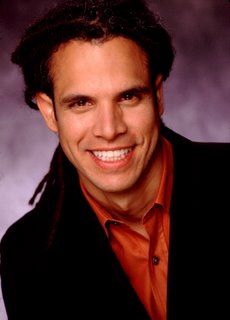 George's post about Omar Wasow's presentation at the Ohio Library Council conference is here, and I think it will give you a good indication of Omar's groove on libraries. Omar is pursuing a doctorate in African American studies and political science at Harvard. In addition to his graduate work, Omar is the co-founder of BlackPlanet.com and an on-air technology analyst. Under Omar’s leadership BlackPlanet.com became the leading site for African Americans. . As a result of his active participation in a number of social issues, particularly the charter school movement, Omar was selected to be a fellow in the Rockefeller Foundation's Next Generation Leadership program.
Now, we've never had to turn people away from a symposium, but registration is inching up! If you like to sit at a table rather than on the floor, come on time!
So, we are very pleased to have two additional panelists: Antony Brewerton and Omar Wasow. Antony will likely be new to most attendees because he's from the UK. Omar may be familiar to you either because you've heard him on NPR, or because you've heard him at a library event. George heard him speak here in Ohio last year and really enjoyed Omar's talk. Come to think of it, George heard Antony speak in England and spoke highly of his talk, and that's why we asked Antony. So, clearly, if you don't like the presentations, it's George's fault. Conversely, if you love them, then I guess George gets the credit.
 Antony is the is Subject Team Leader for Arts, Social Sciences & Hospitality at Oxford Brookes University Library in the UK. Yes, it's in Oxford. No, it's not that Oxford U. He was previously at the University of Reading where he co-ordinated Library PR and compiled the Library’s successful entry in the Library Association/TC Farris Publicity and Marketing Awards. He has written and lectured on the image of librarians and the marketing of library services. His image-busting article “Wear lipstick, have a tattoo, belly-dance, then get naked: the making of a virtual librarian” won the UK Career Development Group’s Martin Award.
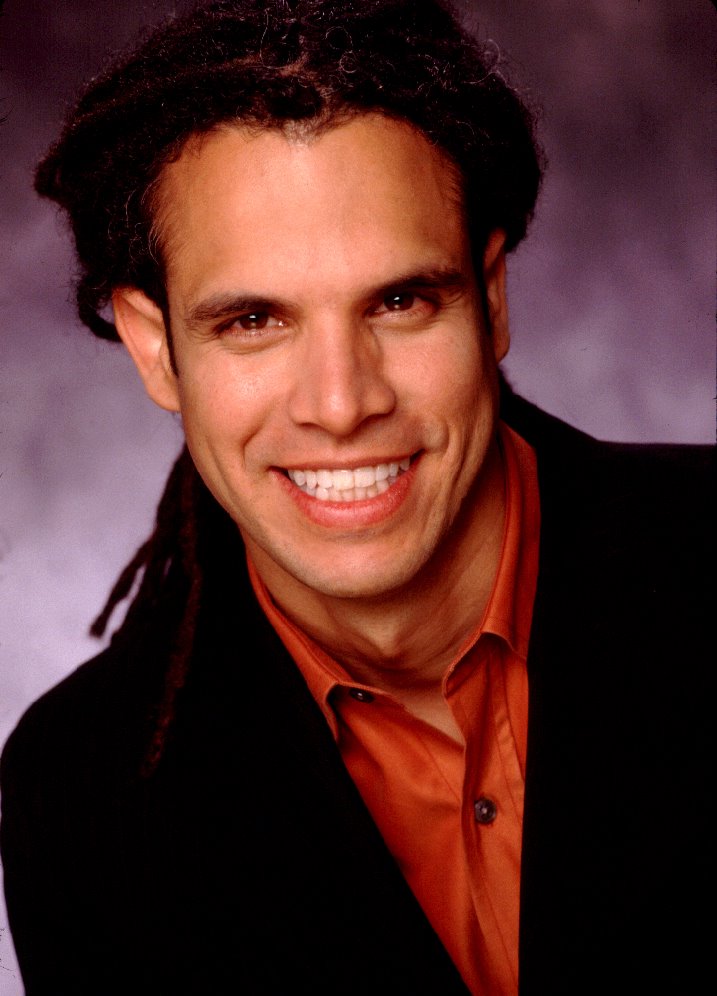 George's post about Omar Wasow's presentation at the Ohio Library Council conference is here, and I think it will give you a good indication of Omar's groove on libraries. Omar is pursuing a doctorate in African American studies and political science at Harvard. In addition to his graduate work, Omar is the co-founder of BlackPlanet.com and an on-air technology analyst. Under Omar’s leadership BlackPlanet.com became the leading site for African Americans. . As a result of his active participation in a number of social issues, particularly the charter school movement, Omar was selected to be a fellow in the Rockefeller Foundation's Next Generation Leadership program.
Now, we've never had to turn people away from a symposium, but registration is inching up! If you like to sit at a table rather than on the floor, come on time!
Thursday, January 12, 2006
Best Jobs of 2006?
According to US News and World Report, quoted on Yahoo! Finance, librarianship is one of the 16 best jobs to have in 2006.
As much as I've loved this career, US News may have a hard time convincing the freshly-minted MLS's who are detailing their struggles to find meaningful work on the nextgenlib or newlib listservs.
Thanks to Wei Bender of OCLC Marketing for passing this news item to me.
As much as I've loved this career, US News may have a hard time convincing the freshly-minted MLS's who are detailing their struggles to find meaningful work on the nextgenlib or newlib listservs.
Thanks to Wei Bender of OCLC Marketing for passing this news item to me.
Wednesday, January 11, 2006
Gerald Hodges
Gerald Hodges, a friend of many years standing, passed away yesterday. As Linda Loman once said, "Attention must be paid."
Gerald was the Associate Executive Director for Communications and Marketing at the American Library Association. Before that, he was the Association's director of Membership Services and Chapter Relations, the role in which I met him when I held a similar job for the Ohio Library Association. Gerald helped me understand the way ALA and state chapters work together on government relations, advocacy, and library promotion. He helped me get into the media training that ALA launched in the early '90s to organize a cadre of librarians who could work effectively with the media. This was some of the best training I've ever had.
When the job of PLA Executive Director came open, Gerald encouraged me to apply and even helped me prep for the interview. I promised him that if I got the job, I'd take him to dinner at his favorite restaurant. We had a boozy, enjoyable dinner several months later, and the friendship was sealed.
Working with Gerald was a pleasure. His approach to work and life were marked by his sense of humor, encyclopedic knowledge of the field, and an apparently bottomless reservoir of patience. He took great and constant delight in his work, his partner Charles, frequent trips to Vegas, and, as his obit on the American Libraries site notes, all things Spanish. He was one of the nattiest dressers in the profession. Gerald in a tux at the ALA President's Inaugural Dinner was a GQ photo spread come to life.
After I left ALA for Michigan, our contacts were less frequent, but when we did see each other, at an ALA conference, or at state association conferences, or at a meeting at ALA about WebJunction a couple of years ago, it was as if we'd never been apart.
What I'll remember most fondly about Gerald is the way his eyes would twinkle when he was about to tell a funny story. He knew that as important as libraries are, life is more important. He had perspective.
The best way to memorialize Gerald will be to go to San Antonio for Midwinter and skip a meeting. Instead, go out and have a few laughs with friends that you don't see often enough.
More on Newspapers - Fishwrap?
If you visit here often, you'll know that I keep an eye on what is written about newspapers. I do so because newspapers require readers, because they are a 19th century innovation (at least in terms of mass production and adoption) struggling into the 21st, and because both those challenges seem to me to have relevance to libraries. "People will always read print books" is a mantra we all hear, but increasingly, at least for the sister media of newspapers, that is not assumed.
In a longish essay called "Are Newspapers Doomed," (published in Commentary), the author Joseph Epstein suggests some reasons that print newspapers--at least as we know them--may not continue much longer. He links the change in appetite for print newspapers to, among other things, the blogosphere:
Well worth reading.
In a longish essay called "Are Newspapers Doomed," (published in Commentary), the author Joseph Epstein suggests some reasons that print newspapers--at least as we know them--may not continue much longer. He links the change in appetite for print newspapers to, among other things, the blogosphere:
[T]he young are hardly alone in turning away from newspapers. Nor are they alone responsible for the dizzying growth of the so-called blogosphere, said to be increasing by 70,000 sites a day (according to the search portal technorati.com). In the first half of this year alone, the number of new blogs grew from 7.8 to 14.2 million. And if the numbers are dizzying, the sheer amount of information floating around is enoughto give a person a serious case of Newsheimers.But this isn't an essay on journalism versus blogging. It's much broader and perhaps, a lament for the glory days of newpaper journalism: "About our newspapers as they now stand, little more can be said in their favor than that they do not require batteries to operate, you can swat flies with them, and they can still be used to wrap fish."
Astonishing results are reported when news is passed from one blog to another: scores if not hundreds of thousands of hits, and, on sites that post readers’ reactions, responses that can often be more impressive in research and reasoning than anything likely to turn up in print. Newspaper journalists themselves often get their stories from blogs, and bloggers have been extremely useful in verifying or refuting the erroneous reportage of mainstream journalists.
Well worth reading.
The day passes
“Le jour se passe, les jours se lassent.”
(“Les ciels de traîne” – Autour de Lucie)
[English translation of the lyrics: “The day passes, the days grow weary.”]
I note with sadness that after two years the blog BiblioAcid will cease – for various reasons including a sense by the authors that the blog’s scope and nature was of a time, and the blog and authors needed to transition. While admittedly my mediocre French leaves some details of certain postings beyond my ready grasp, Marlène Delhaye’s & Nicolas Morin’s insightful coverage of topics of interest in both the Anglo- & Franco-library and IT spheres was unique and frequently alerted me to things I’d missed or was not likely to have come upon. Reading BiblioAcid also gave me a chance to refresh and expand my limited repertoire of IT and library-related technical French.
In their final post the authors reflect on BiblioAcid’s role in facilitating the emergence of blogging by librarians, and its impact on Marlène’s & Nicolas’s own “brand” as professionals. I’m pleased that the BiblioAcid posts will be archived, and that each author will continue to blog on their own – marlene’s corner and morinn.
Marlène & Nicolas, merci et bonne chance!
Tuesday, January 10, 2006
The (Fine) Killer Strikes Again!
My post about library fines has sparked more interest than anything on this blog in a long time. Talk about a good news/bad news situation. I love the action, but I wish it could be about some new and challenging service, or a discussion of Library 2.0 as thoughtful and well-reasoned as Walt Crawford's, or anything as intellectually stimulating as Lorcan seems to be able to so effortlessly toss off. Nope, we're down here in nickel and dime land. *sigh*
OK, let me respond to several of the comments that have been made on my piece, and, with her permission, on Alane's follow-up.
First, my comments were about public libraries. I know that academic and public libraries work in very different ways, and the need for a piece of information in demand by everyone registered in one class might require a more sophisticated system of sanctions to function.
Second, I have no problem with sending a notice to Patron A that Patron B has put a hold on an item, and could you please return it?
But that's as far as I'm willing to back off. Yes, I do sincerely think that fines should go. In fact, when I was a library director in Ohio back in the 1980s, and times were relatively flush, I proposed just such a scheme to my board. And I got shot down almost immediately, for most of the reasons cited by the commentators on my post.
Fines seem to bring out our most evangelical fervor. Look at the language people use to describe why we can't dump fines:
I do sincerely believe that anything that creates a perception of a barrier between the user and the library needs to come down. And one of the things that people repeatedly cite as a reason not to use libraries is overdue fines. Sure, more parking, longer hours, and an unlimited supply of the latest best sellers and videos wouldn't hurt either. But one thing at a time, OK?
OK, let me respond to several of the comments that have been made on my piece, and, with her permission, on Alane's follow-up.
First, my comments were about public libraries. I know that academic and public libraries work in very different ways, and the need for a piece of information in demand by everyone registered in one class might require a more sophisticated system of sanctions to function.
Second, I have no problem with sending a notice to Patron A that Patron B has put a hold on an item, and could you please return it?
But that's as far as I'm willing to back off. Yes, I do sincerely think that fines should go. In fact, when I was a library director in Ohio back in the 1980s, and times were relatively flush, I proposed just such a scheme to my board. And I got shot down almost immediately, for most of the reasons cited by the commentators on my post.
Fines seem to bring out our most evangelical fervor. Look at the language people use to describe why we can't dump fines:
- "Inducing a sense of responsibility."
- "How about encouraging a little personal responsibility on the part of the patrons instead of blaming the libraries for following their policies?"
- "Users have the obligation to share library resources with others in the community, and to exercise good judgment in the use of library resources."
I do sincerely believe that anything that creates a perception of a barrier between the user and the library needs to come down. And one of the things that people repeatedly cite as a reason not to use libraries is overdue fines. Sure, more parking, longer hours, and an unlimited supply of the latest best sellers and videos wouldn't hurt either. But one thing at a time, OK?
Google Bookstore?
From BBC News, reporting from the just-over Consumer Electronic Show (flash stuff on this page)
"Google has suggested it may consider setting up an online book store. Google CEO Eric Schmidt told reporters at the Consumer Electronics Show in Las Vegas that this would depend on permission from copyright holders...Sony is also trying to invigorate demand for e-books. At CES, it launched a new portable device to read e-books and announced deals with major publishers to sell them online. Asked if Google would consider doing something similar, Google CEO Eric Schmidt said: "Subject to permission from the copyright holder, yes. I want to be clear on that."
Hmmmm.
Monday, January 09, 2006
When You Put It That Way....
"But it is hard to believe that there will be room in the economy for delivering news by the Rube Goldberg process described above."
Slate writer Michael Kinsley has an amusing description of the "Rube Goldberg process" whereby print newspapers end up on our breakfast tables, in a recent article, "Extra! Extra! The Future of Newspapers." But it is a slightly discomfiting amusement because the process and end product, as he describes it, does now seem a bit absurd, as if we did it this way because we couldn't think of a better way to do it. Will print book publishing seem this way too?
Slate writer Michael Kinsley has an amusing description of the "Rube Goldberg process" whereby print newspapers end up on our breakfast tables, in a recent article, "Extra! Extra! The Future of Newspapers." But it is a slightly discomfiting amusement because the process and end product, as he describes it, does now seem a bit absurd, as if we did it this way because we couldn't think of a better way to do it. Will print book publishing seem this way too?
Saturday, January 07, 2006
Fines Redux
Wading into the fray to support George's opinion...I am not sure how best to provide incentive to borrowers to return material but I am 100% in agreement with George that fines are a lousy way to do it. Tell me all the costs to collect material from delinquent users...less or more than replacement? Most librarians will not be able to answer this.
What do we think we are? The highway patrol? Drivers all know what the rules of the road are, and what the speed limits are. Yet, most of us (even librarians) break some of these rules and limits every single day. When we get caught, do we love our captors? No, I doubt it. Although we know that police officers are upholding laws designed for the common good, we don't feel bathed in the light of this common good when we are pulled over for doing 60 in a 40 zone, do we? We are contrite, and we yet feel anxiety often on spotting police cars. I think anxiety is a very bad state to associate with library use.
Police departments rely heavily on the revenue generated by such fines, but for the love of St. Jerome, do libraries really want to put themselves in the same civic category as police departments? My dad, one of my sisters, and one of my cousins were/are police officers so I have a great deal of respect for this work but I know that in their world there's good guys and bad guys. Nothing in between.
This might be flip, but I do not put never returning a book by Barbara Taylor Bradford into the same category of offense as speeding in a school zone.
I agree with George. Fines have to go. Libraries need to find another way to replace that income even if it means going to the Board and detailing what cannot be done without these funds. The cost of fines to the library's image far outweighs the income generated.
Come on, be truthful...this is really a moral issue, isn't it? People should return material......
Friday, January 06, 2006
Killing Off Fines Is Long Overdue
There's a very interesting discussion going on over at Librarian in Black about a Wall Street Journal article on library fines (and other government fees). I'll just let you go over and read that discussion, then come on back here for my comments. No, it's fine...I can wait.
(musical interlude)
OK, here goes my rant...
I hate library fines. They represent and embody all of the librarian stereotypes I have loathed for the 34-1/2 years I've been working in and for libraries.
I wish some daring library director or board would try the NetFlix model. You know: you can keep these things as long as you want, but you don't get any more until these come back. Set a limit of 25 books and three videos and five CDs (or whatever seems a reasonable number in your setting), and when the user hits that limit, his or her card is blocked from taking out anything else. But no more overdue fines, no fees, no "retribution" at all. Bring back some of the items, you can take some more.
This kind of publicity hurts us, and it hurts us over and over again. We want to see ourselves as the guardians of the public good, but we end up looking like nitpicking gremlins.
And by the way, despite what one of the respondents on LIB said, when I worked in the Buffalo and Erie County Library in the 1970s, whole families could be (and were) barred from borrowing anything from the library because of one miscreant in the household. And don't think that the circ clerk in my branch didn't enforce that rule like an avenging angel. No skip tracer ever born was better at identifying who lived where than Dorothy Childers.
Even if this is no longer the policy anywhere, people remember this from their youth, and the stigma continues to apply to us all.
Blog Salon & Symposium at ALA MW
Just a reminder: the Blog Salon will be in the OCLC Red Suite on Sunday January 22, beginning at 6pm. The OCLC Red Suite (and our moving it from the Blue Suite to the Red has nothing to do with political affiliations) will be at the Marriot Rivercenter. And, as Walt Crawford rightly pointed out in a comment on Alice's post about the Salon: we can't tell you the number of the suite until mere days before the event. The 3 OCLC suites are not assigned until our intrepid suite organizer, Suzanne Lauer, checks in.
We will post the suite number here at IAG but you can drop by the OCLC booth, 1454, and ask for the suite number, or ask the front desk staff at the Rivercenter.
And aside from the lovely orange OCLC totebags, there will be an additional little momento for you--Alice's idea.
As well as your four IAG hosts, I think Jay Jordan and Cathy De Rosa will be attending for at least part of the gathering. And some of our WebJunction colleagues will be there too.
Finally, if you have the time open in your schedule, please come to the Extreme Makeover OCLC Symposium on Friday, 1:30 - 4:30 pm, Marriott Rivercenter, Salon G-H. I've posted about two of the presenters here, and will post about Omar and Antony, our other two speakers, soon. Registration for the event (and all the other official OCLC events at ALA) is here.
Considering how many librarians regard the words "marketing" and "brand" as inimical to librarianship, it could be a lively session. We'll be trying out a polling system during the symposium...200 lucky attendees will get a "clicker" and so will be able to participate in instant voting on questions posed by the panelists.
We won't be streaming the symposium live, but we will video it and make it available after the conference. But, as Alice has mentioned, we're hoping she'll be podcasting the symposium. And if there are bloggers attending--as I know there are--there maybe blog reports.
Thursday, January 05, 2006
Islands passed by
“A warning sign.
It came back to haunt me, and I realised,
That you were an island, and I passed you by.” (“Warning Sign” – Coldplay)
I was turned on to Coldplay by my youngest niece when I saw her over the holidays. I drove, and she organized the music in the rental car – a fair division of labor, I’d say. Some last minute shopping and a trip to see the delightful Chronicles of Narnia: The Lion, the Witch and the Wardrobe made up for the not so pleasant job of navigating Christmas traffic.
Coldplay is a British Pop group with the added bonus of Hollywood celebrity (Gwenyth Paltrow is married to a band member). On my return from the holidays, I thought nothing of doing discovery about the band via the Web, sampling tunes from various albums at an online store, buying an album, A Rush of Blood to the Head, online. And, yes, I could have borrowed a copy from my local library, but I wanted a copy of my very own.
The album’s been great background music as I read/scan my copy of Perceptions of Libraries and Information Resources. There’s a lot of insightful, confirming and at times a bit puzzling reveals in the report. Alane and George have walked through some pieces, and now I’d like to explore a thread myself, the online face of libraries.
Let me start by saying that arguably public access computing (i.e. providing personal computing and general Internet access to users) has been one of the library world’s better deeds (just ask our colleagues at WebJunction and the marvelous community they support). What I’m talking about is surfacing library services/systems and online resources in the users experiences on the Web. The data in the Perceptions report makes it clear that the online resources libraries offer suffer visibility problems.
To that point, here are some illuminating stats from the report (page references in brackets):
Fuzzy knowledge:
Mostly not a clue:
For the poor visibility, there are some interesting indications that the users who actually find their library’s online Web site/online resources are getting some value:
And lastly, I’m still working through the report, but there doesn’t seem to be a lot of emphasis by the users on interfaces, web site organization, or similar quality issues that many of us in the profession complain about. Responses to an open-ended question that asks users to advise their library on potential service improvements reveal that 1% of users would suggest making the local library catalog better. [4-7]
I’m not quite sure what to make of all this – are library online resources reasonably useful, but simply not a resource our users consider first (or even last)? Or are library online offerings suffering from interface, integration, restriction, indexing, or other systemic issues that if addressed would significantly increase the likelihood of discovery and use?
It came back to haunt me, and I realised,
That you were an island, and I passed you by.” (“Warning Sign” – Coldplay)
I was turned on to Coldplay by my youngest niece when I saw her over the holidays. I drove, and she organized the music in the rental car – a fair division of labor, I’d say. Some last minute shopping and a trip to see the delightful Chronicles of Narnia: The Lion, the Witch and the Wardrobe made up for the not so pleasant job of navigating Christmas traffic.
Coldplay is a British Pop group with the added bonus of Hollywood celebrity (Gwenyth Paltrow is married to a band member). On my return from the holidays, I thought nothing of doing discovery about the band via the Web, sampling tunes from various albums at an online store, buying an album, A Rush of Blood to the Head, online. And, yes, I could have borrowed a copy from my local library, but I wanted a copy of my very own.
The album’s been great background music as I read/scan my copy of Perceptions of Libraries and Information Resources. There’s a lot of insightful, confirming and at times a bit puzzling reveals in the report. Alane and George have walked through some pieces, and now I’d like to explore a thread myself, the online face of libraries.
Let me start by saying that arguably public access computing (i.e. providing personal computing and general Internet access to users) has been one of the library world’s better deeds (just ask our colleagues at WebJunction and the marvelous community they support). What I’m talking about is surfacing library services/systems and online resources in the users experiences on the Web. The data in the Perceptions report makes it clear that the online resources libraries offer suffer visibility problems.
To that point, here are some illuminating stats from the report (page references in brackets):
Fuzzy knowledge:
- Of total respondents, 61% know their library has a Web site, 6% don’t think their library has one, and 33% are unsure [2-7]
- Roughly similar responses are offered for whether users know the library has an online catalog or offers online reference materials. [2-7]
Mostly not a clue:
- For e-audiobooks, e-magazines/e-journals, e-books, and virtual reference services, the responses are even more dismal placing the “no” or “not sure” responses combined above 60% (above 70% for virtual reference) for total respondents. The vast majority (50% or higher depending on the resource type) are not sure. [2-7]
- When asked why users did not use their library Web site, for total respondents, 55% don’t know or don’t think their library has Web site, 4% can’t find it, and 25% could find it, but thought other Web sites were superior. [5-3]
For the poor visibility, there are some interesting indications that the users who actually find their library’s online Web site/online resources are getting some value:
- Users who use their library’s Web site to keep up-to-date on library resources [2-28]: Total respondents (3rd highest ranked choice – 25% of users); College students, all regions (1st highest ranked choice – 49%)
- Starting at a Web engine and then finding information via the library Web site: College students, all regions – "Have you ever started your search for information using a search engine and ended up at a library Web site?" Yes: 48%; "If yes, did you use the library Web site?" Yes: 41%, No: 7%; "If yes, did the library Web site fulfill your information needs?" Yes: 37% (10% -- library resources alone, 27% library plus additional resources) No: 4% [2-17]
And lastly, I’m still working through the report, but there doesn’t seem to be a lot of emphasis by the users on interfaces, web site organization, or similar quality issues that many of us in the profession complain about. Responses to an open-ended question that asks users to advise their library on potential service improvements reveal that 1% of users would suggest making the local library catalog better. [4-7]
I’m not quite sure what to make of all this – are library online resources reasonably useful, but simply not a resource our users consider first (or even last)? Or are library online offerings suffering from interface, integration, restriction, indexing, or other systemic issues that if addressed would significantly increase the likelihood of discovery and use?
Wednesday, January 04, 2006
I love to take a photograph
“I got a Nikon camera,
I love to take a photograph” (from “Kodachrome” by Paul Simon)
Well I didn’t want to let the day pass with less than 100% of IAGers posting given our dearth of posts last week. During the last two weeks I spent time with family and friends to celebrate the holidays, captured some of those moments digitally, and for the last two evenings I spent some time uploading pictures to my account on flickr, adding metadata & tags to same, and alerting family members (including several who couldn’t join us) the photos were up.
Compared to more traditional methods, the ease, speed, and low-cost of digital images are hard to beat. And it’s really easy to share the images with folks far and wide. My pics aren’t professional quality, but they’re on par with the pics I’ve taken with fairly expensive film equipment (suggesting sadly that the variable is the lack of a good photographer, not a shortcoming in the equipment). I haven’t used a traditional film camera in two years.
My habits and experiences are apparently not unique. An item in the Business 2.0 blog reports statistics gleaned from a new report by Merrill Lynch:
• Nearly half of all households now own a digital camera
• People are printing more digital photos than ever before (7.7B in 2005 vs. 400K in 2000)
• Retail printing of digital photos is gaining market share from home printing
• Traditional film printing is spiraling downward rapidly (down about 10B units in 5 years)
• The rise in digital printing doesn't offset the fall in traditional -- overall total photo printing has dropped about 5B units in 5 years
The author of the B2B blog piece opines that lowering prices for digital photo printing will stimulate demand, and I won’t disagree, but I think the fundamental problem may be a shift in tastes – standard physical prints may no longer be of strong interest. Amateur photography has probably always been more about sharing than holding. I think the more promising business space, however, is probably helping people manage their digital photos (flickr, Picasa, etc.), enhance the photos (e.g. Adobe Photoshop), and make novel use of them (for example, Qoop allows you to create posters, photobooks, apparel, many people choose personal photos as wallpaper on their computers, cell phones, etc.).
For libraries, the shift to the dominance of the digital photo presents some challenging new preservation issues, and raises issues the digital versions of any resources do – storage, retrieval, rights management, etc. What I admit I don’t know is whether there’s a role for libraries in helping users enjoy and share personal photography (film or digital). Like gaming, it seems like there could be. Any thoughts? Are libraries actively supporting the shutterbugs in their communities?
Empowering or empowered?
"If the likes of Google (through search and other online analytics) and Apple (through portable devices) taught us anything in 2005 it is that empowering consumers is very good business."
This quote is from an interesting article, "New media to take full control in 2006" published in yesterday's The HollywoodReporter.com Empowering consumers, empowering users...now, there's an idea.
We have here in my corner of the Kilgour building at OCLC, a small collection of promotional stuff libraries do: newspaper ads and mailed material, mostly. And one mailer card Cathy De Rosa and I were looking at recently was created to encourage people to renew their library cards. In person. As the only option. Not even by Pony Express.
Isn't this just a tad nineteenth century? Well, perhaps, but maybe this library system is waiting for a better way to empower their users.
Ok, how about renewing books? The mailer card says one of the benefits from renewing library cards is being able to renew books by phone. As the only option. Now, I happen to know that it is possible--and has been for some time--to renew material on the web site of this library. So, why the heck wouldn't this promotional piece of paper say so??! Was there an assumption that most people receiving the mailer wouldn't have a clue what the web was? Who knows? But all in all, the mailer was not a testament to an institution serious about empowering users.
"Empowering users..." It's a quaint phrase anyway. Our users hardly need to be empowered by us. They come that way, empowered by technologies outside of our domain, and empowered by all the various motives that drive people to do things for themselves, rather than seeking out "the experts." What we need to do is empower our systems and services so that they are attractive to users of all kinds. Wait! How about before we do all that empowering we all have a big think about what those services and systems should be and who they're designed for?
Here's the library services and systems Private Citizen Alane uses:
- Circulation to check out, holds and renew (my preference is to do this without humans)
- Look stuff up (a pain always because of either way too many steps or because of the indexing)
That's it.
Establish a "Signage Czar"
And other good insights into how to make your physical library space more user-oriented. Of course, this Library Journal online article "Power Users" champions the approach we've all been soapboxing for years now--but it's good to see it filter into mainstream library conscience.
Is it "dumbing down" the system?
Absolutely!
Will it make the system more accessible for people who do not want to learn the secret library codes--but really just want to find some information on a certain subject?
Absolutely!
Paco Underhill and so much more. Read the piece as a warm-up to the OCLC Symposium...which I am meant to be figuring out how we can podcast live from San Antonio...
Okay, let's hear it. Read the article and then weigh in here--on the very provocative subhead in the article: WAS Dewey the Anti-Christ?
Why or Why not?
"Public Use of the Library and Other Sources of Information"
Alane's post below reminded me of two things: first, I made a conscious effort not to write anything beyond thank you notes while I was off for the holidays, and I make no apologies for that!
Second, there is another report of the same vintage as the Public Library Inquiry that reinforces the report Alane references. Public Use of the Library and Other Sources of Information, by Angus Campbell and Charles A. Metzner (Ann Arbor: University of Michigan Institute for Social Research, 1950) "presents the major findings of a survey undertaken by the Survey Research Council for the Public Library Inquiry." The field work was done in 1947, and was delivered to the Public Library Inquiry in 1948.
However, I see the differences between the two reports as indicating some important strides libraries have made in the past half century. Two key examples: The 1947 results indicated that about one fifth of adults in the US had a library card. Compare that to the 75% of US respondents to the Perceptions of Libraries and Information Resources survey who say they have library cards. In the OCLC report, 73% of the respondents said that had visited a public library in the previous year; in 1947, only 18% reported that they had done so. The 1947 report also said that library use was "highly concentrated among a small percentage of the population," that percentage being the highly educated book readers. Obviously, libraries have broadened their nets to draw in more users.
There is considerable discussion in the OCLC report of the library brand equaling "books." No great surprise there, despite our best efforts to become more relevant. (Ladle on as much irony as you'd care to here.) The interesting thing to me is that the 1947 report, like the OCLC report, asked people to make suggestions about what libraries could do to make themselves more attractive. In several cases, the answers given in both surveys are exactly the same: advertise more; have more current materials; be open longer/more convenient hours. But in several cases, the 1947 report pointed directly to changes that librarians have made. In 1947, people wanted to be able to view and rent movies at the library. They wanted to be able to borrow records. They wanted to have study groups, and group meeting space in the library. Over the last decades, public libraries have added all these services, and the results can be seen in the expanded participation numbers in the OCLC report.
The biggest consistency has been in people failing to see libraries as a primary information source. Librarians have not been able to make the leap from being a storehouse of recorded information (books, magazines, videos, audios) to being an active partner in the information gathering and evaluating process. The ubiquity of the web is making it even less likely that a formal institution like the library, with all our rules, service policies, limited hours, and other historical baggage, is ever going to change that.
The best use of the Perceptions report is to use a triage approach. Look at what respondents have said they want, and then figure out: a.) what you already offer but that you need to be more "in your face" about advertising; b.) what you could do by realigning resources, eliminating redundancies, or changing legacy policies; and c.) pipedreams. Just make sure not to confuse what you can't do (pipedreams) with what you don't want to do (because it's always been done this way)!
Tuesday, January 03, 2006
Synchronicity
Funny--I was just composing a post when Alane published hers.
Yes friends, today is the day when we celebrate the fact that my parents were brave enough to risk the great unknown, ["a 2nd child! How can the second ever live up to the wonderful-ness of the first?"] and that I have lived to tell the tale thus far. Birthdays are so fun. Too bad American culture does not also celebrate Name Days, like they do other places.
Had planned to give you a morsel of the Perceptions report that has stuck in my craw over the holidays...perhaps it will stick in yours, too, and together we can figure out what to make of it. It lines up with one of the quotations Alane posted:
FRIENDS! Friends as an authoritative source for all knowledge? I never would have pegged myself as relying on friends instead of *real* sources. But then again, I started to think about my own information-seeking habits.
In fact, I do rely on friends for most things. Heck, I ask my friends questions on
* medical advice [starve a fever, feed a cold?]
* home decorating [do you know how hard it is to make your own insulated drapes?]
* technology [how can I transfer MY iTunes downloads to YOUR computer?]
* entertainment [is that movie worth seeing? Yes for Walk the Line.]
* DIY [how exactly do I seal the ductwork that is within the walls?]
* and especially matters-of-the-heart/relationship questions [no comment]...
It dawns on me--these are all the types of questions that I have turned to my local public library for, for answers. But yes, it's usually only after I have nosed around with family/friends for initial opinions!
61%.
The Librarian was ranked lowest, at 8%, as a source of info about electronic resources. Ouch!
Yes friends, today is the day when we celebrate the fact that my parents were brave enough to risk the great unknown, ["a 2nd child! How can the second ever live up to the wonderful-ness of the first?"] and that I have lived to tell the tale thus far. Birthdays are so fun. Too bad American culture does not also celebrate Name Days, like they do other places.
Had planned to give you a morsel of the Perceptions report that has stuck in my craw over the holidays...perhaps it will stick in yours, too, and together we can figure out what to make of it. It lines up with one of the quotations Alane posted:
"61% of all respondents learn about electronic information sources from friends."
[page 1-19 Perceptions report]
FRIENDS! Friends as an authoritative source for all knowledge? I never would have pegged myself as relying on friends instead of *real* sources. But then again, I started to think about my own information-seeking habits.
In fact, I do rely on friends for most things. Heck, I ask my friends questions on
* medical advice [starve a fever, feed a cold?]
* home decorating [do you know how hard it is to make your own insulated drapes?]
* technology [how can I transfer MY iTunes downloads to YOUR computer?]
* entertainment [is that movie worth seeing? Yes for Walk the Line.]
* DIY [how exactly do I seal the ductwork that is within the walls?]
* and especially matters-of-the-heart/relationship questions [no comment]...
It dawns on me--these are all the types of questions that I have turned to my local public library for, for answers. But yes, it's usually only after I have nosed around with family/friends for initial opinions!
61%.
The Librarian was ranked lowest, at 8%, as a source of info about electronic resources. Ouch!
Alane's Back....
So, I leave for a little break and what do I see on my return? No posts since December 21....an eon in blogtime. Since I have not seen (in person) or "seen" (on email) any of my blogging colleagues, I will assume they were all doing real world things over the holiday period and, in keeping with the season, chastise them not. Besides, it's Alice's birthday today and that means she can do as she pleases.
Actually she just emailed me, confessing she was the secret Santa who sent me The Romance of Libraries, the brainchild of my friend Madeleine Lefebvre, who heads up the library at St Mary's U in Halifax, Nova Scotia. Madeleine edited this compilation of accounts of love in and of libraries, and I read it on the Chicago-Vancouver leg of my outbound holiday flight. And I left that copy with a retired librarian friend on New Year's Eve, after swanky drinks and snacks in the Fairmont Hotel at the Vancouver airport. So, I was thrilled to get another copy and I mean to get it autographed by Madeleine at ALA Midwinter.
One of the books I read in the early part of December is called The Library's Public. It was published in 1949, and is one of several volumes written about the results of The Public Library Inquiry, a national (US) survey conducted by the Social Science Research Council of the University of Michigan, at the request of ALA. This particular volume includes not only the results of the national survey mentioned above, but also the results of an analysis of all the studies of library use and users published since 1930.
And I'll not leave you in suspense. Nothing, but nothing has changed. Oh, technology has changed. The media collected by libraries and used by people has changed. But, the attitudes? The use of collections? The place--or not--of libraries in peoples' lives? Hardly a wiggle in the health-o-meter. What this means in a big sense I have yet to wrap my head around...it does suggest that We (that's the collective "we") have been barking up the same trees, tilting at the same windmills, denouncing the same media and communication innovations for decades. And that We know as little about our publics as We did 50+ years ago, and that presented with data that tells us about the people We apparently serve, many chose and choose to disbelieve. The author, Dr. Bernard Berelson (the then-Dean of the Library School at the U of Chicago) comments:
So, if you've dipped into the OCLC Perceptions of Libraries and Information Resources report and been surprised by the data, then I suggest you read Berelson's report. You'll be even more surprised. A few quotes--remember this research was done before 1949:
- "Of the five major public media of communication, [books, magazines, newspapers, movies, radio] book reading is the most limited in terms of total population...book reading is not an activity of the majority of Americans today."
- "Yet, not all people turn to formal media when they need information on various topics. In fact, the majority of a national sample of the population indicated that they would try other sources of information--usually friends or experts--rather than any of the mass media if they needed to know something about four selected subjects. The public library was specifically mentioned as a source by only a small minority of those questioned, and the following conclusion was drawn: The library appears to be lacking in salience to many people--it wouldn't occur to them to go there."
- "The young use the library more than the old, the better educated more than the lesser eductaed, and women a little more than, and differently from, men. The public library serves the middle class, defined either by occupation or by economic status, more than either the upper or the lower classes."
- "Only a relatively few people use the card catalogue with any regularity or rely on the librarian for reading guidance."
- "To a greater extent than ever before, people read newspapers and magazines, see films, and listen to the radio. These media provide recreation, information, and education to a greater or lesser degree; and they thus represent, in a special sense, competitors of the public library. "
- "There is no single public of library users; there are several publics. This is not simply a nice semantic distinction. It is central to the problem of the values and the objectives of public library service; it is the key to the 'philosophy of public librarianship'...Librarians have the problem of designating the library's publics to whom more or less consideration will be given. It is a matter of ranking the library's actual and potential publics in a value hierarchy."
And it was this last quote that made the reins from several hobby horses come together for me, because is it not this professional devotion to the philosophy of all publics are served that makes it impossible for any public library to serve adequately any public? The idea of ranking services and publics in a "value hierarchy" will be as repugnant to many librarians now as it likely was in 1950. But there it is...in the words of David Byrne of Talking Heads: Same as it ever was...Same as it ever was...Same as it ever was...Same as it ever was...Same as it ever was...Same as it ever was...Same as it ever was...Same as it ever was... "These studies [writes Dr Berelson] also indicate that the general public has little knowledge about the public library and its services and seems to regard the public library as a fine thing for a community to have--for other people to use."
Actually she just emailed me, confessing she was the secret Santa who sent me The Romance of Libraries, the brainchild of my friend Madeleine Lefebvre, who heads up the library at St Mary's U in Halifax, Nova Scotia. Madeleine edited this compilation of accounts of love in and of libraries, and I read it on the Chicago-Vancouver leg of my outbound holiday flight. And I left that copy with a retired librarian friend on New Year's Eve, after swanky drinks and snacks in the Fairmont Hotel at the Vancouver airport. So, I was thrilled to get another copy and I mean to get it autographed by Madeleine at ALA Midwinter.
One of the books I read in the early part of December is called The Library's Public. It was published in 1949, and is one of several volumes written about the results of The Public Library Inquiry, a national (US) survey conducted by the Social Science Research Council of the University of Michigan, at the request of ALA. This particular volume includes not only the results of the national survey mentioned above, but also the results of an analysis of all the studies of library use and users published since 1930.
And I'll not leave you in suspense. Nothing, but nothing has changed. Oh, technology has changed. The media collected by libraries and used by people has changed. But, the attitudes? The use of collections? The place--or not--of libraries in peoples' lives? Hardly a wiggle in the health-o-meter. What this means in a big sense I have yet to wrap my head around...it does suggest that We (that's the collective "we") have been barking up the same trees, tilting at the same windmills, denouncing the same media and communication innovations for decades. And that We know as little about our publics as We did 50+ years ago, and that presented with data that tells us about the people We apparently serve, many chose and choose to disbelieve. The author, Dr. Bernard Berelson (the then-Dean of the Library School at the U of Chicago) comments:
In addition, there is one general deficiency in the literature which this review has made strikingly apparent; that is, the concentration of the studies upon which certain kinds of problems, but not others, and mainly upon those dealing with the characteristics of the library's clientele. This has given rise in library circles to some deprecation of what are called quantitative results. Many conscientious and responsible librarians have disparaged research of the kind reported here because of its "quantitative" nature, asserting that book reading and library service are too subtle and too "subjective" to warrant such treatment. [p113 in the Columbia U Press edition]
So, if you've dipped into the OCLC Perceptions of Libraries and Information Resources report and been surprised by the data, then I suggest you read Berelson's report. You'll be even more surprised. A few quotes--remember this research was done before 1949:
- "Of the five major public media of communication, [books, magazines, newspapers, movies, radio] book reading is the most limited in terms of total population...book reading is not an activity of the majority of Americans today."
- "Yet, not all people turn to formal media when they need information on various topics. In fact, the majority of a national sample of the population indicated that they would try other sources of information--usually friends or experts--rather than any of the mass media if they needed to know something about four selected subjects. The public library was specifically mentioned as a source by only a small minority of those questioned, and the following conclusion was drawn: The library appears to be lacking in salience to many people--it wouldn't occur to them to go there."
- "The young use the library more than the old, the better educated more than the lesser eductaed, and women a little more than, and differently from, men. The public library serves the middle class, defined either by occupation or by economic status, more than either the upper or the lower classes."
- "Only a relatively few people use the card catalogue with any regularity or rely on the librarian for reading guidance."
- "To a greater extent than ever before, people read newspapers and magazines, see films, and listen to the radio. These media provide recreation, information, and education to a greater or lesser degree; and they thus represent, in a special sense, competitors of the public library. "
- "There is no single public of library users; there are several publics. This is not simply a nice semantic distinction. It is central to the problem of the values and the objectives of public library service; it is the key to the 'philosophy of public librarianship'...Librarians have the problem of designating the library's publics to whom more or less consideration will be given. It is a matter of ranking the library's actual and potential publics in a value hierarchy."
And it was this last quote that made the reins from several hobby horses come together for me, because is it not this professional devotion to the philosophy of all publics are served that makes it impossible for any public library to serve adequately any public? The idea of ranking services and publics in a "value hierarchy" will be as repugnant to many librarians now as it likely was in 1950. But there it is...in the words of David Byrne of Talking Heads: Same as it ever was...Same as it ever was...Same as it ever was...Same as it ever was...Same as it ever was...Same as it ever was...Same as it ever was...Same as it ever was... "These studies [writes Dr Berelson] also indicate that the general public has little knowledge about the public library and its services and seems to regard the public library as a fine thing for a community to have--for other people to use."
Wednesday, December 21, 2005
EVOLUTION
So glad that, in the midst of governmental spying rumors (those rumors that involve OCLC ILL are quite unfounded), transit strikes in NYC and Ariel Sharon having a stroke--
we can say MONKEYS in a science classroom, free and clear.
we can say MONKEYS in a science classroom, free and clear.
Tuesday, December 20, 2005
Zombies on your site?
A beautiful hunk of writing about meaningless copy from A List Apart.
Wise words to live by, even though it takes aim at business sites instead of library sites. We all fallinto zombie-traps now and then. It's the nature of the enabled, leveraged beast.
I should print this sucker and reread it anytime I start to open my mouth onto a blank page.
And interestingly, this gem comes on a day when I was forced down into the syntax rule books for citations...would you believe that a lot of bibliographic manuals still espouse underlining for book titles? I had dismissed it years ago, with the advent of hyperlinks!
So. Good lessons for me on this day.
Monday, December 19, 2005
Wanna better internet? You belong at a 5%-Google-owned America Online
Julia Roberts's reassuring voice on AOL's recent tv commercials has made even me start to move my brand-o-meter for AOL from "in the toilet, stop sending me irritating CDs in the mail" to "mildly unnecessary but no longer annoying."
Which of course is a huge jump upward. Now, with the news leaked that Google has bought a 5% share in AOL, it makes me think I'm not the only one who noticed!
Of course, it's probably just the "Coke vs. Pepsi" of the 2000's...but still, Google giving it up for branded logo-placement of AOL content on their page, make me think the pressure to perform for stockholders has begun to encroach on the Google Boardroom.
I could argue the other way, too--that finally Google has admitted publically that this is a battle for our eyeballs, and that Google aims to win.
It reminds me of a saying (paraphrased) from one of the smartest people I know, "All technology races eventually become a 2-horse race." And it seems that this merger signals that Microsoft's MSN is now the distant 3rd...
Anyone else have a different take? Comments are all over the map, Shark jumping or no?
Gutenberg Radio
Librivox is offering free access to recorded versions of titles from the Project Gutenberg library of public domain electronic books. The recordings are done by volunteers. There are 12 complete titles available so far, and Librivox is soliciting additional readers.
When I was at the Library of Michigan, we ran a studio for recording books as part of our service for the visually impaired. The process to learn to do this well was long and challenging. I'm listening to one of the Librivox recordings as I write this (Stave 2 of A Christmas Carol, as read by Kara Shallenberg). I used to review audiobooks for Library Journal and AudioFile, so I've heard a lot of recorded books over the years. No one will confuse Ms. Shallenberg with a professional actor/narrator from Recorded Books or Books on Tape, but her reading is actually very good. She modulates her voice to convey Mr. Dickens' emotion without getting carried away, and her enunciation is excellent.
This could be an interesting precedent for creating a cooperatively developed library of recorded materials. It would seem to me that the most difficult challenge would be getting enough narrators of sufficient vocal quality to keep up the flow of new material. There are only so many hams and hacks (such as your faithful correspondent) who might be willing to take on such a chore.
Thursday, December 15, 2005
Look, it's a Library in my pocket
File under: jealous
One of my friend-of-a-friend friends found out recently that he has won an iPod. He wasn't that excited at first, sure that we was getting a 5GB leftover or something...here was his message:
Now, how many WorldCats would fit in there? (OR should I say, how many WorldCats with digital content and reader's comments embedded straight in?)
I mean, the day is not too far away--You synch your digital device up every night and suck in all the content you want to have with you at all times--media/entertainment, (TV shows, movies) written words (books, magazines, blogs, journals), news (newspapers, podcasts)...and much of that content is broadcast to you, by way of the library. Maybe...
You just load up your 600 GB iPod every day and take sips of information, as you wait for the robot to finish ironing your silver space-jumper...
One of my friend-of-a-friend friends found out recently that he has won an iPod. He wasn't that excited at first, sure that we was getting a 5GB leftover or something...here was his message:
I have been informed that the iPod's been ordered.
And it's the new 60GB monster.
Lessee. 15,000 songs divided by 250 CDs divided by 12 songs per CD still leaves room for, oh, TWELVE THOUSAND songs. Or a whole season of Lost episodes.
Now, how many WorldCats would fit in there? (OR should I say, how many WorldCats with digital content and reader's comments embedded straight in?)
I mean, the day is not too far away--You synch your digital device up every night and suck in all the content you want to have with you at all times--media/entertainment, (TV shows, movies) written words (books, magazines, blogs, journals), news (newspapers, podcasts)...and much of that content is broadcast to you, by way of the library. Maybe...
You just load up your 600 GB iPod every day and take sips of information, as you wait for the robot to finish ironing your silver space-jumper...
Symposium Panelists: Women First
Wendy McGinnis (OCLC's Director of Communications and Public Relations) and I put our heads together and come up with a list of people we'd like to have as speakers for the symposia OCLC holds at the ALA conferences. And then Wendy works her magic and people say yes...my side of the conversation often goes like this: "you're kidding...X said yes??!"
So, this Symposium, two of our four panelists have done consulting work for the likes of Microsoft, Verizon, McDonalds and the American Library Association.
 Jennifer Rice is a strategist and evangelist for relationship-centric brands (and wouldn't libraries be a relationship-centric brand?) at her company, Mantra Brand Consulting. She brings 15 years experience in brand strategy, customer insight and marketing communications, and has worked with companies such as Microsoft, Verizon, Alcatel and Corning. Her current passion is exploring how brands are being impacted by blogs and other social technologies. She's a brand strategist who specializes in bringing the voice of the customer into organizations and she's is often hired to revive a stagnating brand. Jennifer has 15 years experience in brand/marketing strategy, market/customer research, integrated marketing communications and channel support.
Her company blog is What's Your Brand Mantra? (Which is how I found her...I like her blog voice) And she also blogs at the Corante group blog Brandshift.
The second panelist I am introducing today is Pat Martin, and Pat sent me a nice picture to use here and I'll be danged if I can get it to load, so I give up and will tell you there's a perfectly good likeness of Pat on her company LitLamp's home page. Here's what Pat writes about herself and her company:
Our communities are built on partnerships and relationships with our clients, funders, suppliers, and colleague organizations. Behind every strong relationship is a clear, win-win proposition. Patricia Martin knows the value libraries represent to potential partners. Prior to founding Litlamp Communications, she created and managed a first-of-its-kind sponsorship marketing division for the American Library Association, where she worked with Fortune 100 companies on national campaigns, generating over $6M in new revenues in 18 months. In 1994, she partnered with Microsoft to build the blueprint for what is now the Gates Library Foundation. Martin's firm has been featured in Fast Company as a Purple Cow--firms that help their clients be remarkable, and was selected by GE to be a preferred provider of marketing services to their clients. She is author of the book, Made Possible By: Succeeding With Sponsorship, Wiley 2002. She explores the key elements needed to attract partners and creative ideas for generating revenue to help support innovative library programs.
Pat's blog is here.
We're most fortunate to have Jennifer and Pat as half of the symposium panelists. The registration for the Symposium is here.
I really like this little squib Pat has on her home page...says a lot to me about the ideal position of librarians and libraries in the infosphere.
The knowledge economy is not a parallel universe from which people depart to go shopping.
The knowledge economy exists as part of a knowledge society—a broader milieu of social and cultural expressions. The organizations that will hold sway in the knowledge society will be led by people who seek to strengthen the social fabric—with products, ideas, and experiences that help people feel they are achieving something greater than a simple transaction.
Online Learning in Michigan
According to an article that was published this week in the Chronicle of Higher Education, Michigan's State Board of Education is considering (and is expected to approve) a proposal that high school students be required to take at least one online class in order to graduate.
How's this for a turnaround? While some people are still arguing whether online learning is really learning, Michigan is progressive enough to take a stand in this area. It makes me think that if enough people are exposed to this form of education, new ideas will blossom to make it even better.
As a former resident of Michigan, I can only applaud this approach and look forward to seeing the results!
Wednesday, December 14, 2005
Cancer Survivor or Librarian?
WTF?? Excuse me, but Kris Johnson from Chico, CA (and someone I worked with in Fairbanks, AK) pointed out in a comment to my last post that the real Extreme Makeover is looking for a "cancer survivor or a librarian."
Understand this. The two categories are bundled together on one line, as if there was some kind of affinity or equivalence. How weird. What could there possibly be related in these two "conditions"? The other categories are hokey perhaps but not oddly bundled. Rescue workers stand alone unbundled from divorcees. Even though some rescue workers are, no doubt divorcees, just as some librarians are cancer survivors--and I'll bet some people can fit in all four categories.
Anyone care to speculate what the connection is?
Extreme Makeover: OCLC Sympoisum at ALA
It's not the Symposium that is being extremely made over but it is the topic of the afternoon's talks at ALA Midwinter. Unfortunately we are not offering makeovers for audience members--or OCLC staff, for that matter, although on the mornings I look at myself and think, "good grief, it's my mother!" I would be most grateful for an extreme makeover.
No, this makeover refers to our collective community, our industry, Libraryland, and is related to the report we just issued called Perceptions of Libraries and Information Resources . Respondents to the survey that the report is based on generally like libraries, generally hold the information they get from librarians with reasonably high regard, and even use libraries with some regularity. But, there are some service gaps that need to be discussed, at the very least. Many respondents do not think much of the environments of the libraries they use--cold, dirty, no comfortable chairs, surly staff, confusing layouts and poor signage, inconvenient hours and locations--and most respondents associate libraries with books.
Now, this association with books is perhaps not one we want to discard or change as it is so very clearly important to people and is also important to people who work in libraries. But, what "industry", be that a clothing store, a church, a restaurant, or a car maker, wants to be associated with bad service and unpleasant surroundings? And beyond this, what "industry" wants to be known predominently for "products" that represent only a fraction of their offerings--and the oldest product line, at that? Libraries spend a bazillion dollars on electronic resources for their communities and as far as we can tell, they may as well have donated all that money to Oxfam or Doctors Without Borders and few people would have been the wiser.
Many librarians see Google and other search engines as competitors to libraries that must be beaten at their own game….many librarians still want people to begin searching at library websites because that’s where the “good” information is. This won’t ever happen, but a lot of energy and time is being spent on speaking and writing about the library as an alternative to search engines.
We’ve (well, I have, for sure) started to dig a little deeper into the published literature on peoples’ perceptions and use of libraries over decades (mostly in the US) and have discovered that it’s likely that only a minority of the population has ever used libraries which suggests that attempts to increase use do not provide the simple answer to increased support of libraries. Likewise, marketing of content to people isn’t likely the simple answer either as content is no longer the differentiator it used to be.
One differentiator of the library is in its role in the community in supporting the educational, recreational and leisure interests of all people, and in supporting citizenship and democracy but expression of this role has been muted lately in the library profession as attention is focused on providing content and services virtually, and on the encroachments of the Amazons and Googles.
So, we asked some clever and thoughtful people to come to San Antonio and talk to Symposium attendees about the issues suggested by the report. Hosted by Cathy De Rosa, mine and Alice's boss and OCLC Vice President of Marketing and Library Services, the panelists are: Antony Brewerton, Subject Team Leader at Oxford Brookes University; Patricia Martin, President and Founder of LitLamp Communications Group, Inc.; Jennifer Rice, President of Mantra Brand Communications; and Omar Wasow, Executive Director of BlackPlanet.com and Internet Analyst for NBC.
I'll provide details about them, including links, in my next post.
Tuesday, December 13, 2005
Arrows Wanted
“Me and my Arrow,
Straighter than narrow.”
– from Harry Nilsson’s song, “Me and My Arrow”
This delightful song has been playing in my head ever since I bought Nilsson’s Greatest Hits album. I also adore the animated movie, The Point about a land where everything must have a Point. The made-for-TV movie featured “Me and My Arrow” and other songs by Nilsson who is also credited with The Point’s story.
So let’s talk about pointing. Among the genteel it’s considered impolite, but on the web one can – indeed, ideally, will -- point (i.e. link) to other resources, or, frequently, to descriptions of those resources. In this blog entry so far, I’ve linked to entries in the All Music Guide, Internet Movie Database, and Open WorldCat, and these have all been references to information about the “thing,” but not the thing itself. Indirection of this sort can be powerful, sometimes annoying -- and for items that can’t transit over the web, a necessity -- but done well, it’s also a superb means of adding value to a reader/user’s experience. The information I’ve linked to provides background and context, and, for the album and movie, provides adequate information to help you get to a copy if you wish.
Referring is something libraries have done forever. Certainly through our catalogs (e.g., search the catalog, discover resources, find the call number, retrieve the item), but also through carefully-crafted pathfinders (i.e. selected bibliographies of library resources). And library reference work is, well, mostly about query-refinement, recommending, and referring. We’ve raised pointing to a high art. Heck, if you simply counted the number of times reference librarians have pointed to where the library washrooms could be found, surely librarians have claim to a new category in the Guinness Book of World Records.
But back to the point -- if the recent past gave us “Rip, Mix, Burn,” (a la Apple’s iTunes ad campaign) and the current thinking emphasizes “Remix” (for more see a conversation with and presentation by Rael Dorfest of O’Reilly Media), I’d like to add another verb, “Refer.” It might just be the Next Big Thing. Indeed, maybe it’s a candidate as a central feature of Library 2.0. Authoritative pointers to reliable descriptions -- and a quick means (intermediated by the library) to get to the referenced resources – is a durable, powerful role for libraries. The next phase is arguably about re-platforming these basic services, and adding in a robust content contribution role for users. Maybe the Library 2.0 campaign slogan should be “Reconnoiter, Refer, Retrieve, Reuse, Reward?”
OK so I got slightly off-point again. Sorry. Let’s return to the pointers themselves. As you’ll see by looking at the various URLs used so far in this blog entry, many lack an elegance of syntax. And we know far too many URLs lack persistence. A lack of elegance isn’t necessarily fatal, but a predictable syntax that lets you remix well-known identifiers into persistent, actionable URLs is certainly far more useful – it makes pointing a lot more predictable, and the pointers far easier for third parties to construct without actually having to do a lot of preliminary searching to figure out what the URL will be. As a new blogger (welcome!) recently noted, there is now a very nice feature in Open WorldCat that allows anyone to cite resources by using a simple URL syntax and the appropriate ISBN/ISSN/OCLC-record-number to point to the corresponding Open WorldCat record (official instructions here).
And use these Open WorldCat links I have. I’ll find the ISBN of an item I’m interested in through various sources, then use the Open WorldCat ISBN URL link method to bring up the appropriate record, click on the editions tab (if one’s present) to look for other editions (e.g., audiobook, e-book, etc.). It’s easy to see if my local public library (for personal reading) or the OCLC Library & Information Center (for professional reading) has the item. And for the professional materials I want, I’ll just email the Open WorldCat link to the OCLC library staff as a circulation/material purchase/ILL request (which is really handy – when they get the item they automatically check it out to me, and ship it to me by interoffice mail. In fact it’s possibly too easy – OCLC staff get indefinite check-out for most items so I now have a very sizable collection of library materials at my desk. And yes, we’re a little spoiled by our marvelous library staff. The blame falls partially on George though – he encourages this sort of user-centered behavior).
If I cite a book, DVD, CD, etc. in a document, blog entry, or create a bibliography that’s going to be made available on the web, I’m now favoring embedding links in the citations to their respective Open WorldCat records – it just makes life so much easier for anyone who actually wants to follow through on the citation and get a copy. Presumably routinely embedding Open WorldCat links would make library pathfinders a bit easier to maintain (as opposed to linking to a number of alternative bibliographic sources) since the links should prove very durable. And in any case the Open WorldCat links in pathfinders could be used with greater ease by users who aren’t the primary service population – all the easier to find the copy in their local library.
One tip, gentle readers – Open WorldCat has a corresponding record for every record in WorldCat, but the search engines only index a subset of all of WorldCat’s records. A big subset, true, but not all. Which means the URL-with-ISBN/ISSN/OCLC record-number link will retrieve records that don’t show up when you search Open WorldCat via the search engines (BTW did I mention that there are some great Open WorldCat tools/search plug-ins are available?)
Which all leads to the final point: I may “heart” Harry Nilsson, but now I “arrow” Open WorldCat frequently and often. And I hope others will too.
Tuesday news roundup
Just because I haven't seen it elsewhere (but truth be told, I have not exactly looked everywhere--so no offense if someone posted it days ago...) I thought I'd give some news round up for the posse:
1. Yahoo! bought delicious. Quite cool and it makes total sense to me, that the same brilliant minds working on Flickr will fold in del.icio.us. I always read that and think of delis in the US and wish for veggie pastrami. Don't ask me. What I didn't realize or had forgotten--is that Amazon.com was one of Del.icio.us's venture capital funders. Huh! And Upcoming.org is Yahoo's answer for evite, look like.
2. HarperCollins plans to do something with their digital content. Digitize its catalog of 20,000 books and scan about 3,500 new titles every year. A Publish article here, Chronicle blog post there...but interestingly enough, HarperCollins has happily been a NetLibrary Publisher Partner for years. Or so I thought...(Freakonomics was the June 2005 NetLibrary eBook of the month!)
3. eWeek.com did a special report on "Libraries Go Online" (as if they're breaking new journalistic ground or something? Whatevah...)
4. A back issue of Talk of the Nation from Nov. 2, 2005 features Chris Anderson of ALA Annual 2005 OCLC Symposium fame (oh okay, he's also the editor-in-chief of Wired),Jimmy Wales, founder of Wikimedia Foundation and Nicholas Carr, writer with creds, all chime in with Neal for a rousing (and differing) exchange of opinions on Wikipedia, the Open Source and the Future of the Web.
5. Most of us are sick of talking about Web 2.0. Library 2.0...but of course most people (including me) are just now sorting out what meanings everyone packs into these quasi-ambiguous terms. See Lorcan's post for reflections on buzzwords.
Now, what news have I forgotten, oh my IAG readers?
Monday, December 12, 2005
Blog Salon is on, now at 6:00 pm
Still Sunday, Jan. 22.
Still OCLC Blue Suite.
Now at 6:00pm (ish)!
In honor of Texas and especially of the Guadalupe river that managed to miss my Dad's house by mere inches, we will be having chips and salsa instead of pretzels this time.
Come one, come all, come blogger, come soon-to-be blogger, come I've-run-out-of-ideas-blogger, come I-just-want-my-photo-with-Steven-Cohen-blogger...
Subscribe to:
Posts (Atom)

