As much as I enjoy the notions that OCLC is the Death Star, that we who work here dress funny, or that we're poor civilian contractors, I enjoy it ever so much more when somebody actually gets it. (Thanks to my colleagues for pointing this out on our team's delicious feed. Follow along if you'd like to know what we're reading online.)
Meanwhile, I have been very slammed with getting myself back into a worky work type of head space. Some days it's hard to do even though I remain very excited about what I'm working on; difficult because my library land self is stuck back at ALA 2007. It's like I've been time-warped to the present, I'm actively trying to catch up *and* keep up, not to mention try and lead something. Specifically, I'm helping to get a new group of WebJunction staff settled, working very hard on our new, very exciting, and altogether networky platform (coming later this summer, more on that later), and finally, as Alice mentioned, getting ready for Anaheim. Will be my first time out in library land since last year. I'm hoping I remember what to wear. Either way, I'll be there, and hopefully, really, truly be "back" to library land by that time as well.
That all being as it is, I sometimes find it difficult to know what, exactly, to blog about. Maybe I've lost my blogging groove. To bridge the gap while I find it again, I've added my twitter feed to the lower right hand side bar of our trusty It's All Good site. If I'm not blogging, you'll at least know where I appeared last. I'm here! Really, I am. And guess what else? I'm "doing" something! You can follow my tweets on the web, via RSS, or text "follow itgirl" to 40404.
Thursday, April 17, 2008


Wednesday, April 16, 2008
Anaheim
We've just been talking about fun activities we've got up our sleeves for ALA Annual. Booth contests, the blog salon, and the 5 of us all at the LITA President's program. Very fun--I am getting excited already.
I also saw that you can buy passes for Disneyland or Disney's California Adventure for at least $10 off the regular price. Cool.
I also saw that you can buy passes for Disneyland or Disney's California Adventure for at least $10 off the regular price. Cool.
Tuesday, April 15, 2008
Economic downturn could be uplifting for libraries
I have been sidetracked this morning, reading the headlines about the economy. I started the track by wondering what retail chains were going bankrupt, then mosied over to read about the "how to pay for college" crunch, and then ended up on biofuel and a global food shortage.
Yikes.
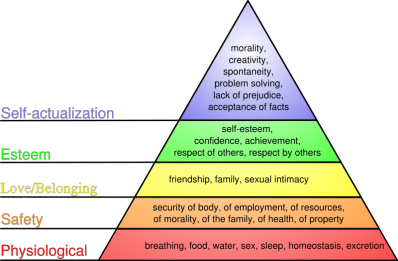
When I think about Maslow's hierarchy, food and shelter have to come before such things as problem-solving, community or eventually self-actualization...many of the things the Library (with a capital L) excels at. At least, the Library sets up the environment to make self-actualization more likely.
But people can't get excited about ideas or the life of the mind if they are hungry.
So it may seem like we as a society are heading into a time where we must hunker down and not do anything (translation: spend money). And of course I know all too well the whole "the library is free" mentality is a double-edged sword--it's free but it must be funded adequately.
But I was thinking that the economic downturn could be just the thing for libraries to use as a springboard to make their case to the American public:
1. We are a vital city service--as important as electricity or clean water.
2. Use us in good times and in bad.
3. We welcome ALL the people of the community here for technology access.
4. Hope lives here, at the library. Hope for improvement.
When all the headlines you see are about closing doors and belt-tightening, we can stand out from all the bad news: our doors are open, we are the place to come for education, entertainment, information...basically we are the place to come when you want to hope for a better life.
Is this realistic or am I just searching for a way out of all the bad news headlines?
Happy National Library Week.
Yikes.
When I think about Maslow's hierarchy, food and shelter have to come before such things as problem-solving, community or eventually self-actualization...many of the things the Library (with a capital L) excels at. At least, the Library sets up the environment to make self-actualization more likely.
But people can't get excited about ideas or the life of the mind if they are hungry.
So it may seem like we as a society are heading into a time where we must hunker down and not do anything (translation: spend money). And of course I know all too well the whole "the library is free" mentality is a double-edged sword--it's free but it must be funded adequately.
But I was thinking that the economic downturn could be just the thing for libraries to use as a springboard to make their case to the American public:
1. We are a vital city service--as important as electricity or clean water.
2. Use us in good times and in bad.
3. We welcome ALL the people of the community here for technology access.
4. Hope lives here, at the library. Hope for improvement.
When all the headlines you see are about closing doors and belt-tightening, we can stand out from all the bad news: our doors are open, we are the place to come for education, entertainment, information...basically we are the place to come when you want to hope for a better life.
Is this realistic or am I just searching for a way out of all the bad news headlines?
Happy National Library Week.
Thursday, April 10, 2008
Why Intellectual Freedom Still Matters
Maybe I'm the last person on earth to twig to this controversy, but this week, I had my pride in librarianship refreshed.
Gloria Won, a librarian at University of California at San Francisco medical center, discovered that Popline, a federally-funded health information database housed at Johns Hopkins University's Bloomberg School of Public Health was ignoring keyword searches using the word abortion. (Ironically, Popline bills itself as "Your connection to the world's reproductive health literature.") She contacted the database's manager, who confirmed that this had been done to comply with an interpretation of federal rules about making information about abortion available through federally-funded sources.
After the story went public, the dean of the Bloomberg School quickly changed the policy, recognizing that this was an overinterpretation of the rules.
No matter whether you are pro-choice or pro-life, access to information that makes your case and can potentially save lives is vital. Calling out a stupid, misguided and ill-advised policy that limits this access is part of long tradition of librarians fighting for intellectual freedom. I salute Ms. Won for her actions, and hope that we can all embody her attitude in our work.
Gloria Won, a librarian at University of California at San Francisco medical center, discovered that Popline, a federally-funded health information database housed at Johns Hopkins University's Bloomberg School of Public Health was ignoring keyword searches using the word abortion. (Ironically, Popline bills itself as "Your connection to the world's reproductive health literature.") She contacted the database's manager, who confirmed that this had been done to comply with an interpretation of federal rules about making information about abortion available through federally-funded sources.
After the story went public, the dean of the Bloomberg School quickly changed the policy, recognizing that this was an overinterpretation of the rules.
No matter whether you are pro-choice or pro-life, access to information that makes your case and can potentially save lives is vital. Calling out a stupid, misguided and ill-advised policy that limits this access is part of long tradition of librarians fighting for intellectual freedom. I salute Ms. Won for her actions, and hope that we can all embody her attitude in our work.
The Human Touch---in Wired?
Wired magazine features nine "Wired Business Trends 2008" in April. Number 9 is called "The Human Touch: Algorithms are terrific, but to search smarter, find a person." The article is specifically about websites such as Brijit, which publishes summaries of 125 magazine and newspaper articles and audio and video programs daily, rating and classifying them so readers can quickly decide what's relevant; Mahalo, a "human powered search engine" that hires freelancers to compile search results; ChaCha, which offers live guidance on analyzing results; and Squidoo, which allows users to create their own pages on specific topics of interest.
These sites leverage the amazing abundance of the web to allow personality and individuality to emerge. So where are libraries in all this? Is there a way we can begin to capitalize on the fact that the web magnifies the importance of personalization? Why do we keep the vast majority of our services on such an impersonal level? The old verities simply don't hold water any more.
These sites leverage the amazing abundance of the web to allow personality and individuality to emerge. So where are libraries in all this? Is there a way we can begin to capitalize on the fact that the web magnifies the importance of personalization? Why do we keep the vast majority of our services on such an impersonal level? The old verities simply don't hold water any more.
Wednesday, April 09, 2008
prediction markets
Hey look! I'm blogging!
There's a special section in the NY Times today on technology innovation. The cover story is about prediction markets and their usefulness for business decision-making. Something about it unsettled me, at first, but then I started thinking about the possible applications a little closer to home. What if we could use such a tool to help direct the features we choose to build at WebJunction for our members there - it's a smallish set of the library profession (30K members, 70K visitors a month) or even help direct decision-making at OCLC with the wisdom of the membership of our vast, global cooperative. Would you make "bets" on what's coming and what's next if you could win an iPod? It has such a lovely tone of fun and gaming that I think people might actually 'play'.
I'd love to hear if anyone knows of any library-related application of prediction markets *in libraries*. If our patrons could bet on the future of the library - where would that be?
There's a special section in the NY Times today on technology innovation. The cover story is about prediction markets and their usefulness for business decision-making. Something about it unsettled me, at first, but then I started thinking about the possible applications a little closer to home. What if we could use such a tool to help direct the features we choose to build at WebJunction for our members there - it's a smallish set of the library profession (30K members, 70K visitors a month) or even help direct decision-making at OCLC with the wisdom of the membership of our vast, global cooperative. Would you make "bets" on what's coming and what's next if you could win an iPod? It has such a lovely tone of fun and gaming that I think people might actually 'play'.
I'd love to hear if anyone knows of any library-related application of prediction markets *in libraries*. If our patrons could bet on the future of the library - where would that be?
Flickr has video!
Oh, I am so excited about Videos on Flickr. Not that YouTube doesn't cut the mustard, but I've had trouble uploading a few things to YouTube.
Plus I do prefer Flickr's more visually pleasing, clean interface. (90 seconds or less...this is microcontent at it's finest!)
Plus I do prefer Flickr's more visually pleasing, clean interface. (90 seconds or less...this is microcontent at it's finest!)
Monday, April 07, 2008
Mr. Sustainability
This morning among other stalling tactics I have been practicing while I stubbornly resist finishing my now-overdue article for NextSpace, I scanned the interesting articles in the latest two print magazines to hit my desk: American Libraries and Governing. Both had cover stories on environmental topics, which was not surprising as Earth Day is in April, spring is finally coming, etc.
So after I mopped up the drool from all the great green library architecture featured this month, I flipped over to Governing, to see that Fayetteville, AR has hired a person to help them be greener in the city government. And the guy has become known as Mr. Sustainability. AND he's all of 30 years old. How cool is that?! Nice that he's gotten some recognition for his work, and I hope it inspires some of us to be greener in our workplaces, too. Do you turn your monitor off at night? Flip the lights out? Walk occasionally, instead of always riding the elevator?
It strikes me that libraries are part of a not-so-big, green lifestyle by implicit design: you don't need to own the book in order to read it, absorb its knowledge and share it with others.
May be we should start capitalizing on our built-in green-ness, in addition to our beautiful new LEED-certified buildings. Can you appoint a Mr. (or Ms.) Sustainability for your staff? Or maybe it's a rotating distinction, that different staff members (or a volunteer!) wears for a couple of weeks, notes behaviors, and then suggests easy changes.
If you have a cotton/canvas library bag available for sale, why not team up with local grocery stores and make you bag available for purchase at the grocery store check-out? Whole Foods is aiming to be plastic-bag free by Earth Day. If they can do it, so can your grocery.
So after I mopped up the drool from all the great green library architecture featured this month, I flipped over to Governing, to see that Fayetteville, AR has hired a person to help them be greener in the city government. And the guy has become known as Mr. Sustainability. AND he's all of 30 years old. How cool is that?! Nice that he's gotten some recognition for his work, and I hope it inspires some of us to be greener in our workplaces, too. Do you turn your monitor off at night? Flip the lights out? Walk occasionally, instead of always riding the elevator?
It strikes me that libraries are part of a not-so-big, green lifestyle by implicit design: you don't need to own the book in order to read it, absorb its knowledge and share it with others.
May be we should start capitalizing on our built-in green-ness, in addition to our beautiful new LEED-certified buildings. Can you appoint a Mr. (or Ms.) Sustainability for your staff? Or maybe it's a rotating distinction, that different staff members (or a volunteer!) wears for a couple of weeks, notes behaviors, and then suggests easy changes.
If you have a cotton/canvas library bag available for sale, why not team up with local grocery stores and make you bag available for purchase at the grocery store check-out? Whole Foods is aiming to be plastic-bag free by Earth Day. If they can do it, so can your grocery.
Wednesday, April 02, 2008
April Show-ers
April is a busy month for conferences and other events, so all of the library highwaymen and highwaywomen are loosed. OK, I'm not as busy as the guys from Unshelved, but here's where I'll be in April:
April 4, webcast for Infopeople in Cupertino, CA, with Joan Frye Williams (Fixed the "P," per Mia)
April 17, Library of Virginia, Richomond
April 22, Oklahoma Library Association Annual Conference, Tulsa
April 24, Kentucky Library Association, Academic Library Section, Cumberland Gap State Park
April 30, "From Center City to the Exurbs: Trends in Public Library Realities," Columbus
The webcast is limited to California viewers on Friday, but it will be archived the following week.
I like that last one in Columbus; any program I don't have to fly to seems like a vacation.
I'm also hosting the annual OCLC talent show (a blatant takeoff on American Idol) in April, but we sure don't open that one up for the public!
April 4, webcast for Infopeople in Cupertino, CA, with Joan Frye Williams (Fixed the "P," per Mia)
April 17, Library of Virginia, Richomond
April 22, Oklahoma Library Association Annual Conference, Tulsa
April 24, Kentucky Library Association, Academic Library Section, Cumberland Gap State Park
April 30, "From Center City to the Exurbs: Trends in Public Library Realities," Columbus
The webcast is limited to California viewers on Friday, but it will be archived the following week.
I like that last one in Columbus; any program I don't have to fly to seems like a vacation.
I'm also hosting the annual OCLC talent show (a blatant takeoff on American Idol) in April, but we sure don't open that one up for the public!
Tuesday, April 01, 2008
The Lost Podcast
Many of you who read this blog know that Joan Frye Williams and I do a regular podcast on library issues called "Thinking Out Loud." The backfile is available here.
So why has this previously unreleased entry suddenly appeared on a totally different web site with no attribution? If anyone figures out what's going on, I hope you will a.) tell me; and b.) enjoy your day.
So why has this previously unreleased entry suddenly appeared on a totally different web site with no attribution? If anyone figures out what's going on, I hope you will a.) tell me; and b.) enjoy your day.
Monday, March 31, 2008
PLA: A Long Summary
Joey Rodger, the former Executive Director of the Public Library Association and President of the Urban Libraries Council, used to refer to library conferences as being like Brigadoon. All of a sudden, a whole community appears out of nowhere, flourishes for a few golden days, and then disappears back into the mists. This year's PLA National Conference was a perfect example of her wonderful simile.
The conference attracted nearly 10,000 people to a cold but sunny Minneapolis, and for the most part, I think nearly all of them went away pleased by their experience. There was a well-crafted selection of breakout sessions, a large and varied exhibit hall, and simply the best wrap-up speaker I've ever heard in my career. Just a few examples:
Thursday morning, I attended "The Game Studio: 21st Century Technologies for 21st Century Teens." The Minneapolis Public Library created a Teen Tech Squad, a cadre of young people, age 14 or so, who were carefully trained in helping people (adults as well as peers) learn about technology. According to Christy Mulligan, the Teen Central Librarian, the program was about "broadening the spectrum of opportunity...to build skills and assets that are going to make (participants) contributors to our community." The Tech Squad Members then worked in the Game Studio, helping their peers create and share their own online games. The best part of the program was the contribution made by the three Teen Squad Members who spoke; these are funny, well-spoken, and knowledgeable people who would do credit to any library. (Full disclosure: I serve on an advisory panel for the Minneapolis Public Library in an IMLS grant proposal to take the Game Studio program nationwide as a means of improving 21st century skills.)
On Friday afternoon, there was a good presentation on the new approaches to reference service that the Columbus Metropolitan Library is taking. The title alone tells you what they have in mind: "Off Your Seat and On Your Feet!" The idea is to get staff people circulating in their branch facilities, to help where the people are, instead of sitting back and waiting for the customers (their word) to come to a service desk. Jodi Lee is a delightful and engaging presenter, and she and her co-presenter, a somewhat more laid back Christopher Korenowsky, handled the many questions with aplomb. Most of the questions, unfortunately, seemed to fall into the category of "here's why we couldn't do this at our place," but Jodi and Christopher never missed a beat, nor did they back down. Well done!
Saturday, I got to hear WebJunction's own Michael Porter talk on a panel with two other speakers about coping with new technologies. Since Michael seems to be adept at every technology from Model T Fords to the next generation of robotics, he was a good choice. His bright, self-deprecating manner and his excellent graphics choices show why he's an in-demand speaker on the library circuit. Kudos to the other speakers, Janie Hermann and Stephanie Gerding, for matching Michael stride for stride.
I promised not to do any more shameless huckstering for the program I did with Joan Frye Williams, but why not? There were 300+ people in the room (at 8:30 on Saturday morning), there were a ton of questions in the Q-and-A, and I'll be posting the revised slides to the PLA web site shortly.
There were hundreds of exhibitors. I was especially impressed by two exhibitors that I probably can't mention by name here. One showed an amazing new microfilm to computer file converter. It can move 25 images a minute from roll film to jpg, pdf, or other image formats. The other exhibitor is a not-for-profit group that is creating online training programs to help elders (their term) learn how to use computers.
The WebJunction reception has been written about over at Blog Junction, so I won't go into that here, except to say that it's always great to see so many of my WJ friends and colleagues in one big room.
Paula Poundstone was the closing speaker for the conference. I don't know why she got to substitute for the announced speaker, but the gods of conference planning were certainly smiling upon us when this substitution was made. (Think of Lou Gehrig coming in to replace Wally Pipp in the Yankees line up in 1925, and you get the idea.) Paula came out and asked what seemed to be an innocuous question about the PLA conference, and just like that she was on her way. From the eliteness of having a "public" library conference ("I'm sorry, but you can't come in here. This is for the public."), to why we have to meet so often ("Librarians meet? Why? And you have to have minutes? Oh, my God..."), to the deeply puzzling reasons behind our ambivalence about the Dewey Decimal System ("You love the books, but you hate the way they're organized. Life must be hell for you!"), she skewered sacred cows with the abandon of a four year old. For years, the late, lamented Molly Ivins was my ultimate conference speaker; now, I gleefully award the crown to Paula Poundstone!
The conference attracted nearly 10,000 people to a cold but sunny Minneapolis, and for the most part, I think nearly all of them went away pleased by their experience. There was a well-crafted selection of breakout sessions, a large and varied exhibit hall, and simply the best wrap-up speaker I've ever heard in my career. Just a few examples:
Thursday morning, I attended "The Game Studio: 21st Century Technologies for 21st Century Teens." The Minneapolis Public Library created a Teen Tech Squad, a cadre of young people, age 14 or so, who were carefully trained in helping people (adults as well as peers) learn about technology. According to Christy Mulligan, the Teen Central Librarian, the program was about "broadening the spectrum of opportunity...to build skills and assets that are going to make (participants) contributors to our community." The Tech Squad Members then worked in the Game Studio, helping their peers create and share their own online games. The best part of the program was the contribution made by the three Teen Squad Members who spoke; these are funny, well-spoken, and knowledgeable people who would do credit to any library. (Full disclosure: I serve on an advisory panel for the Minneapolis Public Library in an IMLS grant proposal to take the Game Studio program nationwide as a means of improving 21st century skills.)
On Friday afternoon, there was a good presentation on the new approaches to reference service that the Columbus Metropolitan Library is taking. The title alone tells you what they have in mind: "Off Your Seat and On Your Feet!" The idea is to get staff people circulating in their branch facilities, to help where the people are, instead of sitting back and waiting for the customers (their word) to come to a service desk. Jodi Lee is a delightful and engaging presenter, and she and her co-presenter, a somewhat more laid back Christopher Korenowsky, handled the many questions with aplomb. Most of the questions, unfortunately, seemed to fall into the category of "here's why we couldn't do this at our place," but Jodi and Christopher never missed a beat, nor did they back down. Well done!
Saturday, I got to hear WebJunction's own Michael Porter talk on a panel with two other speakers about coping with new technologies. Since Michael seems to be adept at every technology from Model T Fords to the next generation of robotics, he was a good choice. His bright, self-deprecating manner and his excellent graphics choices show why he's an in-demand speaker on the library circuit. Kudos to the other speakers, Janie Hermann and Stephanie Gerding, for matching Michael stride for stride.
I promised not to do any more shameless huckstering for the program I did with Joan Frye Williams, but why not? There were 300+ people in the room (at 8:30 on Saturday morning), there were a ton of questions in the Q-and-A, and I'll be posting the revised slides to the PLA web site shortly.
There were hundreds of exhibitors. I was especially impressed by two exhibitors that I probably can't mention by name here. One showed an amazing new microfilm to computer file converter. It can move 25 images a minute from roll film to jpg, pdf, or other image formats. The other exhibitor is a not-for-profit group that is creating online training programs to help elders (their term) learn how to use computers.
The WebJunction reception has been written about over at Blog Junction, so I won't go into that here, except to say that it's always great to see so many of my WJ friends and colleagues in one big room.
Paula Poundstone was the closing speaker for the conference. I don't know why she got to substitute for the announced speaker, but the gods of conference planning were certainly smiling upon us when this substitution was made. (Think of Lou Gehrig coming in to replace Wally Pipp in the Yankees line up in 1925, and you get the idea.) Paula came out and asked what seemed to be an innocuous question about the PLA conference, and just like that she was on her way. From the eliteness of having a "public" library conference ("I'm sorry, but you can't come in here. This is for the public."), to why we have to meet so often ("Librarians meet? Why? And you have to have minutes? Oh, my God..."), to the deeply puzzling reasons behind our ambivalence about the Dewey Decimal System ("You love the books, but you hate the way they're organized. Life must be hell for you!"), she skewered sacred cows with the abandon of a four year old. For years, the late, lamented Molly Ivins was my ultimate conference speaker; now, I gleefully award the crown to Paula Poundstone!
National Library Week in South Africa
Meant to post about this a couple of weeks ago (ahem!) but better late than never. I was so cheered to hear that OCLC's latest advocacy ad subject, Neal Petersen, was picked up and used in South Africa for National Library Week 2008. I was looking around quickly for other national library week celebrations from other countries...anyone know where a good list might be?
Friday, March 28, 2008
In like a lion, out like a polar bear
Isn't that the saying for the month of March? Seems like it should be, up here. It's been snowing on and off all day. But yesterday all the high school kids were out in shorts, running for the track team. "Spring" is a relative term, I guess.
I've been away in lovely North Carolina. We visited friends and basically enjoyed ourselves for a full week. And before that, had my mother-in-law up for a visit. Lesson learned: give yourself a day or two between having guests visit you and leaving to go be a guest yourself. All those little things like laundry and packing and eating up all the perishable food can be a real pain when you're trying to entertain. (Even though my mother-in-law is about as easy-going as anyone I've ever met...she was a good sport about all of it.)
We visited the Davidson, NC library. Very cute. Little. Beautifully windowed, light and airy. Nestled in the middle of the town green, right across from a hipster coffee shop and a soda fountain that is vintage 1950's Americana, it's now a branch of the Charlotte and Mecklenburg County system. Very cool. Everyone in Davidson was watching the NCAA Tournament, it seems. That or waiting for the Easter bunny.
On an unrelated note--I saw that there's a company doing a road show for their downloadable audiobooks. It sounds like they're basically tricking out a big truck and driving around to cities, to help make sure people know how to use the online resources the libraries have purchased for their communities. This is a great idea! The library gets some free publicity about how up-to-date they are, users gain a better understanding of the new technology, and staff can basically enjoy the circus (or so it sounds...). Someone in one of those cities, you'll have to let us know how it goes! (OR someone get the scoop at PLA.)
Speaking of PLA...did anyone see John Wood? Was he as awesome as I would expect?
I've been away in lovely North Carolina. We visited friends and basically enjoyed ourselves for a full week. And before that, had my mother-in-law up for a visit. Lesson learned: give yourself a day or two between having guests visit you and leaving to go be a guest yourself. All those little things like laundry and packing and eating up all the perishable food can be a real pain when you're trying to entertain. (Even though my mother-in-law is about as easy-going as anyone I've ever met...she was a good sport about all of it.)
We visited the Davidson, NC library. Very cute. Little. Beautifully windowed, light and airy. Nestled in the middle of the town green, right across from a hipster coffee shop and a soda fountain that is vintage 1950's Americana, it's now a branch of the Charlotte and Mecklenburg County system. Very cool. Everyone in Davidson was watching the NCAA Tournament, it seems. That or waiting for the Easter bunny.
On an unrelated note--I saw that there's a company doing a road show for their downloadable audiobooks. It sounds like they're basically tricking out a big truck and driving around to cities, to help make sure people know how to use the online resources the libraries have purchased for their communities. This is a great idea! The library gets some free publicity about how up-to-date they are, users gain a better understanding of the new technology, and staff can basically enjoy the circus (or so it sounds...). Someone in one of those cities, you'll have to let us know how it goes! (OR someone get the scoop at PLA.)
Speaking of PLA...did anyone see John Wood? Was he as awesome as I would expect?
Wednesday, March 19, 2008
"It Ain't Necessarily So:" The Trailer!
If you want to get a sense of what Joan Frye Williams and I will be presenting at the PLA conference next Saturday, March 29, from 8:30 to 9:45 am in room M101 of the Minneapolis Convention Center, you can find an abbreviated set of our slides on the PLA handouts page.
And I promise this is the last shameless plug for our program!
And I promise this is the last shameless plug for our program!
Tuesday, March 18, 2008
WebJunction Welcomes Bloggers to PLA Reception
Hey, library bloggers---
If you're attending the PLA Conference in Minneapolis next week, please consider yourself invited to the WebJunction Member Reception on Thursday, March 27, from 5:30 to 8:00 pm at the Hyatt Regency.
I hope to see you there, and maybe even at my program with Joan Frye Williams, "It Ain't Necessarily So: Challenging the Assumptions of Legacy Librarianship" on Saturday morning at 8:30 am (gulp) in room M101 of the convention center.
If you're attending the PLA Conference in Minneapolis next week, please consider yourself invited to the WebJunction Member Reception on Thursday, March 27, from 5:30 to 8:00 pm at the Hyatt Regency.
I hope to see you there, and maybe even at my program with Joan Frye Williams, "It Ain't Necessarily So: Challenging the Assumptions of Legacy Librarianship" on Saturday morning at 8:30 am (gulp) in room M101 of the convention center.
Friday, March 14, 2008
Hulu is here
If you're a TV, movie or a YouTube junkie, now there's a new place for video content: Hulu.com.
There's not a *ton* of content here yet--but scanning through I saw enough Simpsons, Saturday Night Live and House clips to make for some fun doodling over the weekend. Not to mention the smattering of full-length movies.
I wonder if you could write a little script to capture the metadata for each episode and list it (like a journal article) in WorldCat or your local catalog, so the user could find it, click and get right to the content. It doesn't sound that hard.
That usually means it's next to impossible...
There's not a *ton* of content here yet--but scanning through I saw enough Simpsons, Saturday Night Live and House clips to make for some fun doodling over the weekend. Not to mention the smattering of full-length movies.
I wonder if you could write a little script to capture the metadata for each episode and list it (like a journal article) in WorldCat or your local catalog, so the user could find it, click and get right to the content. It doesn't sound that hard.
That usually means it's next to impossible...
Tuesday, March 11, 2008
Rewire your Life Day
But whoops, we already missed it. Rewire your Life Day was yesterday, according to a Michigan State University professor, Ellen Ernst Kossek.
But contrary to what it sounds like (take a day to sort through all the old chargers, USB cables, hard drive folders, and straighten out your iTunes to mobile phone synch, once and for all...), she's saying to take a break from your iLife and switch everything off.
Go to lunch with a friend, talk face to face, etc.
Maybe I have the crackberry addition, because it feels almost the equivalent of saying, "This is a pencil free day," because your hand needs a break from all this writing it does.
Almost, but not quite. And looking through Kossek's Work-Life Web site, I am drawn in. The CEO of Me sounds appealing. Okay, I am changing my mind about this crazy person who is proposing I stop blogging e-mailing chatting texting powerpointing videoing for a day....
Now, can I get that title in an eBook, so I can read sections of it to my lunch friend?
Setting aside the fact that it would promote the wrong brand message for your library (a connected, totally wired space for the future)...what do you think of Rewire Your Life Day, as a personal empowerment strategy?
But contrary to what it sounds like (take a day to sort through all the old chargers, USB cables, hard drive folders, and straighten out your iTunes to mobile phone synch, once and for all...), she's saying to take a break from your iLife and switch everything off.
Go to lunch with a friend, talk face to face, etc.
Maybe I have the crackberry addition, because it feels almost the equivalent of saying, "This is a pencil free day," because your hand needs a break from all this writing it does.
Almost, but not quite. And looking through Kossek's Work-Life Web site, I am drawn in. The CEO of Me sounds appealing. Okay, I am changing my mind about this crazy person who is proposing I stop blogging e-mailing chatting texting powerpointing videoing for a day....
Now, can I get that title in an eBook, so I can read sections of it to my lunch friend?
Setting aside the fact that it would promote the wrong brand message for your library (a connected, totally wired space for the future)...what do you think of Rewire Your Life Day, as a personal empowerment strategy?
Friday, March 07, 2008
Our hearts go out to Jerusalem mourners
[Note: this is not a political post.]
I am reminded of the bit in the Charles Stanford work (sorry Dr. Delcamp--I don't remember which one!), "Pray for the Peace of Jerusalem."
The news yesterday would have been a passing blip on the radio, had they not included that the shootings happened in the library. For some reason, that factoid reverberated right down to the pit of my stomach.
I will not urge you to beef up security. I will not urge you to create an emergency evacuation plan. (Although both of those things would probably be smart undertakings.)
I urge you to set aside time today to reflect on how much we all take the sanctity of the library for granted. As if somehow, whether we have vast expanses of steel and glass, quiet nooks of burnished copper and dark-stained wood, or simply plastic chairs and some makeshift computer tables--somehow, being in the library makes us immune to danger.
And then pray for peace throughout troubled lands.
I am reminded of the bit in the Charles Stanford work (sorry Dr. Delcamp--I don't remember which one!), "Pray for the Peace of Jerusalem."
The news yesterday would have been a passing blip on the radio, had they not included that the shootings happened in the library. For some reason, that factoid reverberated right down to the pit of my stomach.
I will not urge you to beef up security. I will not urge you to create an emergency evacuation plan. (Although both of those things would probably be smart undertakings.)
I urge you to set aside time today to reflect on how much we all take the sanctity of the library for granted. As if somehow, whether we have vast expanses of steel and glass, quiet nooks of burnished copper and dark-stained wood, or simply plastic chairs and some makeshift computer tables--somehow, being in the library makes us immune to danger.
And then pray for peace throughout troubled lands.
Tuesday, March 04, 2008
Trendspotting and PLA
The round of spring conferences is starting to gear up.
A week from Friday, March 14, I'll be speaking at the Connecticut Library Consortium's third Trendspotting conference at the University of Hartford. My title is "Unlocking the Walled Garden," and will focus on how libraries can move content into the public sphere more effectively, including through the use of open source software.
Joan Frye Williams and I will present "It Ain't Necessarily So: Challenging the Assumptions of Legacy Librarianship" at the Public Library Association conference. This program will begin at 8:30 am on Saturday, March 29 in room M101 of the Minneapolis Convention Center. (Believe me, we didn't pick the time!)
I hope to see you at one of these events, or at one of the four programs that I'm speaking at during April.
A week from Friday, March 14, I'll be speaking at the Connecticut Library Consortium's third Trendspotting conference at the University of Hartford. My title is "Unlocking the Walled Garden," and will focus on how libraries can move content into the public sphere more effectively, including through the use of open source software.
Joan Frye Williams and I will present "It Ain't Necessarily So: Challenging the Assumptions of Legacy Librarianship" at the Public Library Association conference. This program will begin at 8:30 am on Saturday, March 29 in room M101 of the Minneapolis Convention Center. (Believe me, we didn't pick the time!)
I hope to see you at one of these events, or at one of the four programs that I'm speaking at during April.
Long weekend
There was sunshine on the beach, too...but still in our snowboots. Hello March and bring on the spring fever.
Monday, March 03, 2008
Unscrew America
A cool site my friend Joel sent me:
Unscrew America
Apologies to all the non-U.S. readers that we here in the States need nifty Web sites like this one to remind us what conservational-type techniques we should be employing...when your governments simply mandate things like recycling or green power sources. Or your culture is more conservation-minded in general.
Well, enjoy the site because I am groovin' on it--even if it's just for the fun music.
Unscrew America
Apologies to all the non-U.S. readers that we here in the States need nifty Web sites like this one to remind us what conservational-type techniques we should be employing...when your governments simply mandate things like recycling or green power sources. Or your culture is more conservation-minded in general.
Well, enjoy the site because I am groovin' on it--even if it's just for the fun music.
Tuesday, February 26, 2008
The Last Lecture
My step-mother tuned me into this lecture by the now-famous Carnegie Mellon professor, Randy Pausch. I was reminded of it again yesterday, when the Chronicle reported he is doing well.
Be warned, if you haven't yet watched it--there is not an single shred of self-sympathy in his presentation, but I still got choked up at times.
An earlier reporting from the Chronicle.
What does this have to do with libraries? It's inspiration, pure and simple.
Be warned, if you haven't yet watched it--there is not an single shred of self-sympathy in his presentation, but I still got choked up at times.
An earlier reporting from the Chronicle.
What does this have to do with libraries? It's inspiration, pure and simple.
Thursday, February 21, 2008
LJ up for sale?
I couldn't believe my eyes when I saw the LJ Academic Newswire this afternoon. Here's the brief paragraph, to save you a click:
I wonder who those buyers might be. (NB! Do not read anything into this. I know nothing!)
Library Journal for Sale as Reed Elsevier Says It Will Divest B2B Publishing Business
Reed Elsevier today announced plans to sell Reed Business Information (RBI), the parent company of Library Journal and sister publications Publishers Weekly, School Library Journal, and Críticas. In a statement, Reed Elsevier CEO Crispin Davis said that the company was divesting its advertising-based business-to-business publishing unit and moving more aggressively into a "risk management business," fueled by a $4 billion acquisition of ChoicePoint, a company that provides data and analytics to the insurance industry. Davis did not identify potential buyers for RBI, and had no timeline for the sale, but expected "a strong level" of interest in RBI from both "strategic and private equity buyers."
I wonder who those buyers might be. (NB! Do not read anything into this. I know nothing!)
Wednesday, February 20, 2008
Total lunar eclipse tonight

From the NASA site...
A total eclipse of the Moon occurs during the night of Wednesday, February 20/21, 2008. The entire event is visible from South America and most of North America (on Feb. 20) as well as Western Europe, Africa, and western Asia (on Feb. 21). During a total lunar eclipse, the Moon's disk can take on a dramatically colorful appearance from bright orange to blood red to dark brown and (rarely) very dark gray.
An eclipse of the Moon can only take place at Full Moon, and only if the Moon passes through some portion of Earth's shadow.
Tuesday, February 19, 2008
WorldCat blog

At long last, I am very happy to welcome the WorldCat blog into the family. Many of you met Jasmine at the last Blog Salon, and if you haven't yet--you might have seen her on the road talking about social networking and WorldCat.
She just made her inaugural post to the WorldCat blog (full disclosure--I am on the WorldCat blog team, too.) with a classic Sesame Street YouTube video of Cookie Monster in the library. I love it!
(And after you watch it, you'll no longer marvel at why the library brand=books!)
Eat, Pray, Love
Along with everyone else in America, I just finished Eat, Pray, Love. I know, you read it years ago. Still a fun, inspiring story.
It's snowing, but the sun's out. Strange.
It's snowing, but the sun's out. Strange.
Thursday, February 14, 2008
Why We Need Libraries ("Oh, My God" Division, part 2)
Susan Jacoby has written a new book, The Age of American Unreason. The book is, according to her web site, "a disturbing portrait of a mutant strain of public ignorance, anti-rationalism, and anti-intellectualism that has developed over the past four decades and now threatens the future of American democracy." According to an article in today's The New York Times, Jacoby was inspired to write her book by a conversation she heard in New York City on September 11, 2001:
“This is just like Pearl Harbor,” one of the men said.
“This is just like Pearl Harbor,” one of the men said.
The other asked, “What is Pearl Harbor?”
“That was when the Vietnamese dropped bombs in a harbor, and it started the Vietnam War,” the first man replied.
Any comparison between this conversation and John Belushi's Henry V-style "rally the troops" speech in Animal House (remember: Animal House was rated R for language!) is purely coincidental.Is Borders Becoming a For-Profit Public Library?
Check out this article in today's USA Today and consider. They are mixing books, digital downloads and their inevitable coffee shops in a single concept store. A quote from the article:
That description sounds chillingly familiar, doesn't it?
...follow the table of books snaking off to the right, and you'll come face-to-face with Borders' newest retail strategy: a digital center where you can download music or books, burn CDs, research family histories, print pictures and order leather-bound books crammed with family photos — with help from clerks who know how to do those sorts of things and won't embarrass you if you don't.
That description sounds chillingly familiar, doesn't it?
Worthington's "World Café"
Last Friday, I spoke at the Worthington (Ohio) Libraries' Board, Staff, and Community Retreat session. Worthington is a wonderfully progressive suburban library system Library Journal's 2007 Library of the Year, in fact), and the director, Meribah Mansfield, has put together a young, enthusiastic leadership team that seems to effervesce with new ideas. (Full disclosure: Meribah and I go way back as friends and colleagues. I live in her library district, and she serves on OCLC's Members Council.) I was delighted to speak in Worthington for another reason---I love any speaking engagement I can drive to.
The point of this post, though, is to talk about the structure the organizers of the meeting used to get the discussion moving. They called this session a "World Café," which has no relationship to the NPR radio show of the same name.
There were about seven tables of eight people each at this event. Lisa Fuller and Kristin Shelley, the organizers of the discussion, had four questions they wanted discussed. They gave us the first question, then asked us to spend about eight minutes discussing it. At the end of the eight minutes, Lisa and Kristin raised their hands to end the discussion, and then they told us all to change tables and sit with a different mix of people for the second question. We worked through this for all four questions, changing tables and getting to meet new people each time. There were no assigned recorders or discussion leaders.
When all the questions had been discussed, they asked us for key "Ah-Ha!" moments at each table. So in about 45 minutes, we had a terrific discussion, and the board had several flip chart pages full of good ideas to take into the second day of their deliberations.
If you are running a meeting seeking broad based input, this could be a good model.
Incidentally, for years, I've been saying in my talks that library web sites can be called many things, but they can rarely be called fun. Here is an exception.
The point of this post, though, is to talk about the structure the organizers of the meeting used to get the discussion moving. They called this session a "World Café," which has no relationship to the NPR radio show of the same name.
There were about seven tables of eight people each at this event. Lisa Fuller and Kristin Shelley, the organizers of the discussion, had four questions they wanted discussed. They gave us the first question, then asked us to spend about eight minutes discussing it. At the end of the eight minutes, Lisa and Kristin raised their hands to end the discussion, and then they told us all to change tables and sit with a different mix of people for the second question. We worked through this for all four questions, changing tables and getting to meet new people each time. There were no assigned recorders or discussion leaders.
When all the questions had been discussed, they asked us for key "Ah-Ha!" moments at each table. So in about 45 minutes, we had a terrific discussion, and the board had several flip chart pages full of good ideas to take into the second day of their deliberations.
If you are running a meeting seeking broad based input, this could be a good model.
Incidentally, for years, I've been saying in my talks that library web sites can be called many things, but they can rarely be called fun. Here is an exception.
Tuesday, February 12, 2008
Pecha Kucha Night at your Library?
My always-on source of interesting, relevant material just sent me another tidbit of fascinating culture:
Pecha Kucha Night
Basically, it's a way for up-and-coming architects and visual designers to show their hot new ideas off, but not get bogged down in the nitty-gritty. Each person gets 20 slides and 20 seconds for each slide.
This could be a great way to draw creatives and artistically-inclined cultural mavens into your library on a biweekly (fortnightly) or monthly basis.
I say fortnightly because I've been at Members Council the past 2 days and am feeling quite global. Or wishing I could express myself less U.S.-centrically...
Pecha Kucha Night
Basically, it's a way for up-and-coming architects and visual designers to show their hot new ideas off, but not get bogged down in the nitty-gritty. Each person gets 20 slides and 20 seconds for each slide.
This could be a great way to draw creatives and artistically-inclined cultural mavens into your library on a biweekly (fortnightly) or monthly basis.
I say fortnightly because I've been at Members Council the past 2 days and am feeling quite global. Or wishing I could express myself less U.S.-centrically...
Friday, February 08, 2008
Jenny Levine and Web 2.0
Okay okay, I am guilty of name-dropping. But Jenny's work on Web 2.0 stuff (gaming in particular) is fantastic and I wanted to make sure everyone had heard about the event going on in Virginia next month.
It's called Changing the Way Libraries Do Business: Meeting the Challenges of the Web 2.0 World, and of course the title alone was enough to pique my interest (oh she that loves change for change's sake!). But on top of that, Jenny is the keynote. And there's a raft of additional interesting people slated to speak, too:
So it's going to be a good session. I wish they were videocasting it. I can't go, because we've already booked our tickets to go see friends for a long Easter weekend. But take the Maundy Thursday (I know it can be really dead on academic campuses right before Easter) and give your brain an infusion of fresh new and fun ideas.
It's called Changing the Way Libraries Do Business: Meeting the Challenges of the Web 2.0 World, and of course the title alone was enough to pique my interest (oh she that loves change for change's sake!). But on top of that, Jenny is the keynote. And there's a raft of additional interesting people slated to speak, too:
*Kate Sheehan from Darien Public Library
*Jamie Coniglio from George Mason University
*Jennifer Howell from Western Maryland Public Libraries
*Karen Calhoun from OCLC
So it's going to be a good session. I wish they were videocasting it. I can't go, because we've already booked our tickets to go see friends for a long Easter weekend. But take the Maundy Thursday (I know it can be really dead on academic campuses right before Easter) and give your brain an infusion of fresh new and fun ideas.
Thursday, February 07, 2008
Hollywood does Libraries
Eric just sent me a link to the Hollywood Reporter:
Estevez goes 'Public'
Here's a clip from the press release:
I am sure it will be more in-depth (and less stereotypical) than The Librarian!
Estevez goes 'Public'
Here's a clip from the press release:
Estevez is prepping "The Public," a social drama set in a public library that he wrote and will direct as his follow-up to "Bobby."
The story is loosely based on a Los Angeles Times op-ed piece written by Chip Ward, a retiring librarian in Salt Lake City, which discussed the epidemic issue of libraries becoming de facto shelters for the homeless and the mentally ill in light of many social program cuts.
I am sure it will be more in-depth (and less stereotypical) than The Librarian!
Wednesday, February 06, 2008
Things that don't suck
According to Wired magazine...Public libraries! (Right between "heated seats" and "remote control.")
I would have put ice cream higher up on the list. But maybe placement on the list does not indicate its rank of nonsuckiness.
Also check out the list of things that do suck. (According to Wired.) What's cool is, they've gathered scientific reasons for the suckiness.
(Spotted by Andy!)
I would have put ice cream higher up on the list. But maybe placement on the list does not indicate its rank of nonsuckiness.
Also check out the list of things that do suck. (According to Wired.) What's cool is, they've gathered scientific reasons for the suckiness.
(Spotted by Andy!)
Tuesday, February 05, 2008
"Better Than Free"
Bruce Newell, late of the Montana Library Network and now a member of the OCLC Board of Trustees directed our attention to a fascinating post by Kevin Kelly on The Technium called "Better Than Free," which sets forth the premise, "When copies (basically everything on the Web) are free, you need to sell things which can not be copied."
Kelly then lists eight attributes he believes can be sold in this market, including personalization, interpretation, and findability. He calls these attributes "generatives," because they are attributed which must be grown from scratch, cultivated and nurtured over time. They can't be faked or cloned. In other words, it's not enough to say you provide immediacy, you have to do it, over and over again, over a long period of time without screwing it up.
If we put this into a library context, what can libraries do to add value to their offerings to make them useful in an era when, as we are so often reminded, "everything is on the Web"? It seems to me that using these generatives as criteria, we could begin to think about how to bring our services into the 21st century. How do we improve findability, for example, an area we have claimed as our own but which doesn't seem to measure up to the benchmarks of the new environment?
Also, could we begin to build a reputation in some of these areas? For example, what can we do to improve the personalization of library services? Can we assist in interpretation in ways we have not before?
Kelly is the first person I have read without a vested interest in the current structure to boldly state that aggregators will continue to have a role, reason enough for librarians to want to know more about his ideas!
Kelly then lists eight attributes he believes can be sold in this market, including personalization, interpretation, and findability. He calls these attributes "generatives," because they are attributed which must be grown from scratch, cultivated and nurtured over time. They can't be faked or cloned. In other words, it's not enough to say you provide immediacy, you have to do it, over and over again, over a long period of time without screwing it up.
If we put this into a library context, what can libraries do to add value to their offerings to make them useful in an era when, as we are so often reminded, "everything is on the Web"? It seems to me that using these generatives as criteria, we could begin to think about how to bring our services into the 21st century. How do we improve findability, for example, an area we have claimed as our own but which doesn't seem to measure up to the benchmarks of the new environment?
Also, could we begin to build a reputation in some of these areas? For example, what can we do to improve the personalization of library services? Can we assist in interpretation in ways we have not before?
Kelly is the first person I have read without a vested interest in the current structure to boldly state that aggregators will continue to have a role, reason enough for librarians to want to know more about his ideas!
Monday, February 04, 2008
New England in mourning
I realize no one in libraryland watches football except us marketing types and advertising affectionados, but I can't help but comment on the game last night. Who would have predicted it?
Just goes to show--it ain't over until it's over (unless there's only 1 second left on the clock...). Remember the Giants when you're in a tough funding situation, hiring situation, or new board members who are flexing their board member-right to question everything.
Most of us here woke up still dumb-founded!
Just goes to show--it ain't over until it's over (unless there's only 1 second left on the clock...). Remember the Giants when you're in a tough funding situation, hiring situation, or new board members who are flexing their board member-right to question everything.
Most of us here woke up still dumb-founded!
Moore's Law
Moore's Law continues to prevail. Intel has just announced a chip that's packed with 2 billion transistors.
Still care to argue over Wikipedia?
Still care to argue over Wikipedia?
Friday, February 01, 2008
simple matters
It's day four of my sitting back at my desk after having been away for several weeks to spend important time with friends and family. All the same bright stars are here - more of them, actually - doing incredibly diligent, insightful work with and for libraries and library staff. Through their work they create and support change for our profession, and it's good change too: another librarian signed up for their first RSS feed; another library with a completed technology plan.
Having been away, I admit that I find myself somewhat disconnected from some parts of the overall effort. Sure, I'm floating about, making various remarks, each accompanied by a CRH jest, smirk, or toss of the hair. Honestly, it hasn't been too terribly difficult to dive back into projects and conversations, do what I do, what some like to call "be Chrystie Hill." But behind all that - it's as if I'm watching myself from above - I feel as if I'm about to cross a new threshold, but I don't know what's exactly I'm crossing over into. (I can hear George,and Marilyn, and Clayton, and others saying as they read this "Don't do it Chrystie - walk away from the light!")
Not to worry. I'm not leaving library land, nor what I still claim to be the best job in library land. On the contrary, the threshold involves some new ... let's call it perspective, but that's not the right word ... clarity? ... about "what's important," and it really is very simple: at the end of the day we all should be able to say that we are working to change libraries so that they matter more. (Don't say we already matter. We don't matter enough.) As a profession, we should be of single mind on this (or something like it) and all of our efforts should map to a vision - call me Utopian - where all libraries are relevant and thriving.
At the very least, I know that's why I care about my job, and that's why I come to work every day. Being away reminded me of the simplicity of it, really, and I'm hoping I can stay clear on this as I immerse myself back into the details and the complexities of our work. (Ever the optimist; I know, I know.)
Hello Libraryland. It is great to be back.
Having been away, I admit that I find myself somewhat disconnected from some parts of the overall effort. Sure, I'm floating about, making various remarks, each accompanied by a CRH jest, smirk, or toss of the hair. Honestly, it hasn't been too terribly difficult to dive back into projects and conversations, do what I do, what some like to call "be Chrystie Hill." But behind all that - it's as if I'm watching myself from above - I feel as if I'm about to cross a new threshold, but I don't know what's exactly I'm crossing over into. (I can hear George,and Marilyn, and Clayton, and others saying as they read this "Don't do it Chrystie - walk away from the light!")
Not to worry. I'm not leaving library land, nor what I still claim to be the best job in library land. On the contrary, the threshold involves some new ... let's call it perspective, but that's not the right word ... clarity? ... about "what's important," and it really is very simple: at the end of the day we all should be able to say that we are working to change libraries so that they matter more. (Don't say we already matter. We don't matter enough.) As a profession, we should be of single mind on this (or something like it) and all of our efforts should map to a vision - call me Utopian - where all libraries are relevant and thriving.
At the very least, I know that's why I care about my job, and that's why I come to work every day. Being away reminded me of the simplicity of it, really, and I'm hoping I can stay clear on this as I immerse myself back into the details and the complexities of our work. (Ever the optimist; I know, I know.)
Hello Libraryland. It is great to be back.
OMG tech division
Microsoft makes a bid for Yahoo! ($45 billion U.S.)
Amazon to acquire Audible.com! ($300 million U.S.)
Is this the market recession we keep hearing so much about?
Amazon to acquire Audible.com! ($300 million U.S.)
Is this the market recession we keep hearing so much about?
Why We Need Libraries ("Oh, My God" Division)
Why We Need Libraries:
LONDON (Reuters) - A shopping chain has withdrawn the sale of beds named Lolita and designed for six-year-old girls after furious parents pointed out that the name was synonymous with sexually active preteens.
LONDON (Reuters) - A shopping chain has withdrawn the sale of beds named Lolita and designed for six-year-old girls after furious parents pointed out that the name was synonymous with sexually active preteens.
Woolworths said staff who administer the website selling the beds were not aware of the connection.
In "Lolita", a 1955 novel by Vladimir Nabokov, the narrator becomes sexually involved with his 12-year-old stepdaughter -- but Woolworths staff had not heard of the classic novel or two subsequent films based on it.
Wednesday, January 30, 2008
Kindle: First e-Impressions
This week, I read my first book on Amazon's remarkable new e-book reader, Kindle. It's not perfect, but it beats many of the other e-book delivery system I've ever tried. Full disclosure: I work for OCLC, which owns NetLibrary, one of the world's largest distributors of e-content.
My Kindle arrived last week after a one-month wait. The packaging seems a little excessive, but at least it wasn't in one of those god-awful unbreakable blister packs. It comes with a number of accessories, including an AC charger, a USB connector, a pretty good instruction manual, and a funky cardboard leatherette cover. The unit ships with two bits of content: a welcome letter from Jeff Bezos, which I accidentally deleted immediately after reading it, and a longer version of the user's manual.
I went to the Kindle store, accessible from the unit, and ordered two books: Steve Martin's Born Standing Up: A Comic's Life and the Oxford edition of The Adventures of Huckleberry Finn. The first thing you discover as you order Kindle books is that your unit is already associated with your Amazon account, so buying books is utterly seamless and as addictive as crystal meth. The books also download as fast as advertised. The second thing you discover is that the books are not all priced at $9.99; many are considerably more expensive and other, mainly public domain classics, are very inexpensive. Old Huck only cost me $1.29. Given Mark Twain's hatred for the expiration of copyright, he would not have been happy that I could pick up his book that inexpensively. But he would have been enthralled by the technology.
The Kindle is lighter than most paperbacks. The e-Ink technology is every bit as slick as you've probably heard. Without backlighting, there is no flicker to the page. I read the entire Steve Martin book without having to recharge the battery. It's not a very long book, but even so...
None of this would amount to a hill of beans if the reading experience were not there. For me, it is there. In spades.
I found myself getting thoroughly enmeshed in Martin's memoir, as thoroughly as if I were reading the paper edition. It helps that it's well-written and covers subjects (comedy, show business) in which I have long-standing interests. But I've begun re-reading Huck Finn, and I've also begun Doris Kearns Goodwin's Team of Rivals, and I believe that the experience will be carried into other titles as well. In fact, this is the second time I've begun Team of Rivals: the size of the book physically overwhelmed me. I couldn't carry it conveniently in my computer bag on an airplane, and it is too unwieldy to read in bed. Since these two places are where I do 75% of my non-work reading, I knew I was never going to make it through the hardback!
Another great feature is the variety of type sizes from which you can choose. At night, when I'm tired, it is tow clicks to make the type size is bigger. During the day, when I'm more alert, I can go to the smaller size and page forward less often.
As noted, Kindle isn't perfect in my opinion. I still keep accidentally advancing the page before I'm ready, due to the position of the two "next page" bars on either side of the unit. The screen wipe between pages, required by the e-Ink, is moderately distracting, but I'm learning how to time the "next page" button so that the screen wipes just as I've read the last word on the page. With such diversions are small minds made happy.
The proprietary format and the charges to access blogs and other content that are freely available elsewhere are real problems now, although I would expect to see these addressed in the not too distant future. The cardboard/leatherette cover is good for protecting the reader, but you can't actually hold the book to read when it's in the cover, unless I'm doing something pathetically wrong. Not that it would be the first time.
This little reader is a fascinating step forward for e-content, in my opinion. I would love to see textbooks available in this format. I hate seeing my poor 8-year old grandson schlepping a heavy backpack full of textbooks. By the time he hits college, his back is going to be in worse shape than mine is now.
So the question seems to be, what now for libraries? Do we have in Kindle an opportunity, a threat, or a parallel course?
PS: A slightly earlier piece I wrote about Kindle is now available on WebJunction here.
My Kindle arrived last week after a one-month wait. The packaging seems a little excessive, but at least it wasn't in one of those god-awful unbreakable blister packs. It comes with a number of accessories, including an AC charger, a USB connector, a pretty good instruction manual, and a funky cardboard leatherette cover. The unit ships with two bits of content: a welcome letter from Jeff Bezos, which I accidentally deleted immediately after reading it, and a longer version of the user's manual.
I went to the Kindle store, accessible from the unit, and ordered two books: Steve Martin's Born Standing Up: A Comic's Life and the Oxford edition of The Adventures of Huckleberry Finn. The first thing you discover as you order Kindle books is that your unit is already associated with your Amazon account, so buying books is utterly seamless and as addictive as crystal meth. The books also download as fast as advertised. The second thing you discover is that the books are not all priced at $9.99; many are considerably more expensive and other, mainly public domain classics, are very inexpensive. Old Huck only cost me $1.29. Given Mark Twain's hatred for the expiration of copyright, he would not have been happy that I could pick up his book that inexpensively. But he would have been enthralled by the technology.
The Kindle is lighter than most paperbacks. The e-Ink technology is every bit as slick as you've probably heard. Without backlighting, there is no flicker to the page. I read the entire Steve Martin book without having to recharge the battery. It's not a very long book, but even so...
None of this would amount to a hill of beans if the reading experience were not there. For me, it is there. In spades.
I found myself getting thoroughly enmeshed in Martin's memoir, as thoroughly as if I were reading the paper edition. It helps that it's well-written and covers subjects (comedy, show business) in which I have long-standing interests. But I've begun re-reading Huck Finn, and I've also begun Doris Kearns Goodwin's Team of Rivals, and I believe that the experience will be carried into other titles as well. In fact, this is the second time I've begun Team of Rivals: the size of the book physically overwhelmed me. I couldn't carry it conveniently in my computer bag on an airplane, and it is too unwieldy to read in bed. Since these two places are where I do 75% of my non-work reading, I knew I was never going to make it through the hardback!
Another great feature is the variety of type sizes from which you can choose. At night, when I'm tired, it is tow clicks to make the type size is bigger. During the day, when I'm more alert, I can go to the smaller size and page forward less often.
As noted, Kindle isn't perfect in my opinion. I still keep accidentally advancing the page before I'm ready, due to the position of the two "next page" bars on either side of the unit. The screen wipe between pages, required by the e-Ink, is moderately distracting, but I'm learning how to time the "next page" button so that the screen wipes just as I've read the last word on the page. With such diversions are small minds made happy.
The proprietary format and the charges to access blogs and other content that are freely available elsewhere are real problems now, although I would expect to see these addressed in the not too distant future. The cardboard/leatherette cover is good for protecting the reader, but you can't actually hold the book to read when it's in the cover, unless I'm doing something pathetically wrong. Not that it would be the first time.
This little reader is a fascinating step forward for e-content, in my opinion. I would love to see textbooks available in this format. I hate seeing my poor 8-year old grandson schlepping a heavy backpack full of textbooks. By the time he hits college, his back is going to be in worse shape than mine is now.
So the question seems to be, what now for libraries? Do we have in Kindle an opportunity, a threat, or a parallel course?
PS: A slightly earlier piece I wrote about Kindle is now available on WebJunction here.
Tuesday, January 29, 2008
Some Retirement Plan
Have you heard about the late Jean Preston? She was a librarian in England who, over the years and through inheritance from her father, amassed an $8 million collection of at works and rare books, all hoarded in her unprepossessing little house in Oxford. Included in the collection were works by Fra Angelico, Dante Gabriel Rossetti, and Sir Edward Burne-Jones. She had a rare early edition of the works of Chaucer tucked away in a closet. The extent of her treasure trove was discovered only when the auctioneers came in to inventory her possessions for sale.
I have no idea how this fits into the general theme of "It's All Good," but I thought her rare collecting skills should not go unremembered!
I have no idea how this fits into the general theme of "It's All Good," but I thought her rare collecting skills should not go unremembered!
Monday, January 28, 2008
We are the Web, We are the People
A personal story that happened this weekend, about the power of the internet bringing us together.
I posted a question out to a local online forum of about 800 people. Within 5 minutes of my post, I had a response in my inbox from someone who could help. How incredible is that? For all its faults and impersonalizing possibilities, I love how the Web can bring disparate people together on common ground they wouldn't have known they had, had they met and talked in person.
I posted a question out to a local online forum of about 800 people. Within 5 minutes of my post, I had a response in my inbox from someone who could help. How incredible is that? For all its faults and impersonalizing possibilities, I love how the Web can bring disparate people together on common ground they wouldn't have known they had, had they met and talked in person.
Friday, January 25, 2008
Connecting with Immigrants
The evaluation report "Welcome to Your Library: Connecting Public Libraries and Refugee Communities" would be interesting reading for any public librarian or trustee who is attempting to serve immigrants in their communities. Although it is a review of a project that was launched in 2003 in London, many of its findings are applicable today anywhere. From the Executive Summary, for example: "Establish ... 'critical friends' in positions of authority in other sectors with no direct connection to library services delivery in order to increase the interaction with cross-sector initiatives."
If this inspires you, consider checking out WebJunction's Spanish Language Outreach program, designed to help US public libraries better serve Spanish speakers.
If this inspires you, consider checking out WebJunction's Spanish Language Outreach program, designed to help US public libraries better serve Spanish speakers.
Thursday, January 24, 2008
Great editorial
I commend to your reading Rob Preston's "Down to Business" column in this week's Information Week magazine. The online version is here.
Titled, "In a Gray World, Why Do We See in Black and White?," Preston makes the point that there is a difference "between conviction and blind obedience." While he is writing about the IT world, you can substitute analogous library terms and suddenly his thoughts are totally, eerily relevant to us.
Titled, "In a Gray World, Why Do We See in Black and White?," Preston makes the point that there is a difference "between conviction and blind obedience." While he is writing about the IT world, you can substitute analogous library terms and suddenly his thoughts are totally, eerily relevant to us.
Software as a Service
Interesting review in Salon today of The Big Switch: Rewiring the World, from Edison to Google, by Nicholas G. Carr. Carr proclaims the end of the personal computing era, with the heavy-lifting of computing moving from the desktop to the web with global services that power our work.
He describes the movement away from Thomas Edison's vision of small, DC generators powering neighborhoods and individual factories to Nikola Tesla's vision of large, AC plants that serve wide areas. He compares this to the move today away from desktop or local applications to service as a service (SaaS) applications like Salesforce.com or the various Google apps, such as Google Docs or Google Calendar.
This is the underpinning of much of what OCLC is doing today, of course, with WorldCat Local and WorldCat.org. The idea is to move as much redundant work out of the individual institutions as possible to free up staff and resources to focus on the library's (pick one or more) customers or patrons or users or constituents. Nomenclature is a discussion for another time.
Thanks to my former IAG co-blogger Alane Wilson for pointing me to this.
He describes the movement away from Thomas Edison's vision of small, DC generators powering neighborhoods and individual factories to Nikola Tesla's vision of large, AC plants that serve wide areas. He compares this to the move today away from desktop or local applications to service as a service (SaaS) applications like Salesforce.com or the various Google apps, such as Google Docs or Google Calendar.
This is the underpinning of much of what OCLC is doing today, of course, with WorldCat Local and WorldCat.org. The idea is to move as much redundant work out of the individual institutions as possible to free up staff and resources to focus on the library's (pick one or more) customers or patrons or users or constituents. Nomenclature is a discussion for another time.
Thanks to my former IAG co-blogger Alane Wilson for pointing me to this.
Wednesday, January 23, 2008
"The Expectation Economy"
The February edition of Trendwatching is out, and this sentence immediately caught my eye:
Never before have consumers enjoyed doing research and "competitive analysis" as much as they do now, and doing it far more diligently than most corporations.
One of the hardest changes for librarians to face seems to be that people have choices today. When we had a semi-monopoly on required readings, encyclopedias, back issue magazines, and 16mm films, we could pretty much make and enforce any rules we wanted. Those days are gone forever.
Never before have consumers enjoyed doing research and "competitive analysis" as much as they do now, and doing it far more diligently than most corporations.
One of the hardest changes for librarians to face seems to be that people have choices today. When we had a semi-monopoly on required readings, encyclopedias, back issue magazines, and 16mm films, we could pretty much make and enforce any rules we wanted. Those days are gone forever.
Help Wanted
I have a friend who is trying to make the leap into her first job as a public library director. She asked me for my ideas about what a library director's role is today, and what red flags to watch out for in the interview process. Here is what I wrote back, but I'd love to know what you think about these questions; I'm sure she'd like to know, too!
As far as the Board goes, the director's role is to provide the trustees with the information they need to make informed decisions. This includes that sense of excitement about the future that the director can bring to the Board's deliberations. This isn't about rejecting what the institution has done in the past; rather, it is using the institutional history as a springboard for the future. The director and the trustees need to be simpatico, having a shared vision of the future. They also need to have clearly delineated roles, although from everything I read about corporate and nonprofit governance, the line between the board's job and the director's job is changing fast. There was an article in the Wall Street Journal last Monday (January 14) about this. The thrust was that CEOs (and, I think, library directors) will go further with their boards if they level with them about major problems and ask their advice before acting.
In a political sense, a public library director's job is not to make trouble for the elected officials of his or her community. Don't do anything that would reflect badly on the elected officials, and if something bad may be about to happen, give them a head's up early. Also, get every elected official involved in every GOOD thing the library does: "READ" posters with the mayor's picture, ribbon cuttings with the entire city council, offering the library's meeting room to state and US senators and representatives who don't have funds for a local office...all of these ingratiate you to the power structure.
During your interviews with trustees and staff members, I'd ask the staff and the board, "What do YOU expect from the director?" The greatest statement you can make if you want to be known as a good conversationalist is, "Tell me about yourself." Give them a chance to talk about it. Then relate what they tell you to the better bosses you've had, or make a point of showing what you've learned from bad bosses. (Not mentioning any "bad boss" names or locations, of course...no matter how tempting it may be.)
In my opinion, a director's role is to be the public face of the institution. A director should be someone who can absorb large amounts of frequently conflicting information about the community's desires and make sense out of it, so the staff can take action on those desires. A director should have a sense of the institution's past, so that he or she can build on that past, but he or she also needs to have a sense of the future, so that the institution doesn't get bogged down in legacy systems and projects.
As far as the Board goes, the director's role is to provide the trustees with the information they need to make informed decisions. This includes that sense of excitement about the future that the director can bring to the Board's deliberations. This isn't about rejecting what the institution has done in the past; rather, it is using the institutional history as a springboard for the future. The director and the trustees need to be simpatico, having a shared vision of the future. They also need to have clearly delineated roles, although from everything I read about corporate and nonprofit governance, the line between the board's job and the director's job is changing fast. There was an article in the Wall Street Journal last Monday (January 14) about this. The thrust was that CEOs (and, I think, library directors) will go further with their boards if they level with them about major problems and ask their advice before acting.
In a political sense, a public library director's job is not to make trouble for the elected officials of his or her community. Don't do anything that would reflect badly on the elected officials, and if something bad may be about to happen, give them a head's up early. Also, get every elected official involved in every GOOD thing the library does: "READ" posters with the mayor's picture, ribbon cuttings with the entire city council, offering the library's meeting room to state and US senators and representatives who don't have funds for a local office...all of these ingratiate you to the power structure.
During your interviews with trustees and staff members, I'd ask the staff and the board, "What do YOU expect from the director?" The greatest statement you can make if you want to be known as a good conversationalist is, "Tell me about yourself." Give them a chance to talk about it. Then relate what they tell you to the better bosses you've had, or make a point of showing what you've learned from bad bosses. (Not mentioning any "bad boss" names or locations, of course...no matter how tempting it may be.)
Watch out for a board that expects too much obedience or too much miracle-work; you will inevitably disappoint them, even if you can walk on water.
Watch out for a staff that tells you just to stay out of the way; they will be very resistant to change.
Scan, flick, and power browse

Information Behaviour of the Researcher of the Future is the title of very interesting and engaging study commissioned by the British Library and JISC (Joint Information Systems Committee). The work was conducted by CIBER (the Centre for Information Behaviour and the Evaluation of Research), an independent publishing and new media think tank based in the School of Library, Archive and Information Studies (SLAIS) at University College London.
Here’s an excerpt:
“The implications of a shift from the library as a physical space to the library as virtual digital environment are immense and truly disruptive. Library users demand 24/7 access, instant gratification at a click, and are increasingly looking for 'the answer' rather than for a particular format: a research monograph or a journal article for instance. So they scan, flick and 'power browse' their way through the digital content, developing new forms of online reading on the way that we do not yet fully understand (or, in many cases, even recognise)” p.8
This is definitely a report to read and share.
- British Library announcement
- PDF version of the report
(Spotted via an entry on Andrew Whitis' library+instruction+technology blog)
[Image: Biblioteca Vasconcelos (Mexico City)]
Musical quote:
"Well, starting now I’m starting over (stop it)
To play the game, get even, act my age.
Tick tock, you’re not a clock,
you’re a time bomb, baby,
a time bomb, baby, oh."
"Time Bomb" -- The Format (AMG ; WCid ; Wikipedia ; Web site)
Tuesday, January 22, 2008
So Long, Library Dust...
One of my favorite library-oriented blogs, Library Dust, has departed. Michael McGrorty, the blog's iconoclastic and witty author, is no longer in the library field (our great loss) and has decided to take it down. I enjoyed his stories about his finds in book stores and thrift shops, his garden, his motorcycle trips, and his mother. He also sent me some of the funkiest greeting cards I've ever seen.
I'll miss these excursions with you, Michael.
I'll miss these excursions with you, Michael.
Monday, January 21, 2008
Morte De Reader?
This morning I have been musing on this interesting phenomenon, the Death of the Reader. (Apologies to Barthes.)
It started with an innocent post on Advergirl, about how her latest book to read is underneath her PS3. And it reminded me of the NEA report scare from before Christmas about how Americans are reading less than they used to. NPR's Talk of the Nation carried the story.
But book sales data is showing it to be true.
There's a great article from this summer's Washington Post.com: Harry Potter and the death of Reading. A chilling excerpt:
Alane sent me a great futurist article about whether we would all stop reading altogether by 2050, in favor of voice. (I won't give away the conclusion here--but you may postpone the monograph bonfire at least until tomorrow...)
And of course I approach all of this with a healthy skepticism.
I have not yet read the NEA study. But I do wonder what model of reading they consider "official." Does it count all the little black squiggley things I roam around in, in my online world? Or is reading online not considered *real* reading?
And maybe it shouldn't be. IS there such a thing as *real* (as opposed to psuedo, imaginary, forced or otherwise unreal) reading?
It started with an innocent post on Advergirl, about how her latest book to read is underneath her PS3. And it reminded me of the NEA report scare from before Christmas about how Americans are reading less than they used to. NPR's Talk of the Nation carried the story.
But book sales data is showing it to be true.
There's a great article from this summer's Washington Post.com: Harry Potter and the death of Reading. A chilling excerpt:
We're experiencing the literary equivalent of a loss of biodiversity.
Alane sent me a great futurist article about whether we would all stop reading altogether by 2050, in favor of voice. (I won't give away the conclusion here--but you may postpone the monograph bonfire at least until tomorrow...)
And of course I approach all of this with a healthy skepticism.
I have not yet read the NEA study. But I do wonder what model of reading they consider "official." Does it count all the little black squiggley things I roam around in, in my online world? Or is reading online not considered *real* reading?
And maybe it shouldn't be. IS there such a thing as *real* (as opposed to psuedo, imaginary, forced or otherwise unreal) reading?
Friday, January 18, 2008
Banning Google and other ideas
There's a lively debate about information literacy and critical evaluation skills over at The Wired Campus today. Apparently a British professor is expected to ban students from using Google or Wikipedia in her course.
The post compares Google to "white bread for the mind."
What does everyone think about that statement? I loathe the idea that I'm feeding my brain white bread. (Who eats white bread anymore, anyhow?) But I also usually turn to Google/Yahoo for my first attempt at solving an information need. Now, I am almost never doing academic research, and perhaps there is the difference. I guess it is simply a question of using the right tool for the right use. Because surely these search engines/wikis are simply tools to be used at appropriate times, I agree with eFoundations.
At the risk of sounding like Andy Rooney here (who is forever on my black list because he dissed librarians), it reminds me of my theory that people who shop exclusively at Wal-Mart are statistically predisposed to have a lower quality of life. I have this theory because almost nothing in Wal-Mart seems to be made with attention to detail, design or beauty. It is all about function and price. And sometimes as a consumer, all you care about is function and price.
But other times you are willing to spend the money for high-style Italian leather sofas. But if you only shop at Wal-Mart to the exclusion of all else, you have no hope of ever even seeing the beautiful sofa because you mistakenly think the only universe available to you is what is on aisle 10.
As a shopper, you need to know there are times for Wal-Mart and there are times for Roche Bobois. And plenty of times for something in between. The same might go for information literacy? Or is it too crass a comparison.
The post compares Google to "white bread for the mind."
What does everyone think about that statement? I loathe the idea that I'm feeding my brain white bread. (Who eats white bread anymore, anyhow?) But I also usually turn to Google/Yahoo for my first attempt at solving an information need. Now, I am almost never doing academic research, and perhaps there is the difference. I guess it is simply a question of using the right tool for the right use. Because surely these search engines/wikis are simply tools to be used at appropriate times, I agree with eFoundations.
At the risk of sounding like Andy Rooney here (who is forever on my black list because he dissed librarians), it reminds me of my theory that people who shop exclusively at Wal-Mart are statistically predisposed to have a lower quality of life. I have this theory because almost nothing in Wal-Mart seems to be made with attention to detail, design or beauty. It is all about function and price. And sometimes as a consumer, all you care about is function and price.
But other times you are willing to spend the money for high-style Italian leather sofas. But if you only shop at Wal-Mart to the exclusion of all else, you have no hope of ever even seeing the beautiful sofa because you mistakenly think the only universe available to you is what is on aisle 10.
As a shopper, you need to know there are times for Wal-Mart and there are times for Roche Bobois. And plenty of times for something in between. The same might go for information literacy? Or is it too crass a comparison.
Wednesday, January 16, 2008
Thanks
Hope everyone made it home safe from Philly. We left immediately after the Blog Salon to beat the snow. So if I didn't see you or talk with you very long--please know I wanted to spend more time together!!
We drove all night and got home about 4 am. Whoooo fun.
I am way behind on loading photos to Flickr. Other people haven't been.
Lots of announcements at Midwinter--not the least of which was OCLC's own news. Welcome Chris! I admit, I only know of EZ Proxy through some implementation support writing that I helped with a long time ago for NetLibrary. Even way back then, it sounded like it was a great product to help libraries authenticate users quickly and easily.
I have heard fretting about "what happens now" that the one-man band has joined the orchestra....
But I understand the concern. It's valid--I've worked on enough library budget data to know how tight things can be for most institutions.
And that's where going to ALA always brings it back into relief for me--that I am privileged to rub shoulders with some super smart people who are dedicated to making the world a better place. I sing the praises of library cooperation.
We drove all night and got home about 4 am. Whoooo fun.
I am way behind on loading photos to Flickr. Other people haven't been.
Lots of announcements at Midwinter--not the least of which was OCLC's own news. Welcome Chris! I admit, I only know of EZ Proxy through some implementation support writing that I helped with a long time ago for NetLibrary. Even way back then, it sounded like it was a great product to help libraries authenticate users quickly and easily.
I have heard fretting about "what happens now" that the one-man band has joined the orchestra....
We make music, of course.
But I understand the concern. It's valid--I've worked on enough library budget data to know how tight things can be for most institutions.
And that's where going to ALA always brings it back into relief for me--that I am privileged to rub shoulders with some super smart people who are dedicated to making the world a better place. I sing the praises of library cooperation.
Thursday, January 10, 2008
Software Developers Salon
Not that I am encouraging you to attend events other than OURS, but Roy just sent out a note about an event for Library software developers and other interested parties at ALA Midwinter. Come to the blog salon and then head over there:
OCLC Developer¹s Network Meet and Greet
Sunday, January 13, 6:00 8:00 pm, Philadelphia Marriott Downtown, Grand Ballroom, Salon I Join this informal get-together to learn about the OCLC Developer¹s Network.
Meet your colleagues and learn about OCLC Grid Services and our collaboration environment.
Tell them what you want or where OCLC is going wrong. Roy says they can take it.
OCLC Developer¹s Network Meet and Greet
Sunday, January 13, 6:00 8:00 pm, Philadelphia Marriott Downtown, Grand Ballroom, Salon I Join this informal get-together to learn about the OCLC Developer¹s Network.
Meet your colleagues and learn about OCLC Grid Services and our collaboration environment.
Tell them what you want or where OCLC is going wrong. Roy says they can take it.
Volunteers at your library
Hey everyone. can't wait to see you in Philadelphia, if you're going. I have a post brewing about the death of reading...which we've all been hearing a lot about lately, seems like.
In the meantime, I have a question. Do you have any tips for how to recruit and marshall volunteers in your library? (or anywhere else, for that matter...)
I am working on a story for the OCLC Canada newsletter, and I thought I'd ask if there are hard-won pearls of wisdom about volunteers from bloggers and blogreaders?
In the meantime, I have a question. Do you have any tips for how to recruit and marshall volunteers in your library? (or anywhere else, for that matter...)
I am working on a story for the OCLC Canada newsletter, and I thought I'd ask if there are hard-won pearls of wisdom about volunteers from bloggers and blogreaders?
Monday, January 07, 2008
Nice choice, LJ!
Norma Blake, state librarian of New Jersey, is this year's Library Journal Librarian of the Year (link). That was a terrific choice, and John Berry's article about Norma is inspirational!
Friday, January 04, 2008
Blog salon reminder
Hey everyone. Shame on me for not having brilliant things to say today. I would love to make some political projections, seeing the results in Iowa and anticipating my own involvement in New Hampshire.
But I will refrain from getting too political. Alane and I were contemplating (yes, I know. I miss her, too) what a cool thing it is, that neither gender nor race seemingly has much to do with this election. It's a seriously cool thing--since the image of Jesse Jackson and Geraldine Ferraro still permeate my "I grew up in the '80s" consciousness.
But I am not going to talk politics with you now. We can if you like, in a mere 9 days:
OCLC Blog Salon
ALA Midwinter 2008
Philadelphia, PA
Sunday, January 13
5:30 - 8 pm, Loews Commonwealth, A1.
Wha Hoo and happy Friday!
But I will refrain from getting too political. Alane and I were contemplating (yes, I know. I miss her, too) what a cool thing it is, that neither gender nor race seemingly has much to do with this election. It's a seriously cool thing--since the image of Jesse Jackson and Geraldine Ferraro still permeate my "I grew up in the '80s" consciousness.
But I am not going to talk politics with you now. We can if you like, in a mere 9 days:
OCLC Blog Salon
ALA Midwinter 2008
Philadelphia, PA
Sunday, January 13
5:30 - 8 pm, Loews Commonwealth, A1.
Wha Hoo and happy Friday!
Wednesday, January 02, 2008
Wishing you a restful 2008

From all of us at IAG, hope you had a wonderful end to 2007 and a peaceful, restful start to 2008. Me, I got to play in the snow (yes, more snow) on my new cross-country skis!
Friday, December 21, 2007
Living in the Library
Andy sent me this quirk from the Chronicle, "Who Needs a Dorm During Finals?"
The holidays push everyone to do quirky things. Especially students. And even me. I have been obsessively tracking the status on the Christmas cards we are sending out this year. (They have not yet arrived at our house, where I can then redistribute.)
Perhaps it is because we've never actually sent Christmas cards before. And the ones we're receiving from friends with 4+ kids BEFORE Christmas are stacking up. No longer do I feel justified in saying "but we have a new baby, and I'm back to work, and we've had 16" of snow, and I have been busy sussing out the Presidential candidates for the rest of the nation..."
No, it may just be that the holidays drive us to it. Maybe it's the prospect of being reckoned and coming up short--whether it be your final exam grades, your year-end budget review or simply the perfect Christmas gift. We all wish for perfection in ourselves, I think, and sometimes this quest takes us to interesting places.
Like the library. While you celebrate this year, take a moment to remember your salad days, your youth and do something quirky. Just for me.
The holidays push everyone to do quirky things. Especially students. And even me. I have been obsessively tracking the status on the Christmas cards we are sending out this year. (They have not yet arrived at our house, where I can then redistribute.)
Perhaps it is because we've never actually sent Christmas cards before. And the ones we're receiving from friends with 4+ kids BEFORE Christmas are stacking up. No longer do I feel justified in saying "but we have a new baby, and I'm back to work, and we've had 16" of snow, and I have been busy sussing out the Presidential candidates for the rest of the nation..."
No, it may just be that the holidays drive us to it. Maybe it's the prospect of being reckoned and coming up short--whether it be your final exam grades, your year-end budget review or simply the perfect Christmas gift. We all wish for perfection in ourselves, I think, and sometimes this quest takes us to interesting places.
Like the library. While you celebrate this year, take a moment to remember your salad days, your youth and do something quirky. Just for me.
Thursday, December 20, 2007
Added a bell and a whistle
If you're scanning in your feedreader, click over to the Web page. I added a poll feature and a slideshow element on the left. Enjoy! (And take the poll...)
Tuesday, December 18, 2007
Monday, December 17, 2007
The Littlest Birds have the Prettiest Songs
I can't remember if I told you that we were in New Orleans for the Thanksgiving holiday. Saw plenty of rebuilding going on. Imagine my surprise when some of my favorite Canadian singers, the Be Good Tanyas, had a YouTube video shot in the Big Easy. Cool.
I was inspired to visit YouTube because I've been making progress on the Privacy report, specifically the section on Library Directors (PDF). And YouTube topped the Social Media charts at 72% usage for Directors.
Plus I was pleased to see that for Directors ages 22-49, social networking site usage is on par with the rest of the U.S. population (38%). (p. 4-8) Awesome. We're normal. (Not that I'm a library director, but you know what I mean...)
But the plot thickens because this morning I noticed an article from CNET saying Gartner was warning companies not to invest too heavily in social networking infrastructure for business reasons yet.
Although Academic Library Directors are ahead of the curve: 27% of them (you?) report that you use Social Networking sites as part of your business. 23% of them (you?) use social media sites (like YouTube) as part of your business.
Of course, this is somewhat of a big DUH for academics, because we've all been going where the users are...and they are on Facebook and YouTube in droves. So we are, too. Likely Gartner wasn't thinking of libraries, when they issued their statement.
Or maybe libraries are the smallest birds in this business scenario...
I was inspired to visit YouTube because I've been making progress on the Privacy report, specifically the section on Library Directors (PDF). And YouTube topped the Social Media charts at 72% usage for Directors.
Plus I was pleased to see that for Directors ages 22-49, social networking site usage is on par with the rest of the U.S. population (38%). (p. 4-8) Awesome. We're normal. (Not that I'm a library director, but you know what I mean...)
But the plot thickens because this morning I noticed an article from CNET saying Gartner was warning companies not to invest too heavily in social networking infrastructure for business reasons yet.
Although Academic Library Directors are ahead of the curve: 27% of them (you?) report that you use Social Networking sites as part of your business. 23% of them (you?) use social media sites (like YouTube) as part of your business.
Of course, this is somewhat of a big DUH for academics, because we've all been going where the users are...and they are on Facebook and YouTube in droves. So we are, too. Likely Gartner wasn't thinking of libraries, when they issued their statement.
Or maybe libraries are the smallest birds in this business scenario...
Friday, December 14, 2007
The OCLC Blog Salon at ALA Midwinter 2008
Ah-ha! I hadn't realized everyone was already making their ALA MW 2008 dance cards. Before Christmas! You all are so industrious.
Here's the lowdown.
Please come.
Everyone is invited:
OCLC Blog Salon
ALA Midwinter 2008
Philadelphia, PA
Sunday, January 13
5:30 - 8 pm, Loews Commonwealth, A1.
Very close to the Convention center [map], so finish chatting up your favorite exhibitor and come on over for festivities, fun and frolic. Come as you are--no need to wear the formal gown, tux and tails unless you just want to...
George is immortalized
You know you have come into your own when you are featured in a comic strip!

Thanks to Unshelved for the good laugh this morning.
Thanks to Unshelved for the good laugh this morning.
Thursday, December 13, 2007
Philanthropic snow
Eric sent me this piece today:
Philanthropist offering cash for museum, library membership
Right here in New Hampshire. Where we are getting blanketed by a beautiful snowfall...
Now the race is on for 2008, to see who can bring in the most new members.
Awesome on one hand that a philanthropist would see libraries, museums and historical societies as worthy. Challenging on the other: Are we being artificially propped up? Why or why not?
(Hint: Philanthropists built a lot of the libraries in the U.S., so at least in this country I would say there is a precedent!)
Philanthropist offering cash for museum, library membership
Right here in New Hampshire. Where we are getting blanketed by a beautiful snowfall...
Now the race is on for 2008, to see who can bring in the most new members.
Awesome on one hand that a philanthropist would see libraries, museums and historical societies as worthy. Challenging on the other: Are we being artificially propped up? Why or why not?
(Hint: Philanthropists built a lot of the libraries in the U.S., so at least in this country I would say there is a precedent!)
Wednesday, December 12, 2007
Evergreen Wins Mellon Award
Congratulations to my friends Lamar Veatch, David Singleton, and Julie Walker, and the whole Georgia Public Library Service Evergreen team, for winning the Mellon Award for Technology Collaboration on Monday! This is a well-deserved honor for their groundbreaking open source integrated library system.
Full disclosure: Lamar serves on OCLC's Members Council, but I have known him for a lot longer than I have been at OCLC.
Full disclosure: Lamar serves on OCLC's Members Council, but I have known him for a lot longer than I have been at OCLC.
Holiday Greetings from OCLC Research
Those wild and crazy guys and gals in OCLC Research have worked up their annual holiday greeting card, showing off flex technology and the latest in WorldCat and Dewey Browser accouterments.
Tuesday, December 11, 2007
A Remedy for Library Jargon
One of the things I tend to rail against in my talks is the use of library jargon. Now, thanks to a circuitous route from my fellow IAG'er Eric Childress via Mike Burkett of WebJunction, I have a remedy to suggest: a website titled "Library Terms that Users Understand." The site is the brainchild of John Kupersmith, a reference librarian at UC Berkeley. From the summary:
"This site is intended to help library web developers decide how to label key resources and services in such a way that most users can understand them well enough to make productive choices. It serves as a clearinghouse of usability test data evaluating terminology on library websites, and suggests test methods and best practices for reducing cognitive barriers caused by terminology."
This is bookmark worthy!
"This site is intended to help library web developers decide how to label key resources and services in such a way that most users can understand them well enough to make productive choices. It serves as a clearinghouse of usability test data evaluating terminology on library websites, and suggests test methods and best practices for reducing cognitive barriers caused by terminology."
This is bookmark worthy!
Ask.com and the AskEraser
If anyone else is still knee-deep in the new Privacy Report like I am, then this headline might have caught your eye:
Basically, Ask.com has put a feature on, where you can immediately delete your query. Mostly delete. The article surmises that most Americans don't care about privacy unless/until something happens. Of course, see past libraryland discussions...
Interesting to see if this feature will attract a new set of Ask.com users. What do you think?
Ask.com Puts a Bet on Privacy(NYT)
Basically, Ask.com has put a feature on, where you can immediately delete your query. Mostly delete. The article surmises that most Americans don't care about privacy unless/until something happens. Of course, see past libraryland discussions...
Interesting to see if this feature will attract a new set of Ask.com users. What do you think?
Monday, December 10, 2007
Science Fair projects trumped all

I went to my first Hanukkah party yesterday. We played Texas Hold 'Em Driedel and went home reeking of fried food smell. It was great!
'Tis also the season for Science Fair projects at public libraries around the U.S.
(And you thought it was the holiday shopping season!)
We had an interesting discussion today about a trial program we've been running on Yahoo and MSN, to show paid search results for meaningful content in Worldcat. Science Fair projects and related content has been the clear victor, in the results. Likely any Public Library Reference librarian who's driven the desk a year or two could tell you that, but it was good to see the online world bore out the same results.
Recipes were also a big hit--little wonder with the U.S. Thanksgiving holiday in November and baking season in full swing.
Dust off that online cookbook display and consider digitizing a few always-out cookbooks--people are looking for them online!
3. "Resume samples"
4. "Property Tax"
5. "Tax Forms"
rounded out the top 5 visit results. We limited this test to U.S. audiences only, if I remember correctly. Shows you what at least some of America is thinking about:
How can I do my holiday shopping and deduct it from my taxes?
Friday, December 07, 2007
JetBlue has WiFi
Whoah--it's the last frontier: now you can be connected on flights.
JetBlue is set to offer WiFi on select flights.
There will be rioting on the streets: a plane was the one place you could escape the inbox!!
But it only works with Yahoo mail and IM and Blackberries right now.
Note: JetBlue forgot to mention anything about the announcement on their Web site. Their CEO blog hasn't been updated since October! (Okay so he might be a little bit busy running the company...)
JetBlue is set to offer WiFi on select flights.
There will be rioting on the streets: a plane was the one place you could escape the inbox!!
But it only works with Yahoo mail and IM and Blackberries right now.
Note: JetBlue forgot to mention anything about the announcement on their Web site. Their CEO blog hasn't been updated since October! (Okay so he might be a little bit busy running the company...)
Amazon Kindle
Okay, who amongst us has tried a Kindle?
Disclaimer--I know this is no longer new news but remember I've been away in babyland. So it was news to me. And yes, I'm casting about for Christmas gifts. Various news outlets covered it--Newsweek among them. Here's a Cnet review of Kindle vs. Sony eReader.
I saw in the comments that people were bummed they couldn't check out library books to them.
That makes you feel good, huh?
The video makes it look really appealing.
They are backordered now, and for $399 I might think about an iPhone instead. But I heard all kinds of grief about the iPhone because you can't feel the keys. So it is hard to text while you drive, have the phone in your pocket, etc.
But texting while driving. I can't condone it but I can't say I haven't done it, either.
It also randomly reminds me of something I heard the other day--that advocates of the blind don't like the Prius because it's too quiet!
Disclaimer--I know this is no longer new news but remember I've been away in babyland. So it was news to me. And yes, I'm casting about for Christmas gifts. Various news outlets covered it--Newsweek among them. Here's a Cnet review of Kindle vs. Sony eReader.
I saw in the comments that people were bummed they couldn't check out library books to them.
That makes you feel good, huh?
The video makes it look really appealing.
They are backordered now, and for $399 I might think about an iPhone instead. But I heard all kinds of grief about the iPhone because you can't feel the keys. So it is hard to text while you drive, have the phone in your pocket, etc.
But texting while driving. I can't condone it but I can't say I haven't done it, either.
It also randomly reminds me of something I heard the other day--that advocates of the blind don't like the Prius because it's too quiet!
Thursday, December 06, 2007
New librarians, new ways of reading
Here are two articles I recently read and found very interesting.
"The New Librarians" is a positive look at several Canadian academic librarians who are blazing some new paths. None the ideas will blow away anyone reading this blog, but the setting is a change: it's not a library publication, it's a university journal, University Affairs, which bills itself as "Canada's magazine on higher education." (I may have cribbed this one from Lorcan Dempsey's blog; if so, I apologize to him and his readers!)
Tam Dalrymple, one of OCLC's terrific reference librarians, sent me this article, "How Reading Is Being Reimagined," by Matthew Kirschenbaum, from the December 7 issue of The Chronicle of Higher Education's "The Chronicle Review." This article is a brief but powerful counterweight to the recent To Read or Not to Read report from the National Endowment for the Arts.
"The New Librarians" is a positive look at several Canadian academic librarians who are blazing some new paths. None the ideas will blow away anyone reading this blog, but the setting is a change: it's not a library publication, it's a university journal, University Affairs, which bills itself as "Canada's magazine on higher education." (I may have cribbed this one from Lorcan Dempsey's blog; if so, I apologize to him and his readers!)
Tam Dalrymple, one of OCLC's terrific reference librarians, sent me this article, "How Reading Is Being Reimagined," by Matthew Kirschenbaum, from the December 7 issue of The Chronicle of Higher Education's "The Chronicle Review." This article is a brief but powerful counterweight to the recent To Read or Not to Read report from the National Endowment for the Arts.
"Google and Its Enemies"
No matter how you feel about Google's Library Project, you may find ammunition for your point of view in an article in the December 10th issue of The Weekly Standard by Jonathan V. Last, called "Google and Its Enemies." The funniest single quote:
"Google has, as they say, all the right enemies. Anytime the ALA, Microsoft, France, a trade guild, and a bunch of trial lawyers are lined up on one side of an argument, the other side is going to look extremely attractive."
Incidentally, he actually doesn't like what Google is doing.
"Google has, as they say, all the right enemies. Anytime the ALA, Microsoft, France, a trade guild, and a bunch of trial lawyers are lined up on one side of an argument, the other side is going to look extremely attractive."
Incidentally, he actually doesn't like what Google is doing.
London Online 2007
A shout out to those of you at London Online this week. Not a whole lot of chatter about it yet around here...I am sure that will change soon enough.
Saw a Jimmy photo on Flickr. He was the keynote. There's a Q and A in the Guardian insert (PDF). The article starts on page 10.
Here's the most interesting bit, from the perspective of the world's largest library cooperative:
Saw a Jimmy photo on Flickr. He was the keynote. There's a Q and A in the Guardian insert (PDF). The article starts on page 10.
Here's the most interesting bit, from the perspective of the world's largest library cooperative:
Where do you see Wikipedia in tenBut it's also important, for that matter, to the neighborhood branch librarian. That's the beauty of what you (we) do, as librarians: you bring the world to people!!
years?
JW: When I think about Wikipedia in ten years I
mostly have been focussing my attention on the
growth of the languages of the developing world.
So I’ve been to South Africa twice this year so far.
I’m going again in November and again in March.
I’m really trying to promote the growth in the
languages of Africa because right now we don’t
have a lot of content there. One of the things I
look at when I look at long term trends is there’s
about a billion people online now and we expect
to see another billion coming online in the next 10
years or so. Not from the US or Japan or places like
that- we’re already online for the most part. It’s
coming from the next stage- South America, India,
Africa. All joining the global conversation.
Tuesday, December 04, 2007
Words of wisdom for group blogs?
I was just having a discussion with a group of people yesterday about different ways to set up a group blog and manage content, posting, editorial direction, etc.
I know how we do it here at IAG (organized chaos!)...but how do you manage the group blogs you participate in? Are you assigned a *beat*? Is it willy-nilly? Is it "Alice posts every Friday." Or all of these things and then some?
Inquiring minds wants to know...
I know how we do it here at IAG (organized chaos!)...but how do you manage the group blogs you participate in? Are you assigned a *beat*? Is it willy-nilly? Is it "Alice posts every Friday." Or all of these things and then some?
Inquiring minds wants to know...
Subscribe to:
Posts (Atom)